Podcast show notes
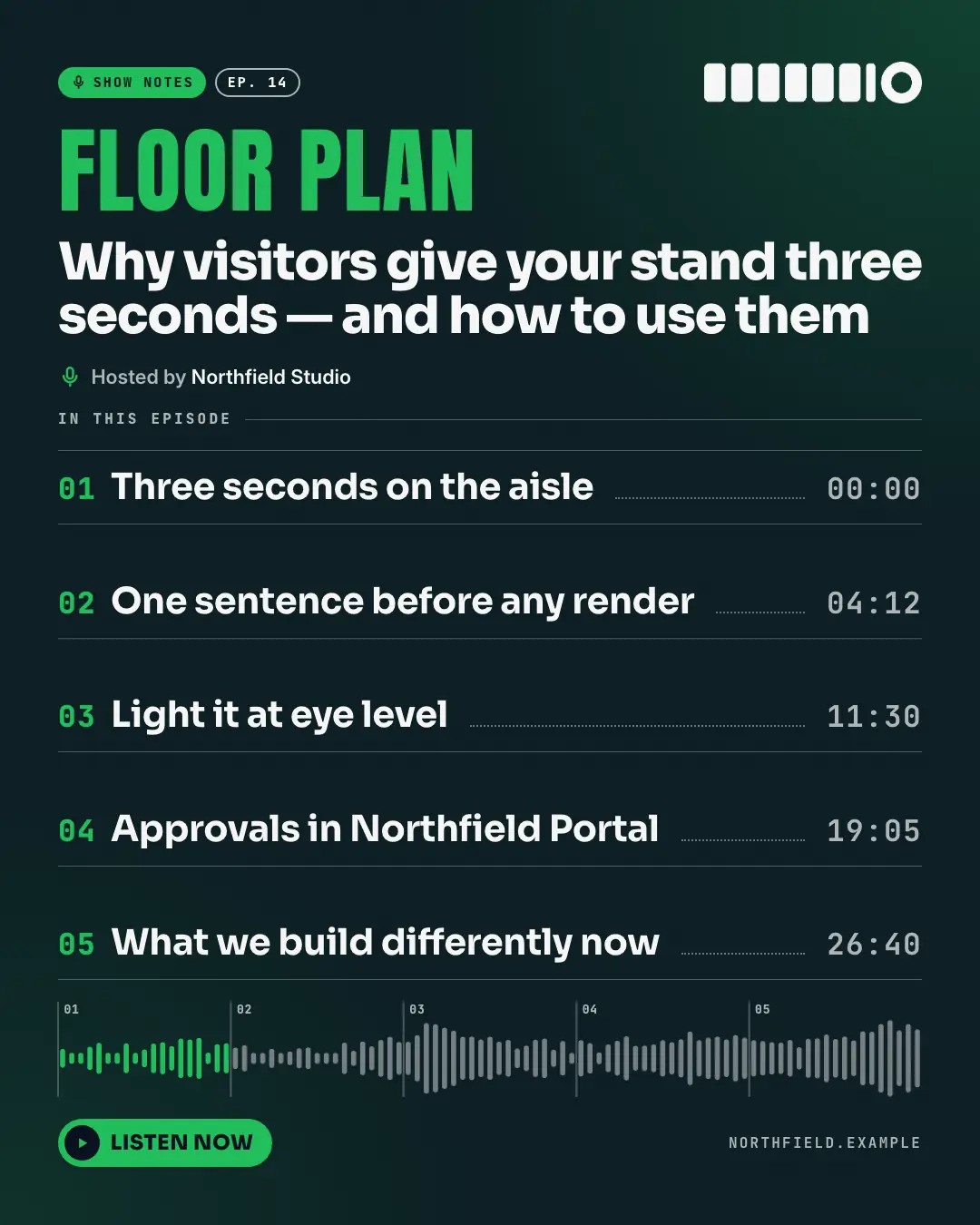
An episode's show notes on a dark studio field: show name in condensed brand caps, the episode title, host and guest line, a ruled 'In this episode' tracklist of three to six numbered chapters (with timestamps only when the copy gives them), a waveform cut into chapters and a LISTEN button. It sells the episode's contents, not just its cover — people see the bit they want and press play.
When the AI picks it
MarketiQ’s Creative Director favours the Podcast show notes for posts that announce news, teach or start a conversation, when the message is a list, steps or a process or a story. It is built first to announce news.
It reads each post’s goal and shape first, then its own words, the platform and the facts you have, and offers this template only where it fits.
Who it’s for
Any business. Nothing in it assumes what you sell, so the Director can offer it to a software company, a café or a coaching centre alike — whenever the post fits.
Platforms and sizes
| Size | Where |
|---|---|
| 4:51080 × 1350 px | Instagram, Facebook, LinkedIn, Threads, Pinterest, Reddit |
| 1:11080 × 1080 px | Ads |
| 9:161080 × 1920 px | TikTok |
| 16:91600 × 900 px | X, YouTube |
| 1.91:11200 × 628 px | Newsletter, Blog |
Single image. Each size is laid out for its canvas, not cropped; the sample above is the 4:5 version.
What it needs
Only your post. It is made from your copy and your brand kit — there is nothing else to prepare.
Rules the AI follows
Word for word from the template library. The Director follows the copy rules when it writes into the template, and the visual review checks every creative against the visual rules.
Copy rules
- Chapter titles are concrete topics from the episode (what the listener learns), each a few words.
- Episode number, guest and timestamps only when the copy states them — never invent them.
Visual rules
- A dark studio field with soft brand glows; a brand SHOW NOTES pill with a mic and an outlined episode pill, the logo; the show name in condensed brand caps, the title in the heading face and a host/guest line.
- A ruled tracklist with numbered chapters, dotted leaders and timestamps when given; a waveform split into numbered chapter segments; a brand LISTEN button with a play disc and the website.
More News & media templates
Webinar / event card
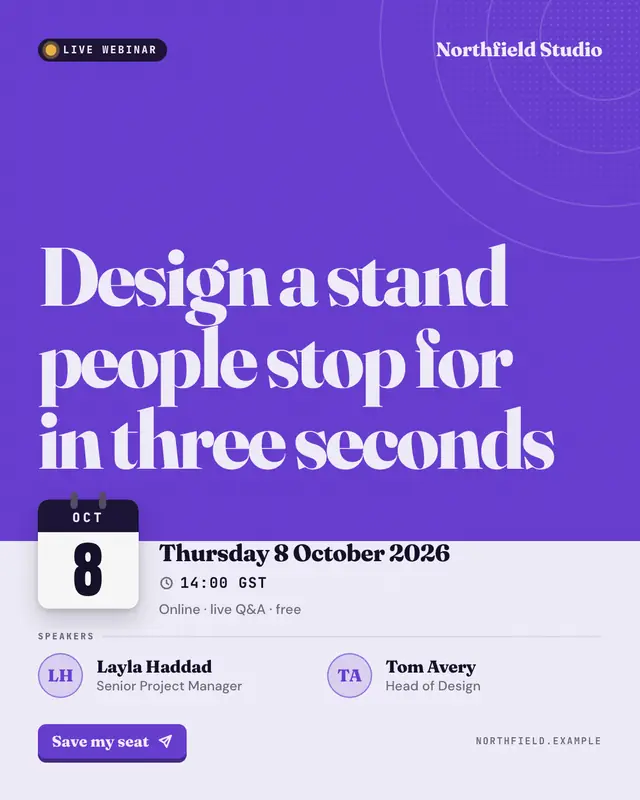
A live-webinar announcement: a brand-colour panel with a LIVE WEBINAR tag and the title set big, a white tear-off calendar tile showing the month and day straddling its…
Front page
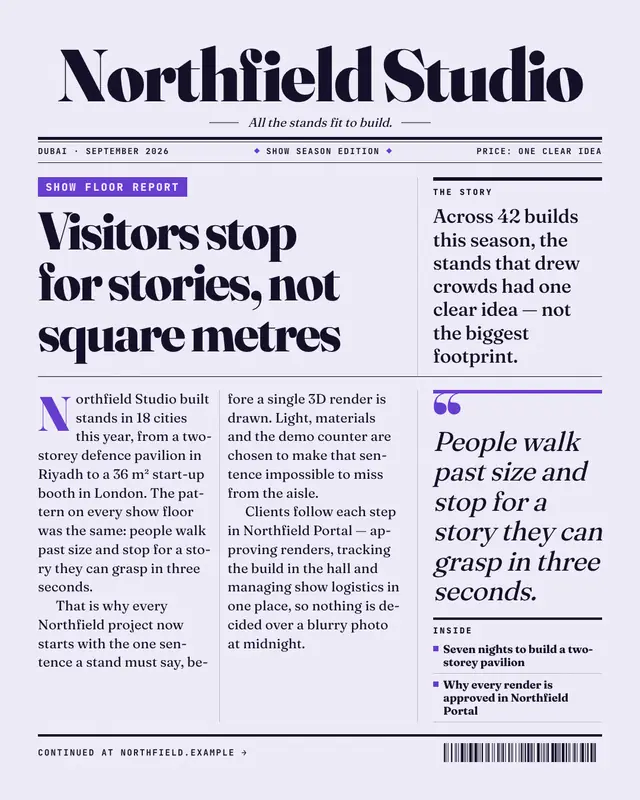
A broadsheet front page with the brand as the paper's masthead: a giant headline, a deck, ruled columns of copy and a pull quote
Breaking news lower third
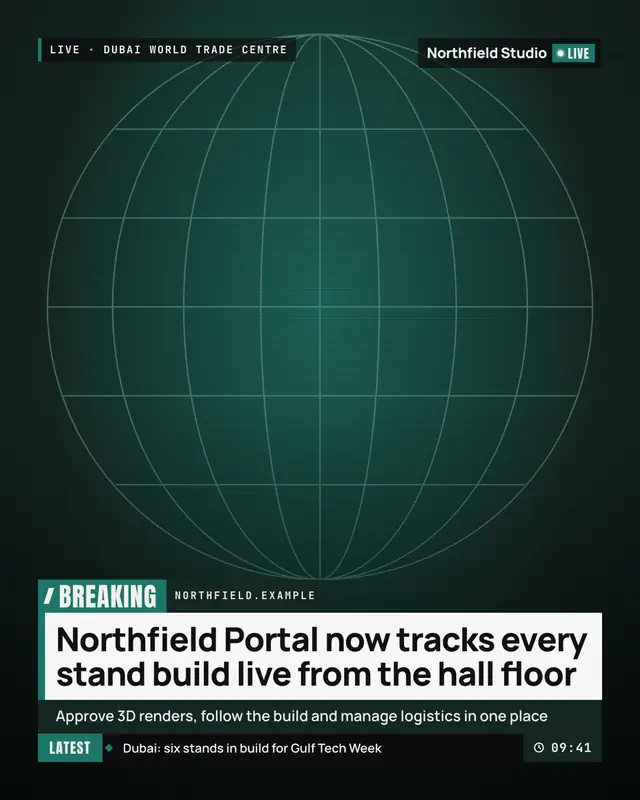
A live TV still: a newsworthy photo with a BREAKING lower third, headline plate, ticker and channel bug built from the logo
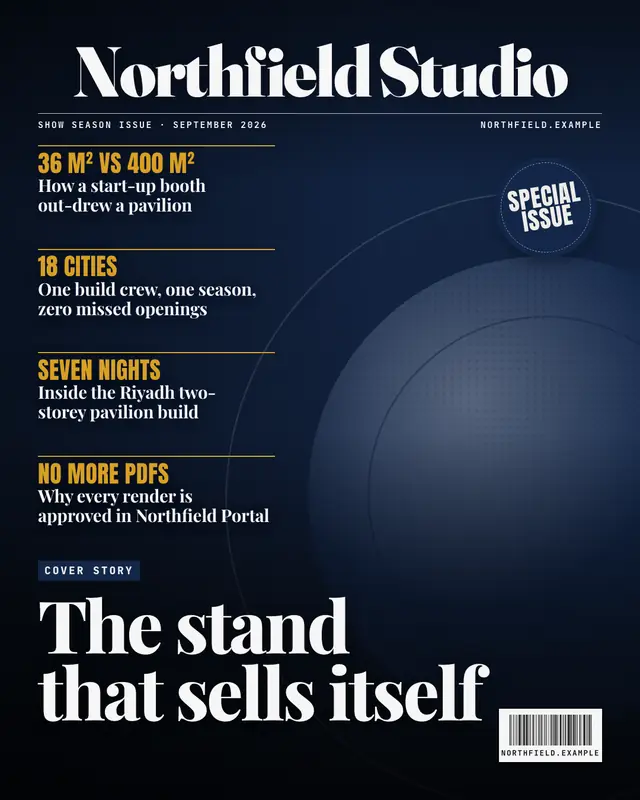
Magazine cover
A glossy magazine cover with the brand as the masthead: an editorial cover image, one big cover story and a stack of cover lines
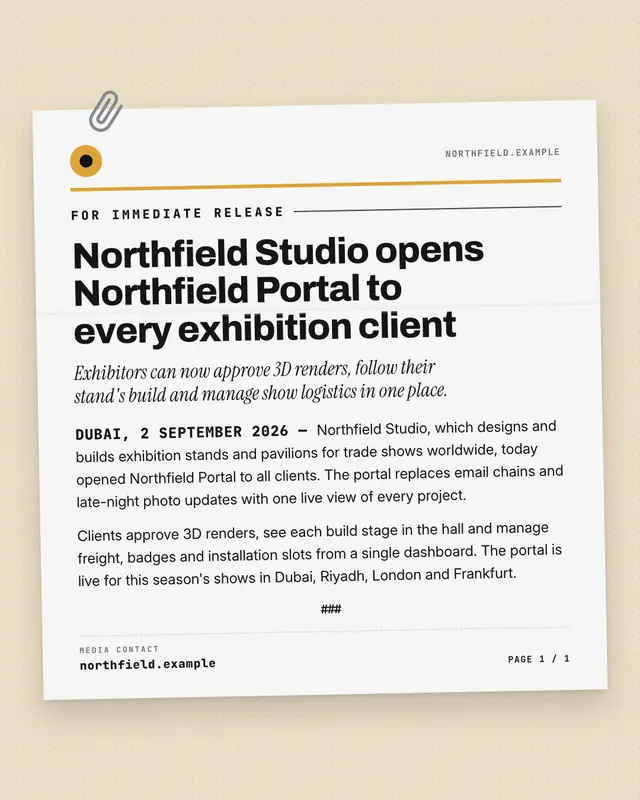
Press release
A formal press release on letterhead
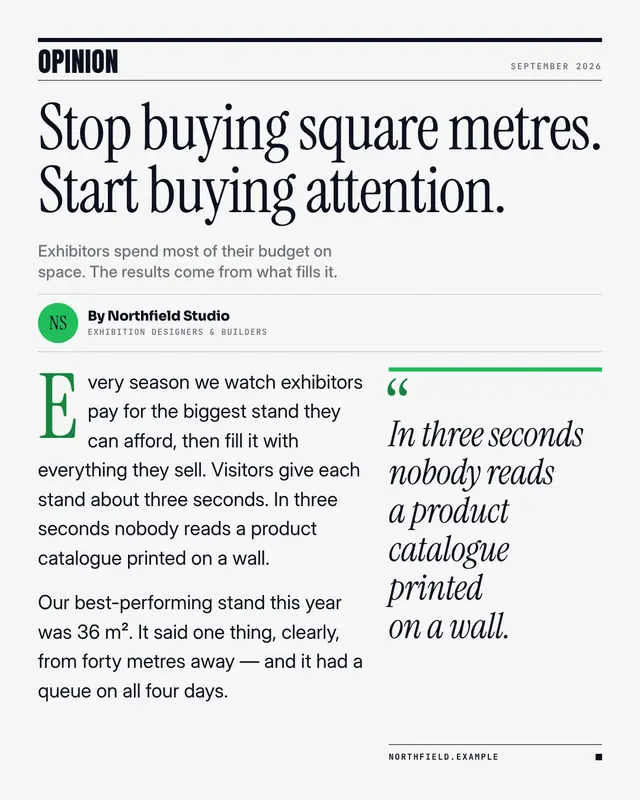
Op-ed column
An opinion column by the brand: section flag, a big serif headline, byline with a monogram, a drop-cap argument and a pull quote
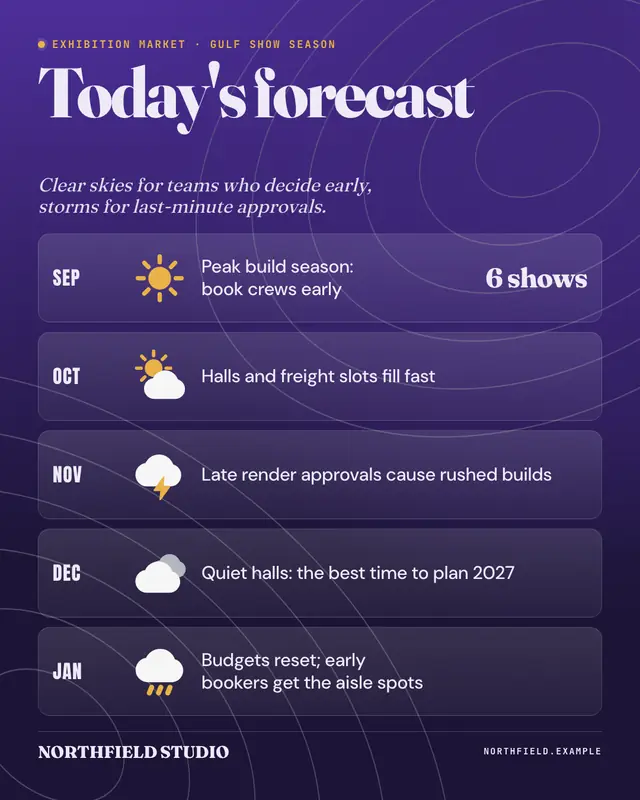
Weather forecast
A TV weather board where the forecast is the market: day or season columns with sun, cloud, rain and storm icons, each condition a real trend
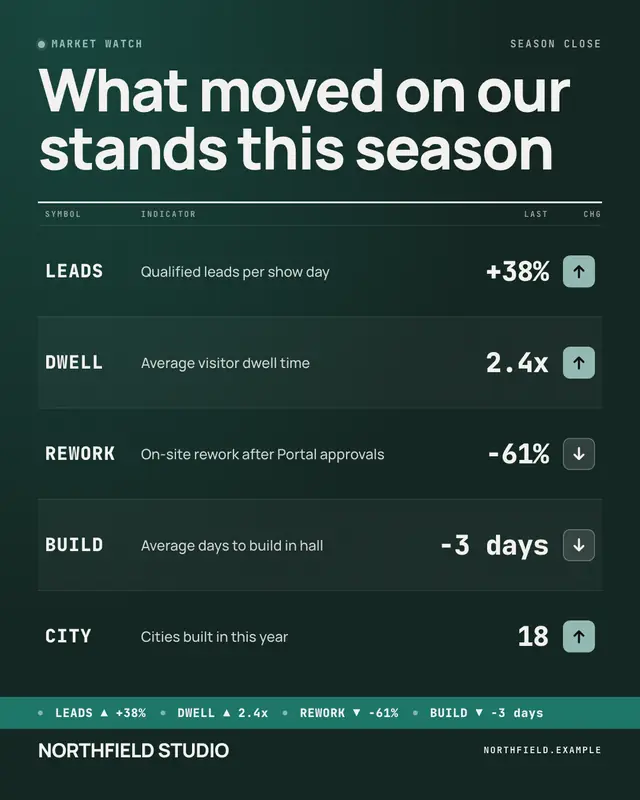
Market ticker board
A trading-terminal board of the brand's own indicators
Make a Podcast show notes with your brand.
MarketiQ writes the post, picks the template that carries it best — this one, when it fits — and fills it with your logo, colours, facts and copy.