Point-of-view essay
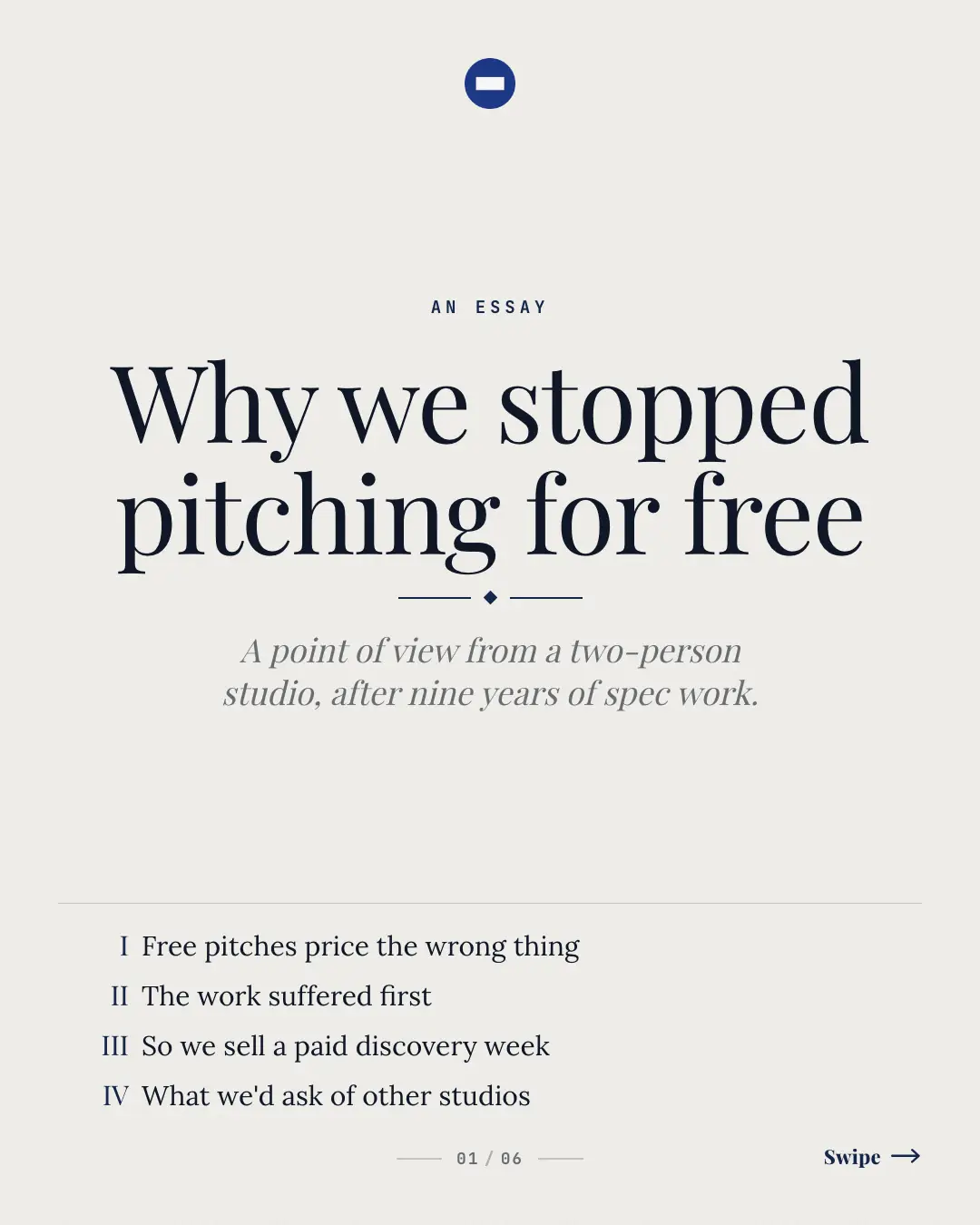
A founder's or partner's argument set like a small book: the cover is a title page with the contents in roman numerals, and each page is one part of the argument — its numeral, a serif heading, an ornament and the text under a drop cap — below a running head, with a folio at the foot.
When the AI picks it
MarketiQ’s Creative Director favours the Point-of-view essay for posts that teach or start a conversation, when the message is one sharp insight, a story or a contrast (this, not that). It is built first to teach.
It reads each post’s goal and shape first, then its own words, the platform and the facts you have, and offers this template only where it fits.
Who it’s for
Any business. Nothing in it assumes what you sell, so the Director can offer it to a software company, a café or a coaching centre alike — whenever the post fits.
Platforms and sizes
| Size | Where |
|---|---|
| 4:51080 × 1350 px | Instagram, Facebook, LinkedIn, Threads |
Carousel of 3–10 slides. Each size is laid out for its canvas, not cropped; the sample above is the 4:5 version.
What it needs
Only your post. It is made from your copy and your brand kit — there is nothing else to prepare.
Rules the AI follows
Word for word from the template library. The Director follows the copy rules when it writes into the template, and the visual review checks every creative against the visual rules.
Copy rules
- The argument is the author's own, from the post, in order; facts or figures it cites come from the post or the truth pack.
- Each page is one part of the argument: a claim and the reasoning behind it.
Visual rules
- Cover: a book title page — logo, 'An essay', the serif title, an ornament, the dek in italics and the contents in roman numerals — with the folio and a swipe cue at the foot.
- Content pages: a running head (the brand's site and the part), the part's roman numeral, a serif heading, an ornament and the text with a drop cap; the page counter as the folio.
- Closing page: the closing line set like a colophon, the note and the logo.
Truth pack: the verified facts MarketiQ keeps about your business — what you sell, prices, proof and the claims you have approved.
More Business decks templates
Trend radar
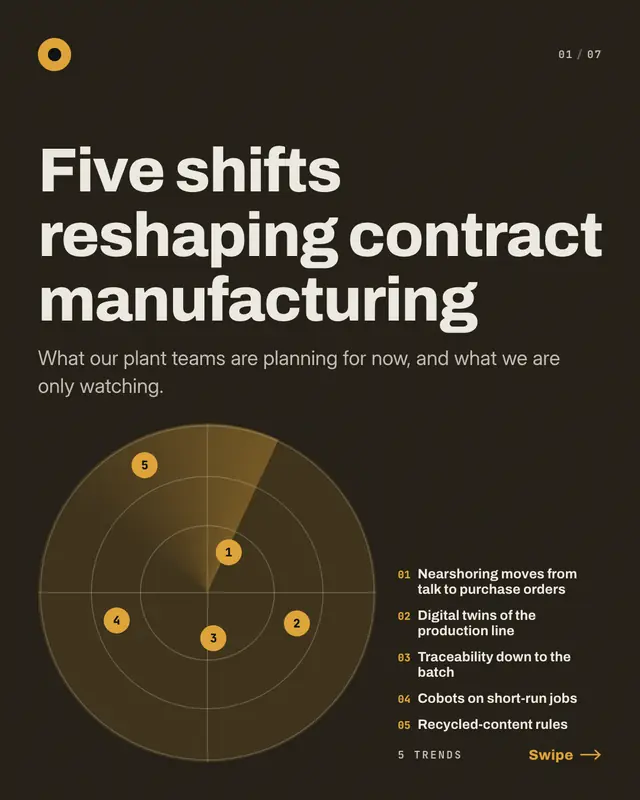
The industry's 'trends to watch' plotted on a radar: the cover sweeps a dark scope with one numbered blip per trend
Capabilities binder
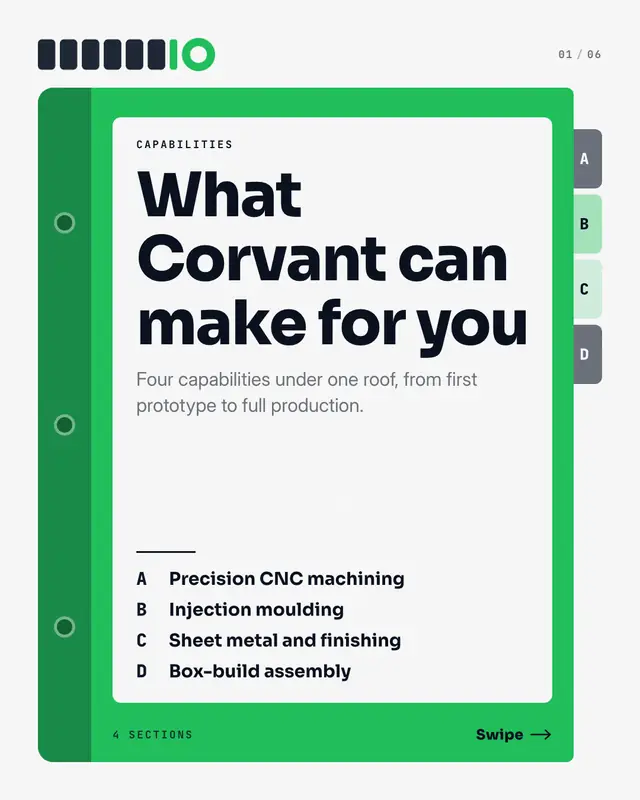
The 'capabilities deck' as a tabbed binder: the cover is the binder itself
Implementation Gantt
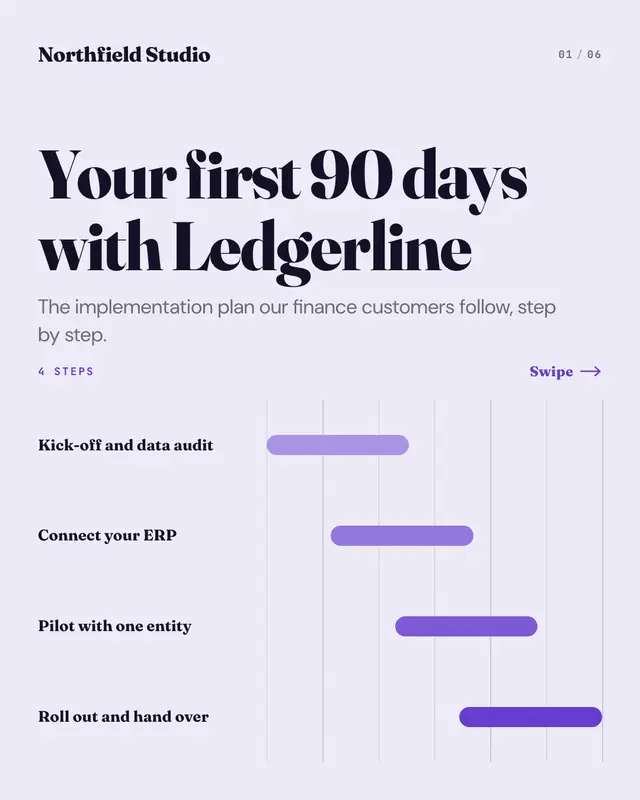
The 'implementation plan' as a Gantt chart that unfolds: the cover charts every step as a bar that starts while the one before is under way, and each page opens one step…
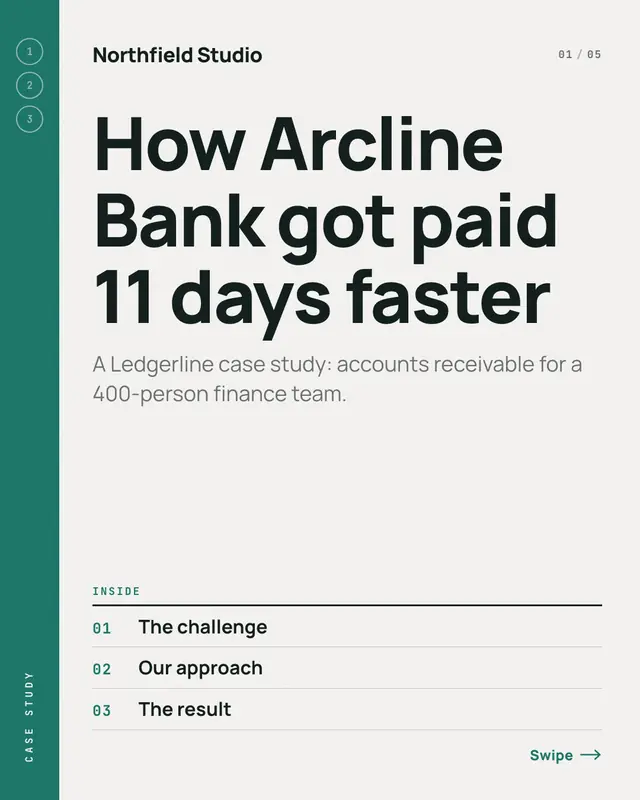
Case study dossier
A case study told page by page
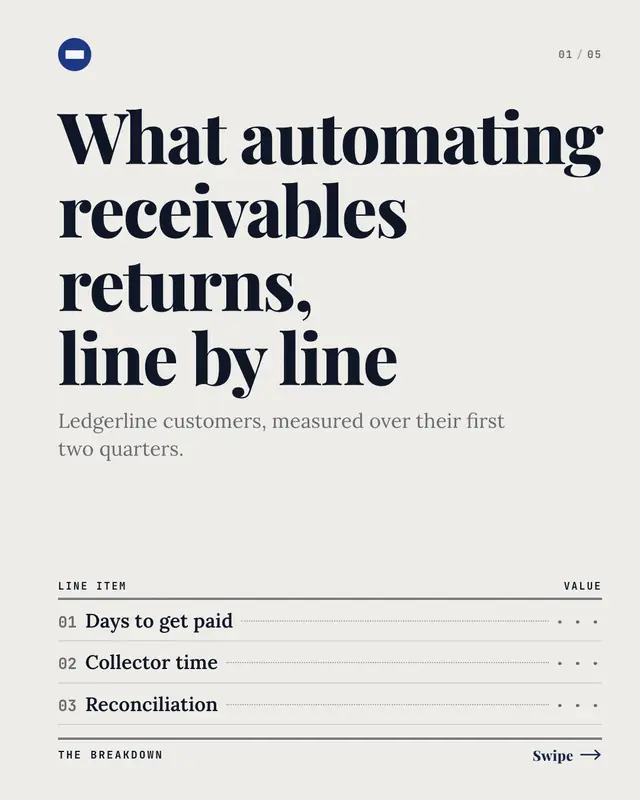
ROI breakdown
An accountant's ledger that reveals the return one line item per page: the cover lists the items with their values hidden, each page fills in the next value
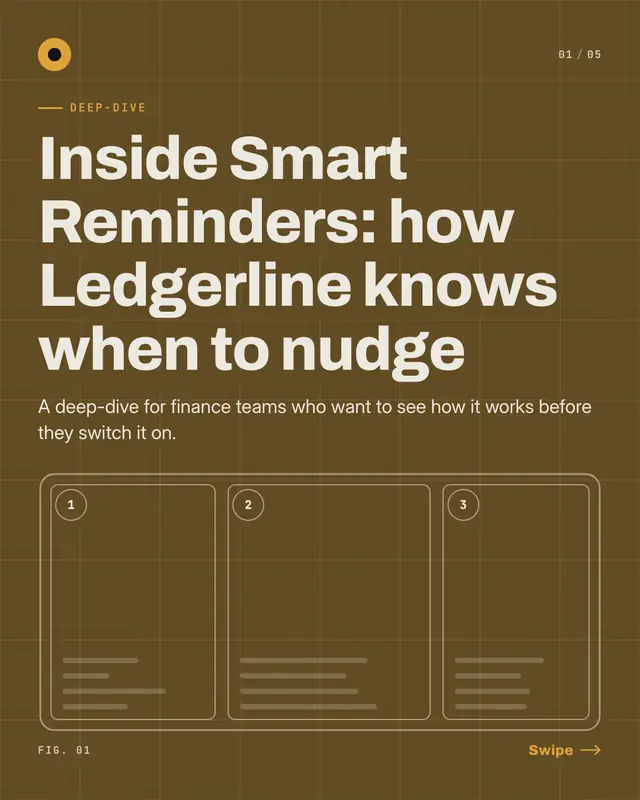
Feature deep-dive
A 'deep-dive' into one feature drawn as a blueprint: a schematic of the feature's parts on a brand-shade grid, one numbered callout per page lighting up as the page…
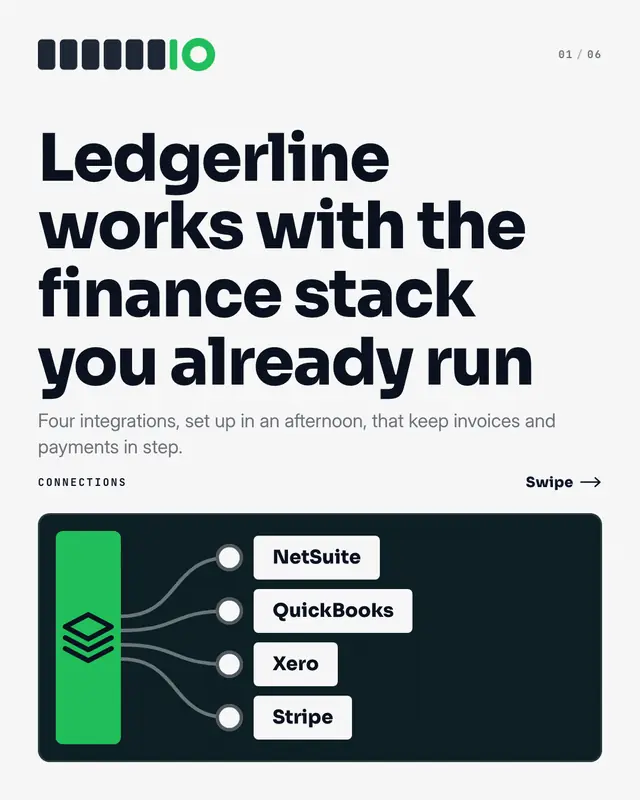
Integration walk-through
A patch panel of the product's integrations: the cover plugs a cable from the brand's hub into a socket for every tool it 'integrates with', then each page pulls one…
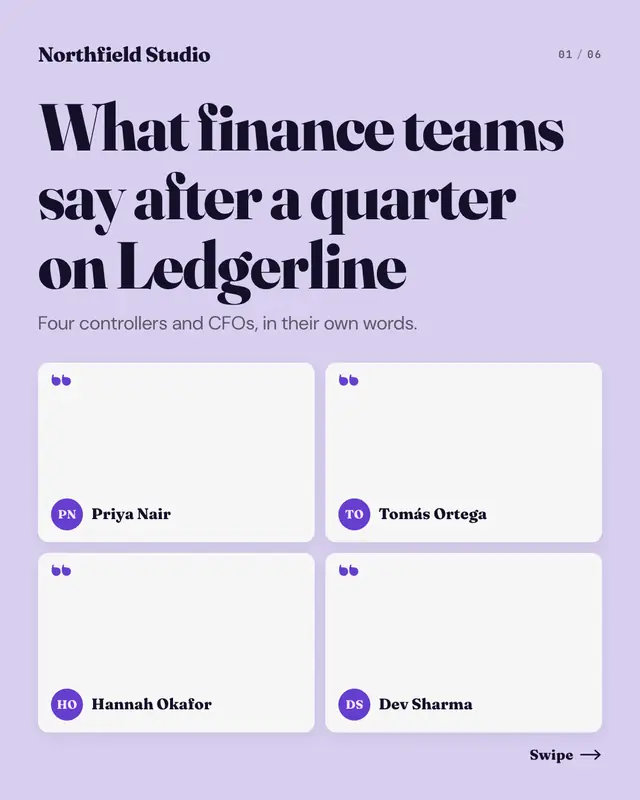
Customer quote wall
A wall of customer quotes, one per page: the cover pins a card for every voice
Make a Point-of-view essay with your brand.
MarketiQ writes the post, picks the template that carries it best — this one, when it fits — and fills it with your logo, colours, facts and copy.