Case-of-the-week teardown
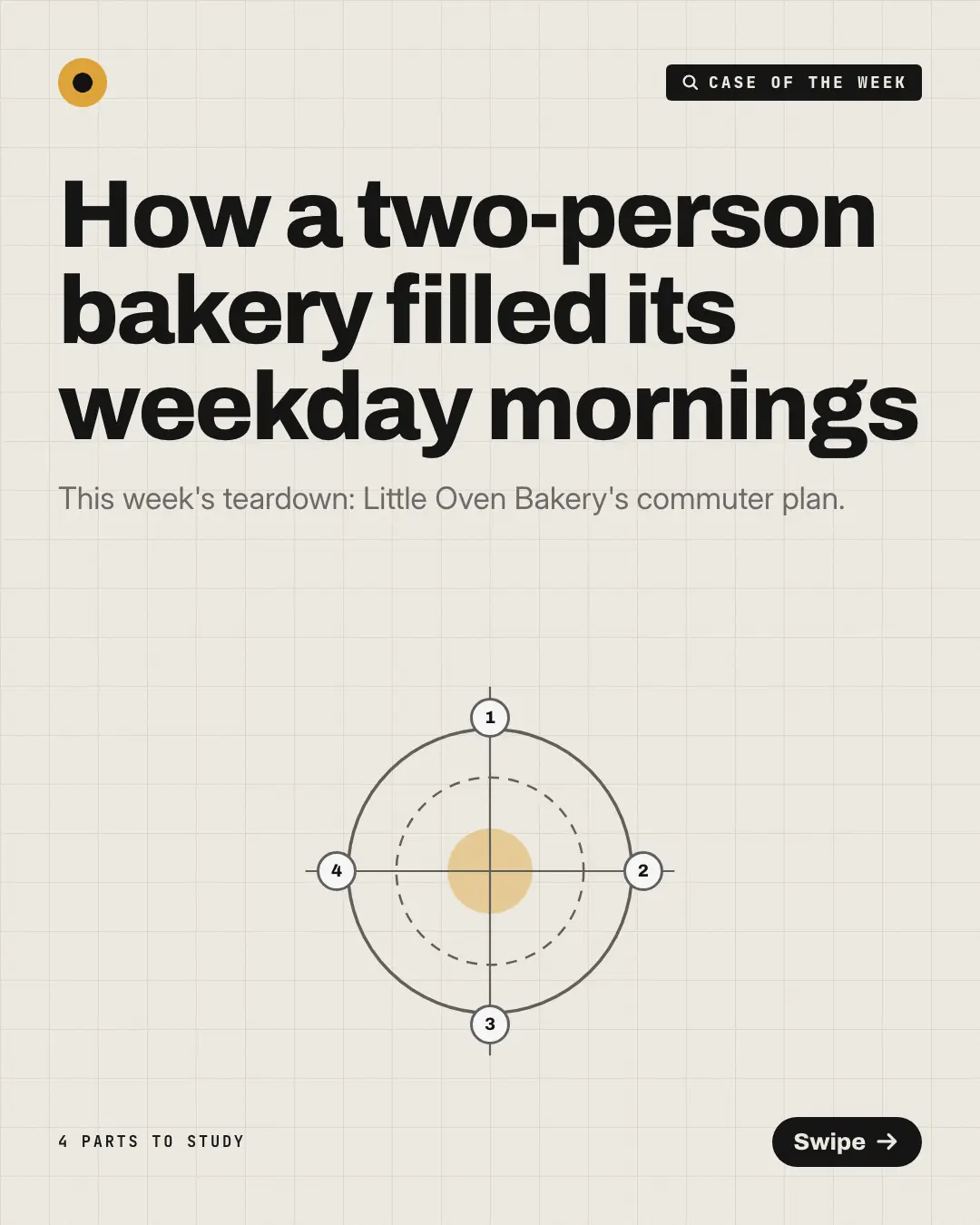
A 'case of the week' taken apart like a specimen on graph paper: a ringed diagram with one numbered pin per part, each page lighting its pin above what that part did and why — a breakdown readers can study and borrow from.
When the AI picks it
MarketiQ’s Creative Director favours the Case-of-the-week teardown for posts that teach or start a conversation, when the message is a story, a list or one sharp insight. It is built first to teach.
It reads each post’s goal and shape first, then its own words, the platform and the facts you have, and offers this template only where it fits.
Who it’s for
Any business. Nothing in it assumes what you sell, so the Director can offer it to a software company, a café or a coaching centre alike — whenever the post fits.
Platforms and sizes
| Size | Where |
|---|---|
| 4:51080 × 1350 px | Instagram, Facebook, LinkedIn, Threads |
Carousel of 3–10 slides. Each size is laid out for its canvas, not cropped; the sample above is the 4:5 version.
What it needs
Only your post. It is made from your copy and your brand kit — there is nothing else to prepare.
Rules the AI follows
Word for word from the template library. The Director follows the copy rules when it writes into the template, and the visual review checks every creative against the visual rules.
Copy rules
- The case is one the copy describes; each row is one part of it — what was done and why it worked.
- Results, numbers and names only as the copy states them; no client names the brand facts do not allow.
- The closing line turns the lesson into the reader's next step.
Visual rules
- Graph paper with a specimen diagram — concentric rings, a crosshair, numbered pins around it — under a dark 'Case of the week' badge.
- Each part page fills its pin in the brand colour with a dashed leader line down to 'Part n of N', the part's heading and its text.
- The cover shows the whole diagram under the title; the closing page fills every pin above the CTA.
More Teaching carousels templates
Commonplace book
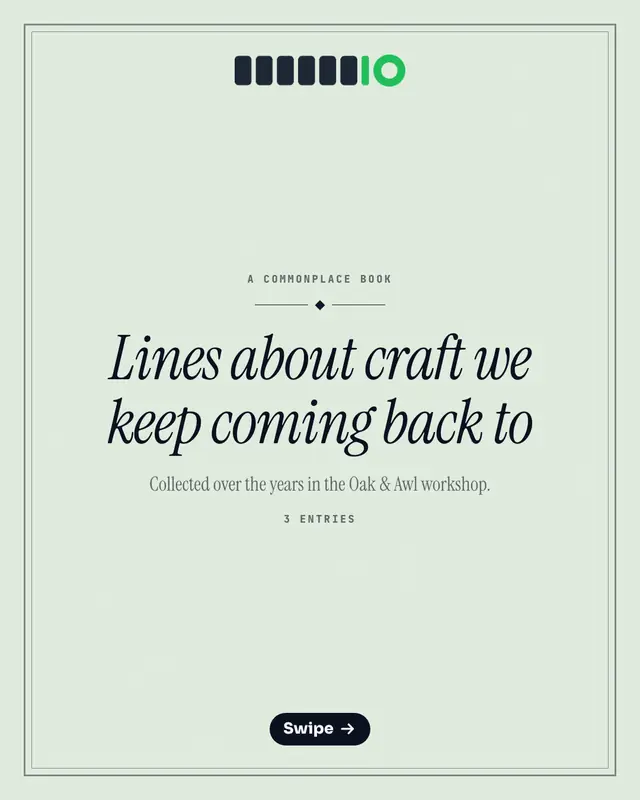
A commonplace book, the notebook people copy memorable lines into: one entry per page, the line in italic serif under a hanging quotation mark, who said it and why it…
How-to stepper
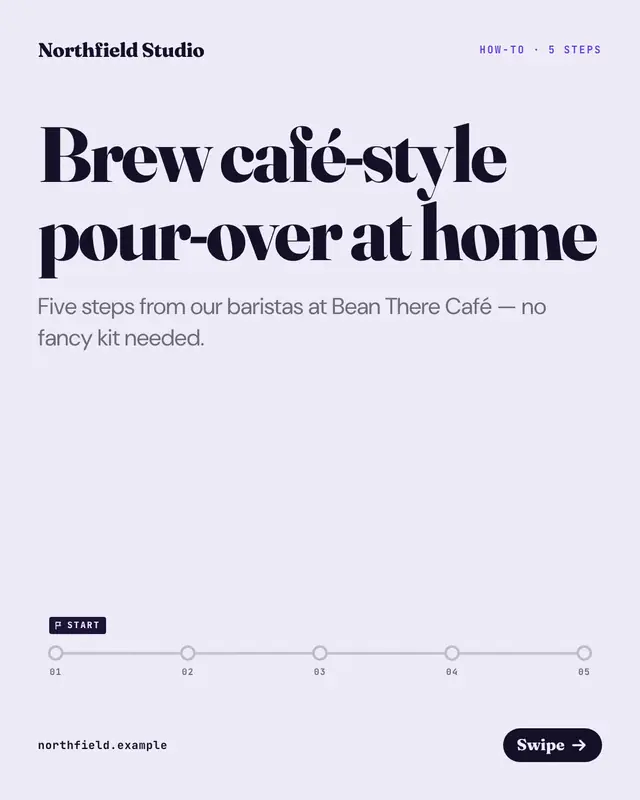
A how-to on a transit-line stepper: each page lights the next station with its big step number, the step and how to do it, and names the step after it
Index-card tip stack
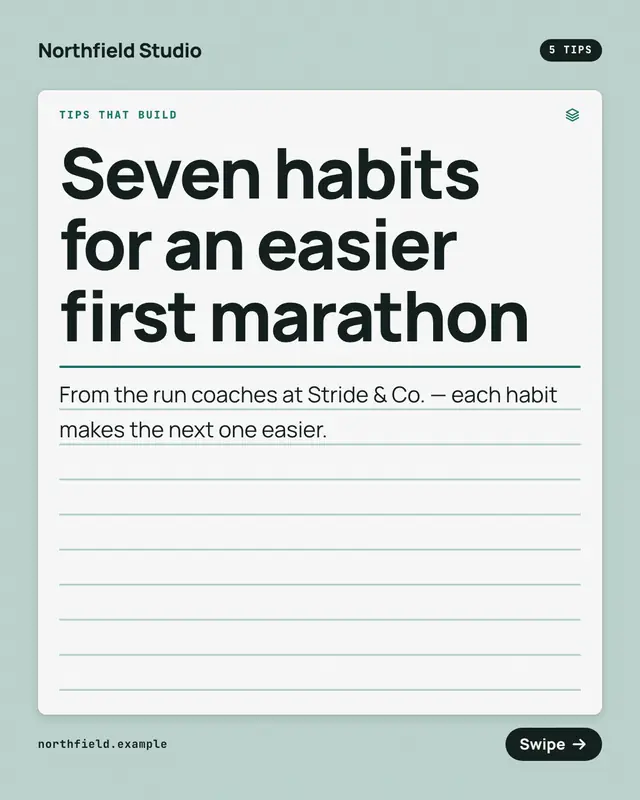
Tips that build, on ruled index cards: each page lays one more numbered card on a growing stack, the earlier tips' numbers peeking above it
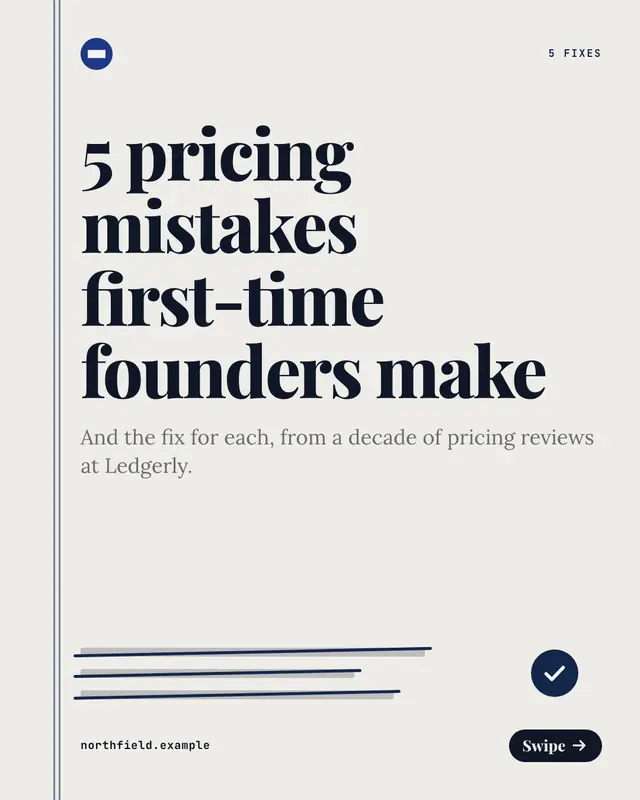
Mistakes and fixes
A proofreader's correction sheet, one mistake per page: the mistake struck through in the brand's ink, a caret sweeping down to the fix set bold on a slip
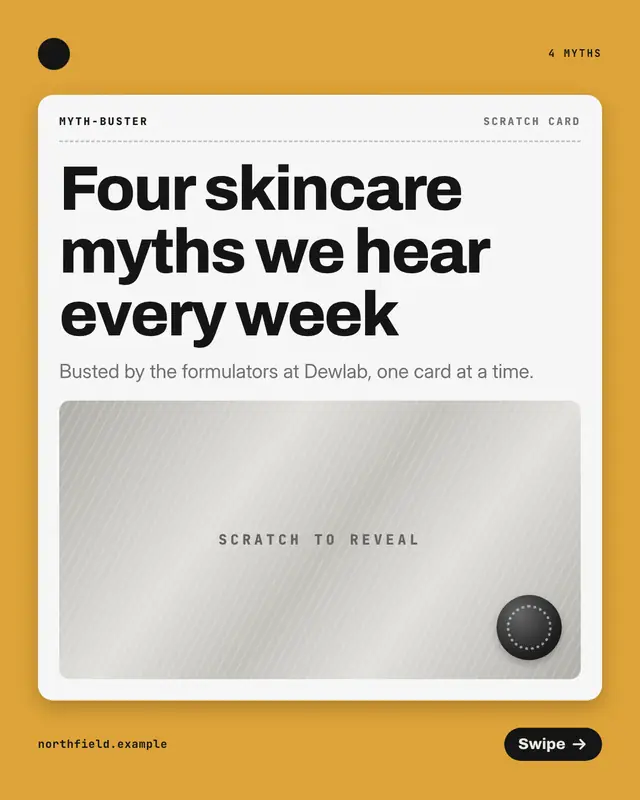
Myth-buster scratch card
A lottery-style scratch card per myth: the myth printed and struck through at the top, the foil panel beneath scratched away to reveal the fact
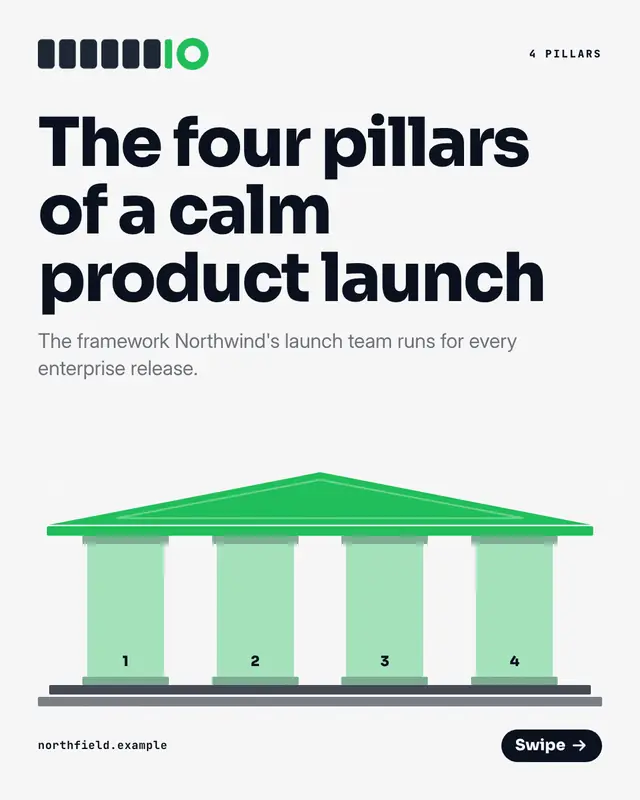
Pillar-by-pillar framework
A framework drawn as a temple with one numbered column per pillar on every page, each page lighting its pillar above the pillar's name and meaning
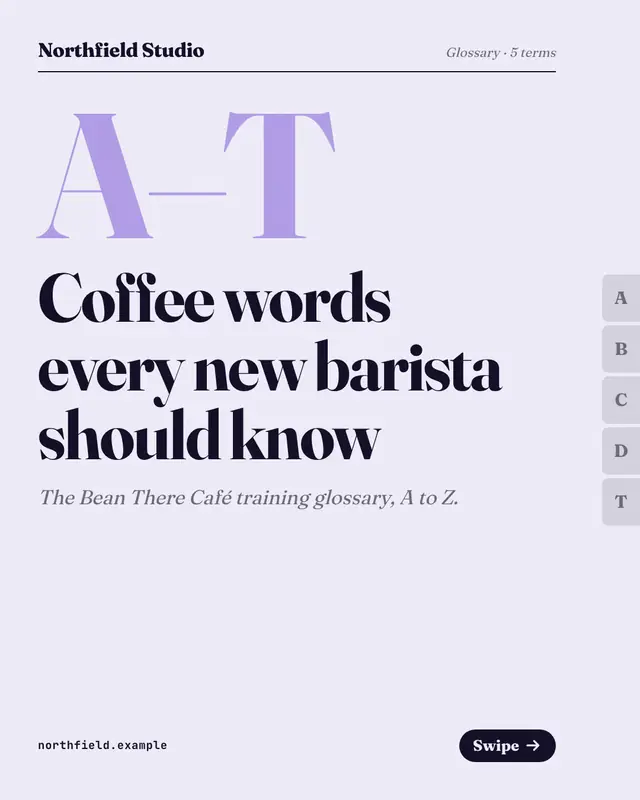
Glossary thumb index
A dictionary-page glossary with thumb-index letter tabs down the edge: each page sets one headword large in serif above its plain-words definition
FAQ flip deck
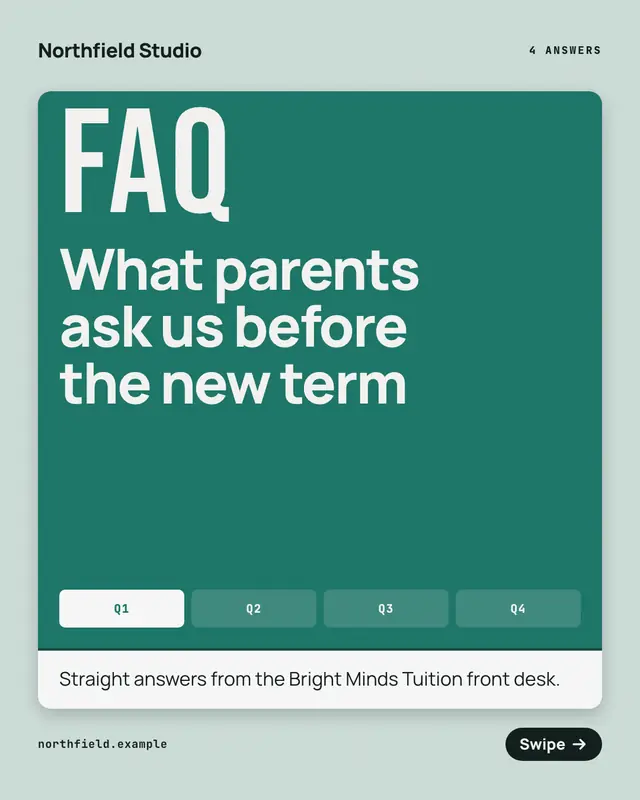
An FAQ as a deck of folded cards: each page's brand-coloured flap carries one question under a big 'Q' and opens onto its answer under an 'A'
Make a Case-of-the-week teardown with your brand.
MarketiQ writes the post, picks the template that carries it best — this one, when it fits — and fills it with your logo, colours, facts and copy.