Archaeological dig
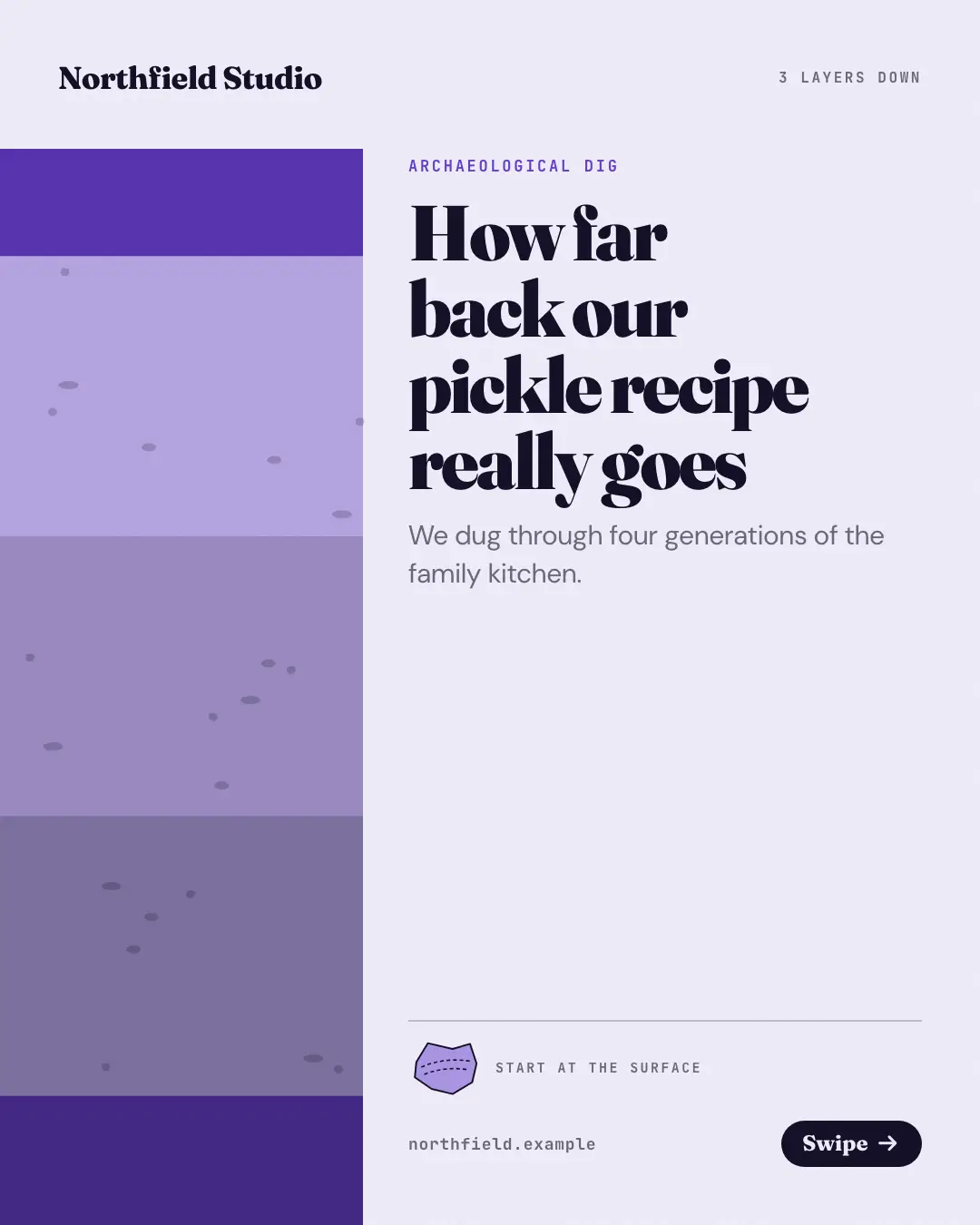
A story uncovered layer by layer, as an 'archaeological dig': a cross-section of soil runs down the left of every page — grass, layers, bedrock — and each page cuts the trench one layer deeper, outlines it and tells what was found there, with an abstract shard for each find; the close hits bedrock. For history traced back to its roots, or a topic you 'dig deeper' into.
When the AI picks it
MarketiQ’s Creative Director favours the Archaeological dig for posts that teach, start a conversation or prove a point, when the message is a story, a timeline or a list. It is built first to teach.
It reads each post’s goal and shape first, then its own words, the platform and the facts you have, and offers this template only where it fits.
Who it’s for
Any business. Nothing in it assumes what you sell, so the Director can offer it to a software company, a café or a coaching centre alike — whenever the post fits.
Platforms and sizes
| Size | Where |
|---|---|
| 4:51080 × 1350 px | Instagram, Facebook, LinkedIn, Threads |
Carousel of 3–10 slides. Each size is laid out for its canvas, not cropped; the sample above is the 4:5 version.
What it needs
Only your post. It is made from your copy and your brand kit — there is nothing else to prepare.
Rules the AI follows
Word for word from the template library. The Director follows the copy rules when it writes into the template, and the visual review checks every creative against the visual rules.
Copy rules
- Only for a story told from the surface down — a history traced back to its origin, a product taken apart to what is underneath, a deep dive past the obvious; not for a forward timeline, offers or tips.
- Each layer is something the copy says was found; periods and names come from the copy, never invented dates or artefacts.
- The closing line is the bedrock — the root of it all, and what the reader can do with it.
Visual rules
- A soil cross-section down the left edge of every page — a grass strip, bands of earth in tints and shades of the brand colour with scattered pebbles, dark bedrock — with a trench cut down to the current layer, which is outlined in a dashed brand line and tagged 'Layer n'.
- Beside it, the layer's name (or 'Layer n') in condensed capitals with 'n of N · deeper', the heading, the text and an abstract shard labelled 'Find no. n'.
- The cover shows the untouched section under 'Archaeological dig' and the title; the closing page cuts the trench to the bedrock with the call to action.
More Narrative decks templates
Storybook pages
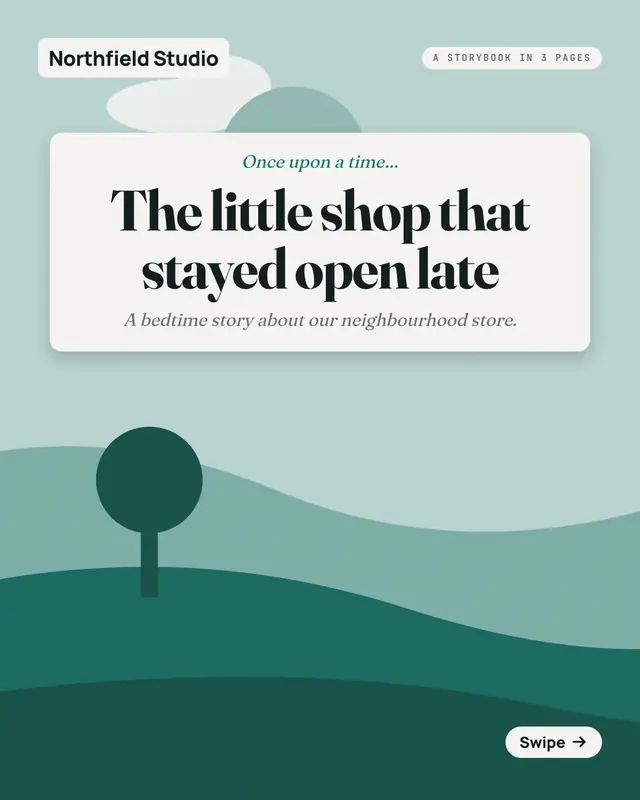
A brand story told like a 'picture book': the cover is a painted landscape with 'Once upon a time…' on the title plate, then each page pairs a scene
Live blog
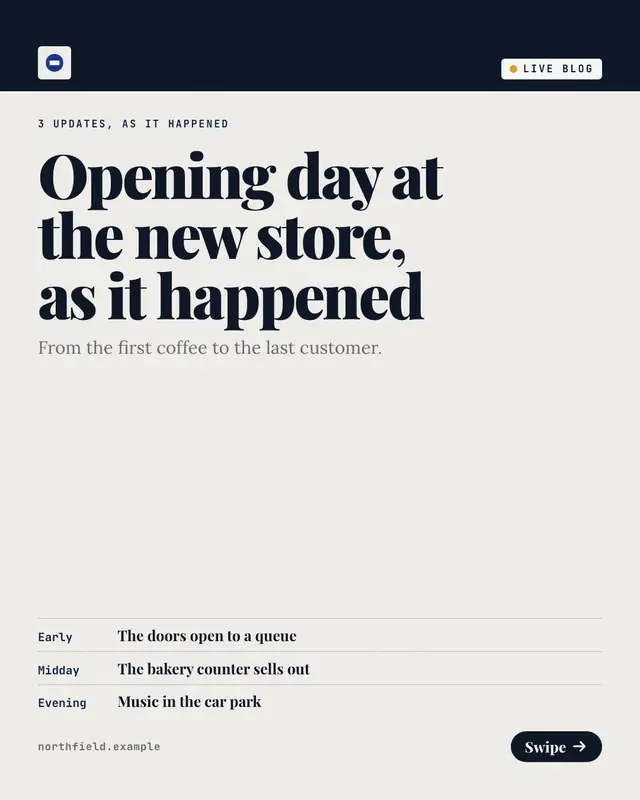
A day told as it happened, as a 'live blog': a dark bar with a 'Live blog' badge, a timeline rail down the page, the previous update fading above and the current one on…
Album tracklist
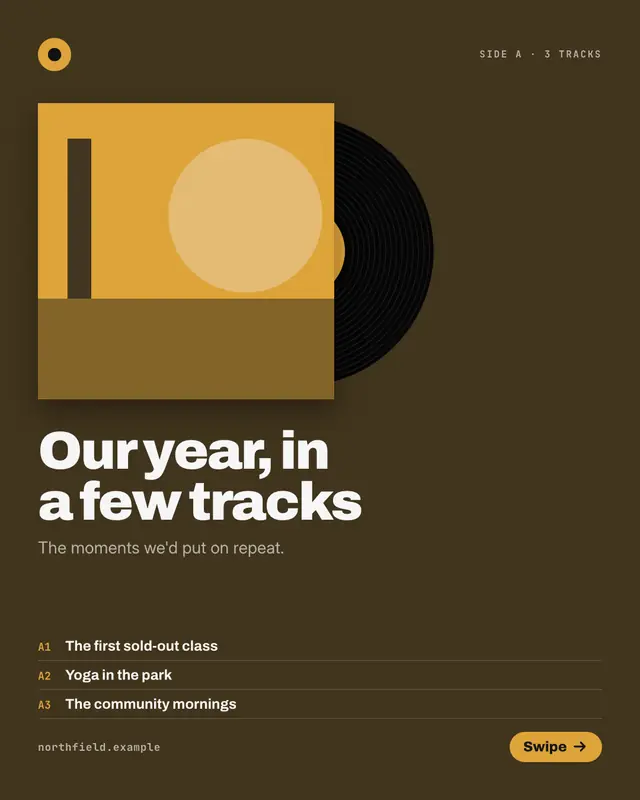
A story released like an album: the cover is the sleeve with the record sliding out and the 'tracklist' of every chapter, then each page plays one track
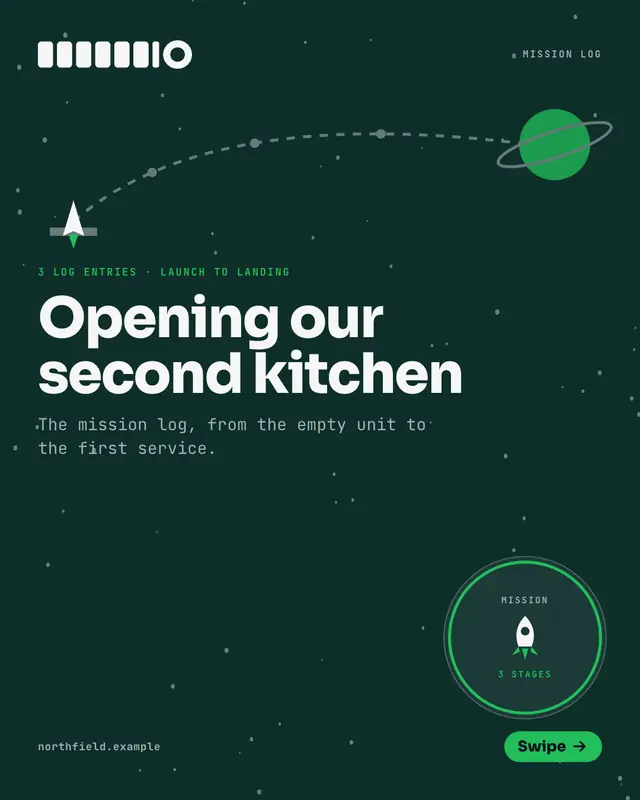
Mission log
A big project flown as a mission, in 'mission log' entries: a dotted trajectory crosses the top of every page from the launch pad to the destination planet, the craft a…
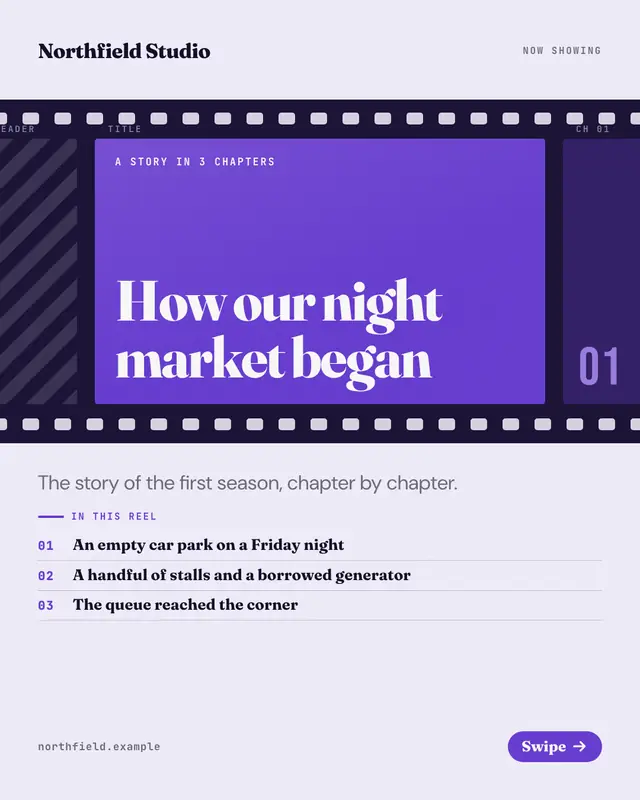
Film-strip chapters
A story cut into chapters on one 'film strip' that runs through every page: each page lights its own frame between the sprocket holes with the chapter's heading, the…
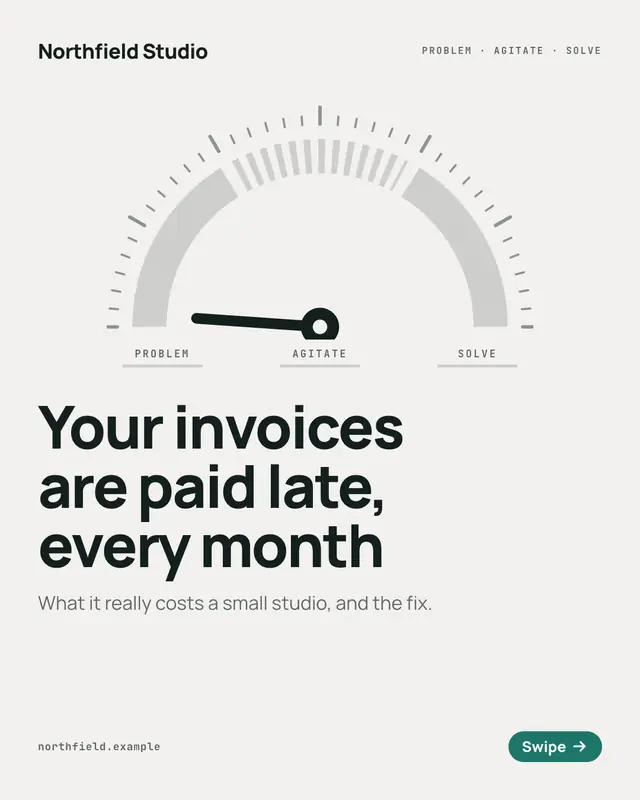
Problem–agitate–solve
A 'problem-agitate-solve' story on a pressure gauge: the needle sits on the problem, swings to its peak as the cost of leaving it is spelled out on a dark page, and…
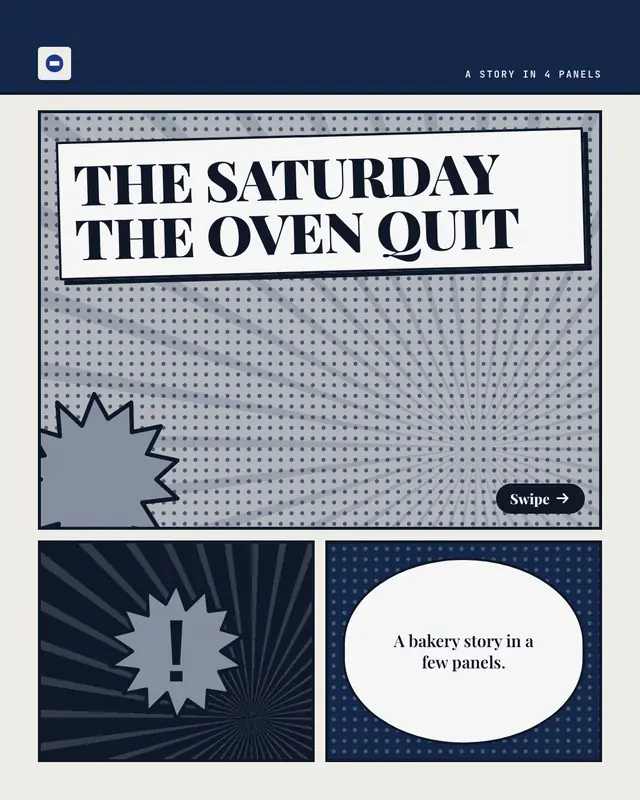
Comic-strip pages
A story told as 'comic strip' pages: inked panels with Ben-Day dots and speed lines, each page's beat in a caption box and its detail in a speech balloon from off-panel…
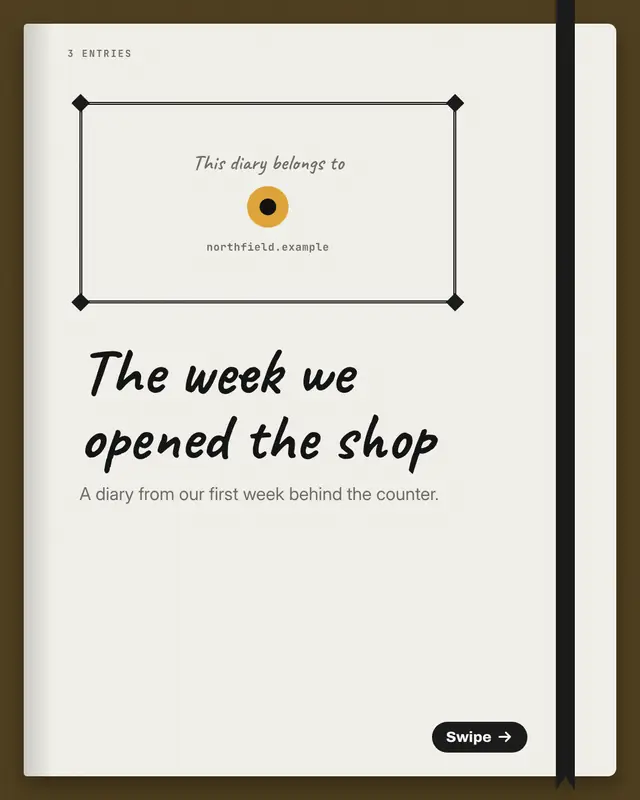
Diary pages
A story told as 'diary pages': a page-a-day diary open on a desk with a ribbon marker, each entry's date written large at the top, the entry in handwriting on ruled lines
Make a Archaeological dig with your brand.
MarketiQ writes the post, picks the template that carries it best — this one, when it fits — and fills it with your logo, colours, facts and copy.