Film-strip chapters
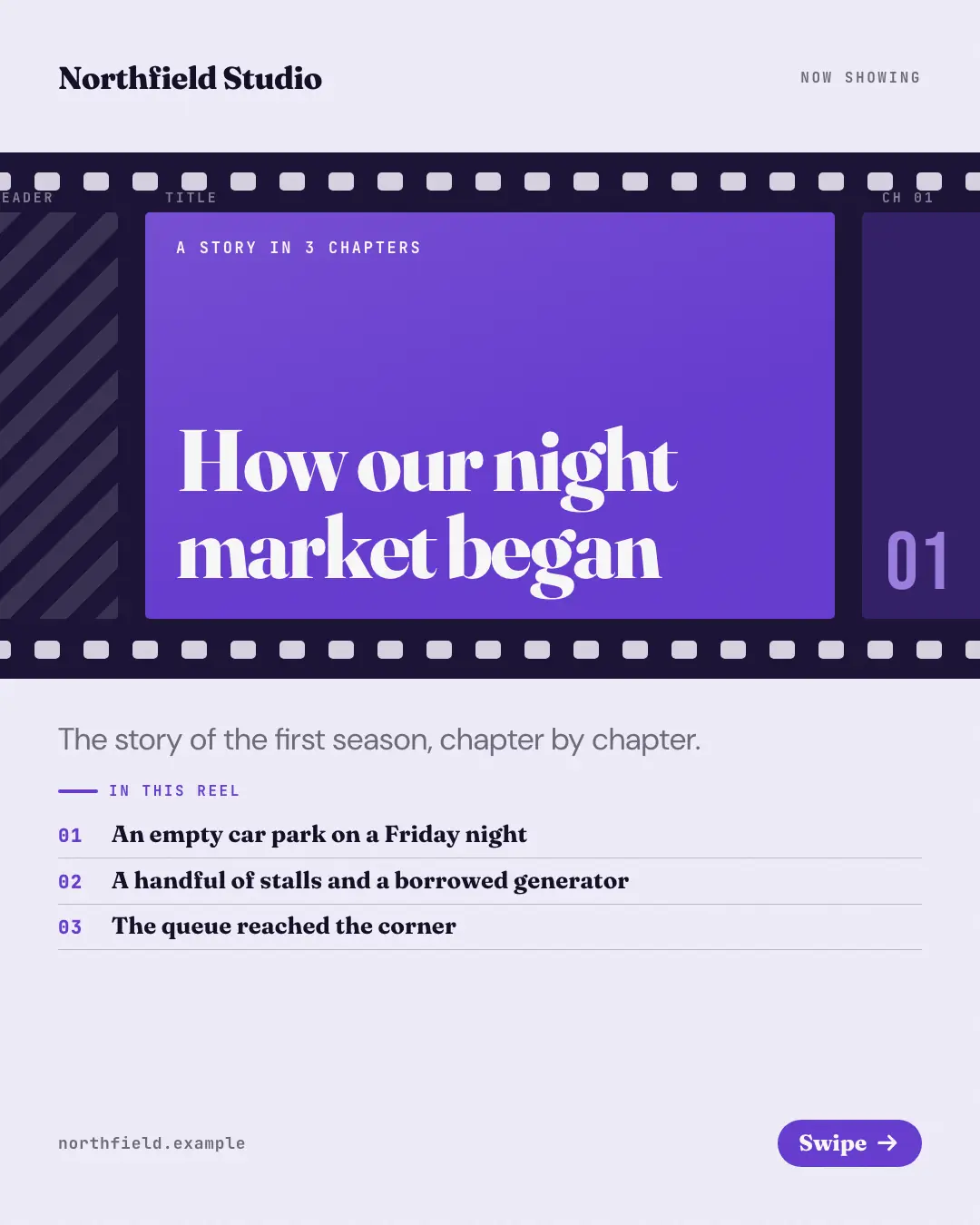
A story cut into chapters on one 'film strip' that runs through every page: each page lights its own frame between the sprocket holes with the chapter's heading, the frames before and after it peeking in at the edges, and the chapter's text set below the strip — a business story that reads like a roll of film.
When the AI picks it
MarketiQ’s Creative Director favours the Film-strip chapters for posts that start a conversation, entertain or prove a point, when the message is a story or a timeline. It is built first to start a conversation.
It reads each post’s goal and shape first, then its own words, the platform and the facts you have, and offers this template only where it fits.
Who it’s for
Any business. Nothing in it assumes what you sell, so the Director can offer it to a software company, a café or a coaching centre alike — whenever the post fits.
Platforms and sizes
| Size | Where |
|---|---|
| 4:51080 × 1350 px | Instagram, Facebook, LinkedIn, Threads |
Carousel of 3–10 slides. Each size is laid out for its canvas, not cropped; the sample above is the 4:5 version.
What it needs
Only your post. It is made from your copy and your brand kit — there is nothing else to prepare.
Rules the AI follows
Word for word from the template library. The Director follows the copy rules when it writes into the template, and the visual review checks every creative against the visual rules.
Copy rules
- Only for a story told in chapters, in the order it happened (a founding, a build, a season, a customer's story); not for a list of tips or features.
- Each row is one chapter: its heading says what happened, its body how; every event, name and number comes from the copy.
- The closing line follows from where the story ends — the next chapter the reader can be part of.
Visual rules
- A dark film strip with sprocket holes along both edges crosses every page at the same height and runs off both sides; the current frame is lit in the brand colour, its neighbours dim at the edges.
- Each chapter page sets the chapter number large inside the lit frame above its heading, and the chapter's text below the strip under a 'Chapter n of N' kicker.
- The cover's lit frame holds the title with the leader stripes before it; the closing frame holds the call to action. Logo top left and the same page counter top right on every page.
More Narrative decks templates
Problem–agitate–solve
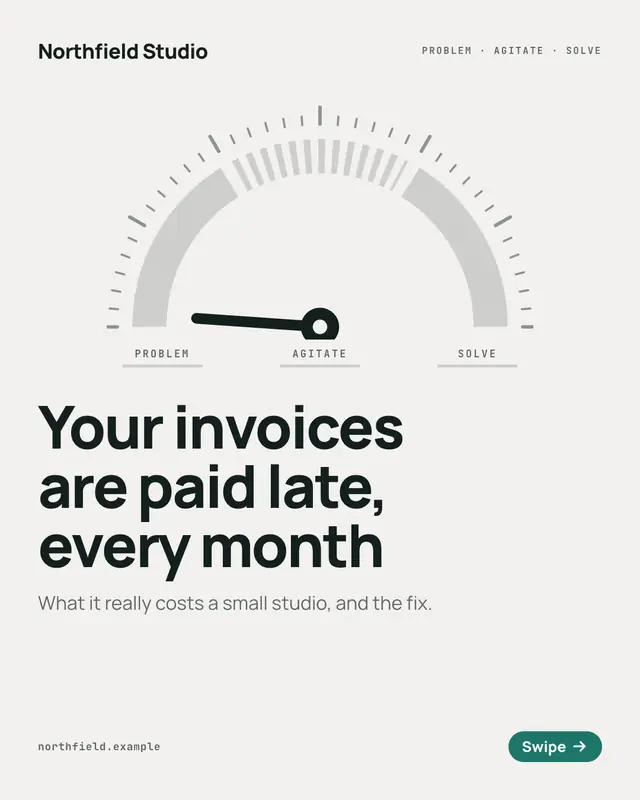
A 'problem-agitate-solve' story on a pressure gauge: the needle sits on the problem, swings to its peak as the cost of leaving it is spelled out on a dark page, and…
Comic-strip pages
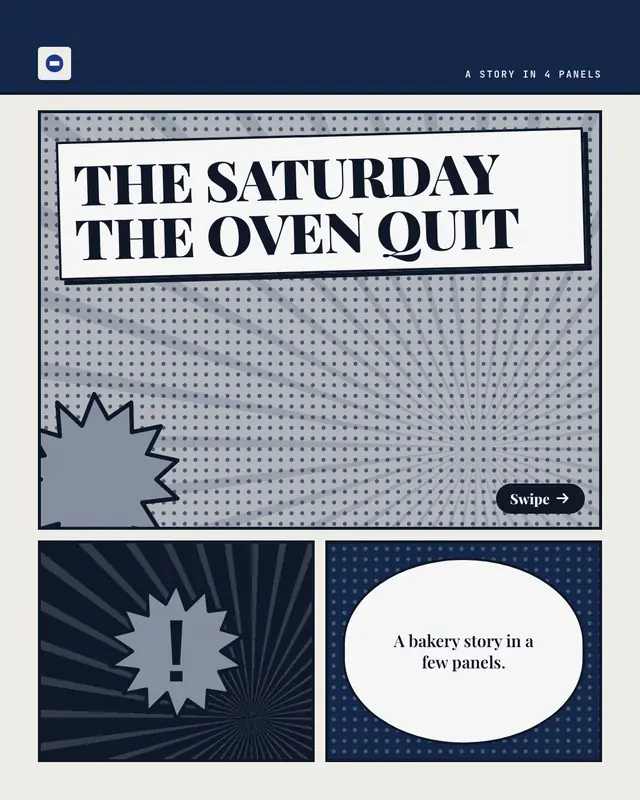
A story told as 'comic strip' pages: inked panels with Ben-Day dots and speed lines, each page's beat in a caption box and its detail in a speech balloon from off-panel…
Diary pages
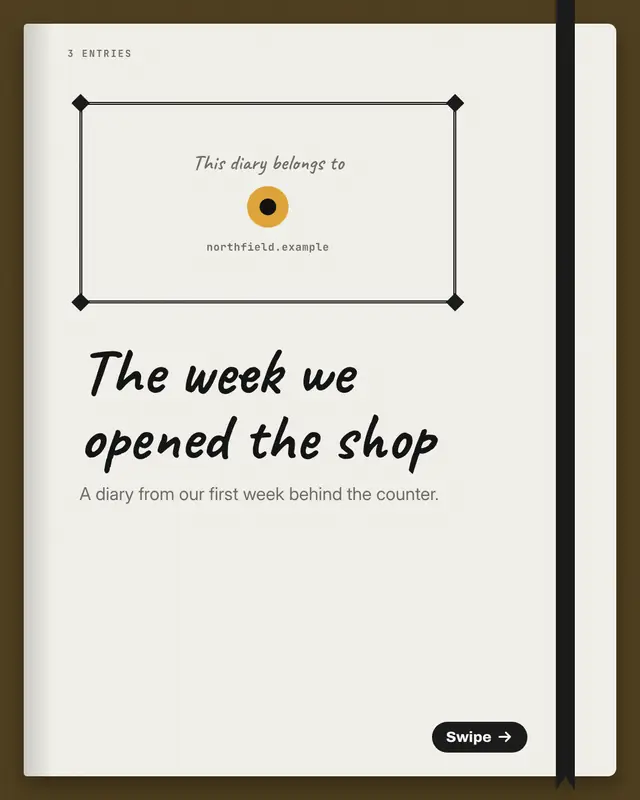
A story told as 'diary pages': a page-a-day diary open on a desk with a ribbon marker, each entry's date written large at the top, the entry in handwriting on ruled lines
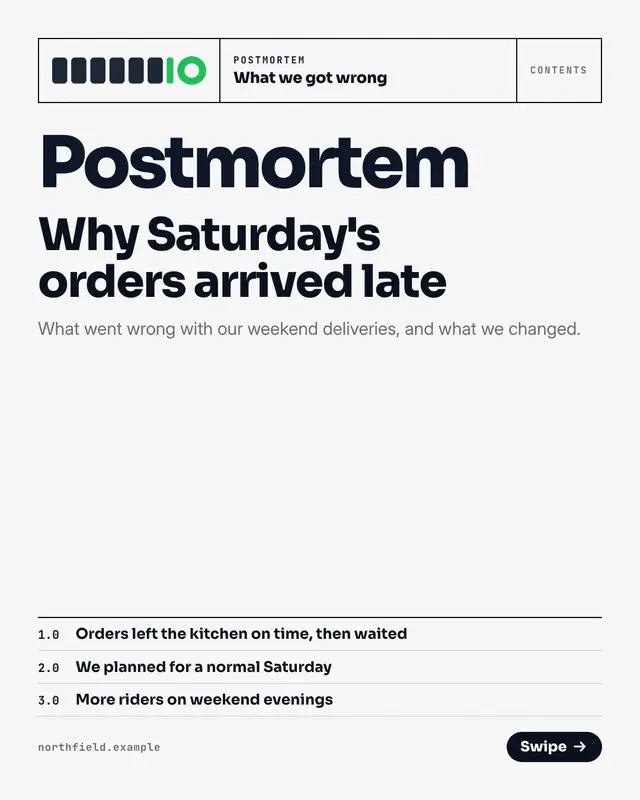
Postmortem
An honest 'postmortem' of what went wrong, set as a plain report: a ruled header on every page, one numbered section per page
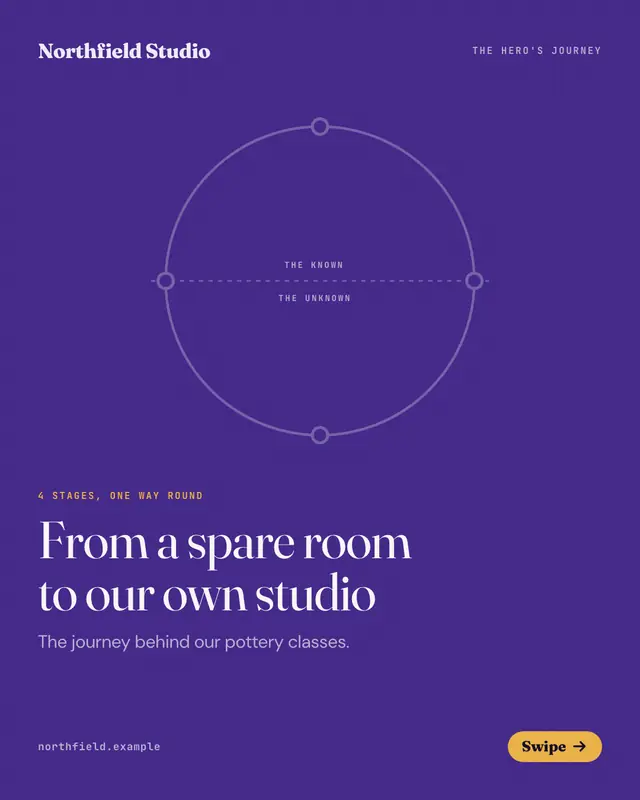
Hero's journey
A 'hero's journey' drawn as the classic ring of stages
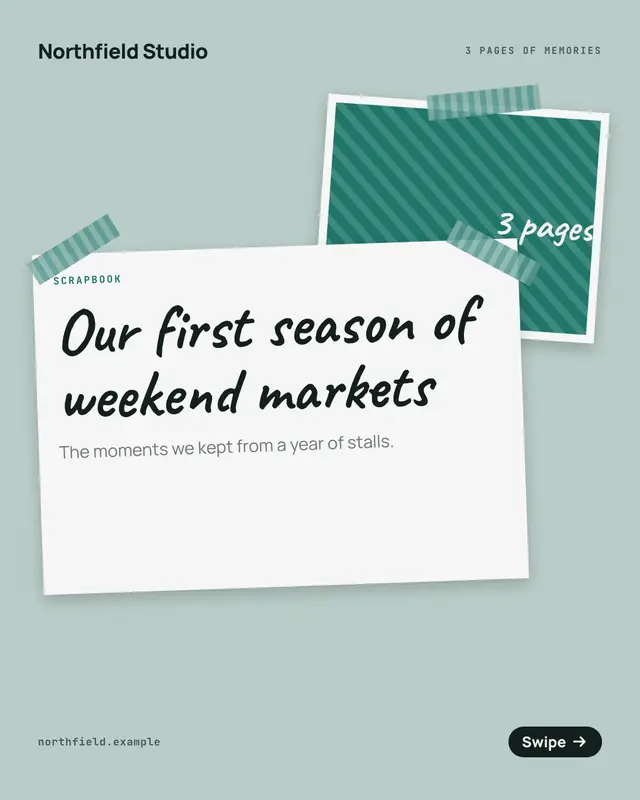
Scrapbook pages
A story kept as 'scrapbook pages' on kraft paper: a numbered pattern swatch mounted in a white border, the moment's heading on a taped card, the story on a torn note and…
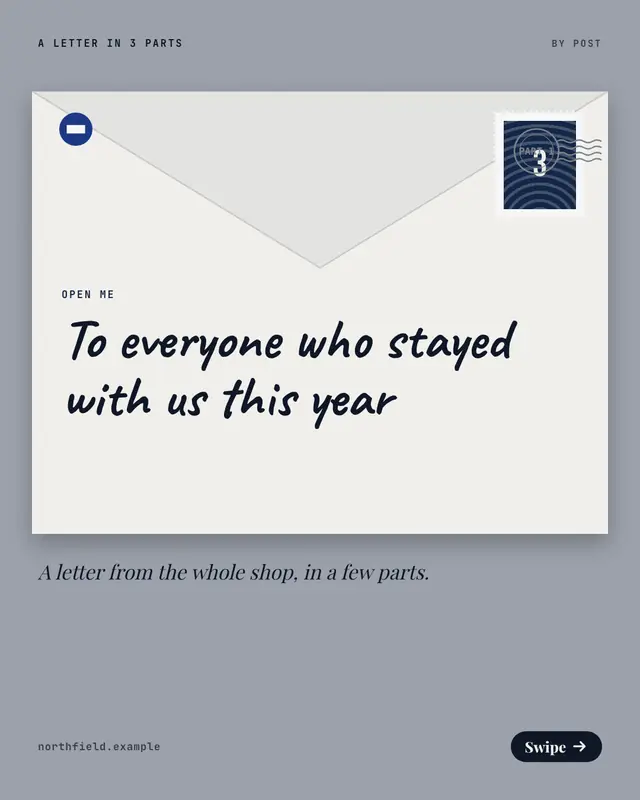
Serial letter
A 'letter in parts': the cover is a stamped envelope with the title written on it, each page one sheet of letterhead marked with its part and continued overleaf, and the…
Storyboard frames
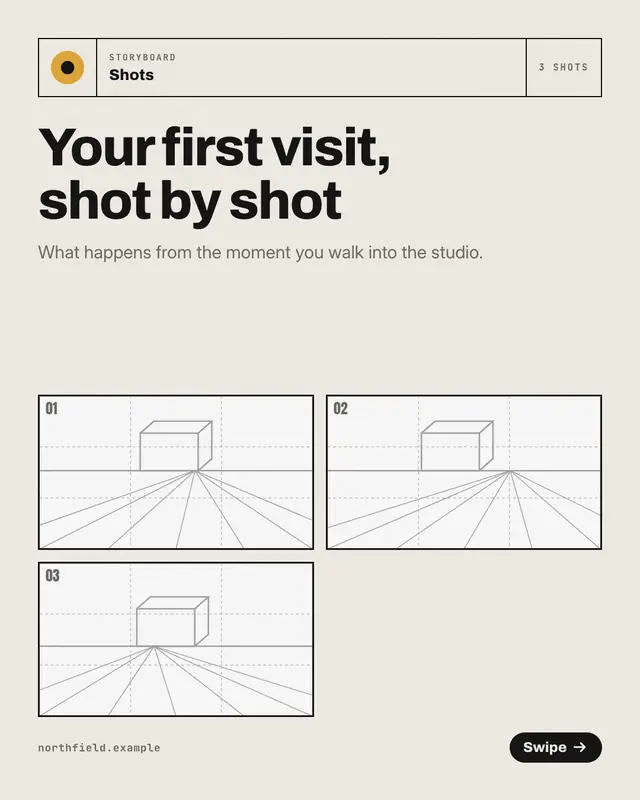
A story planned shot by shot on a production 'storyboard': a title block on every page, one pencil-sketched 16:9 frame with its shot number and camera-move arrow, and…
Make a Film-strip chapters with your brand.
MarketiQ writes the post, picks the template that carries it best — this one, when it fits — and fills it with your logo, colours, facts and copy.