Museum placards
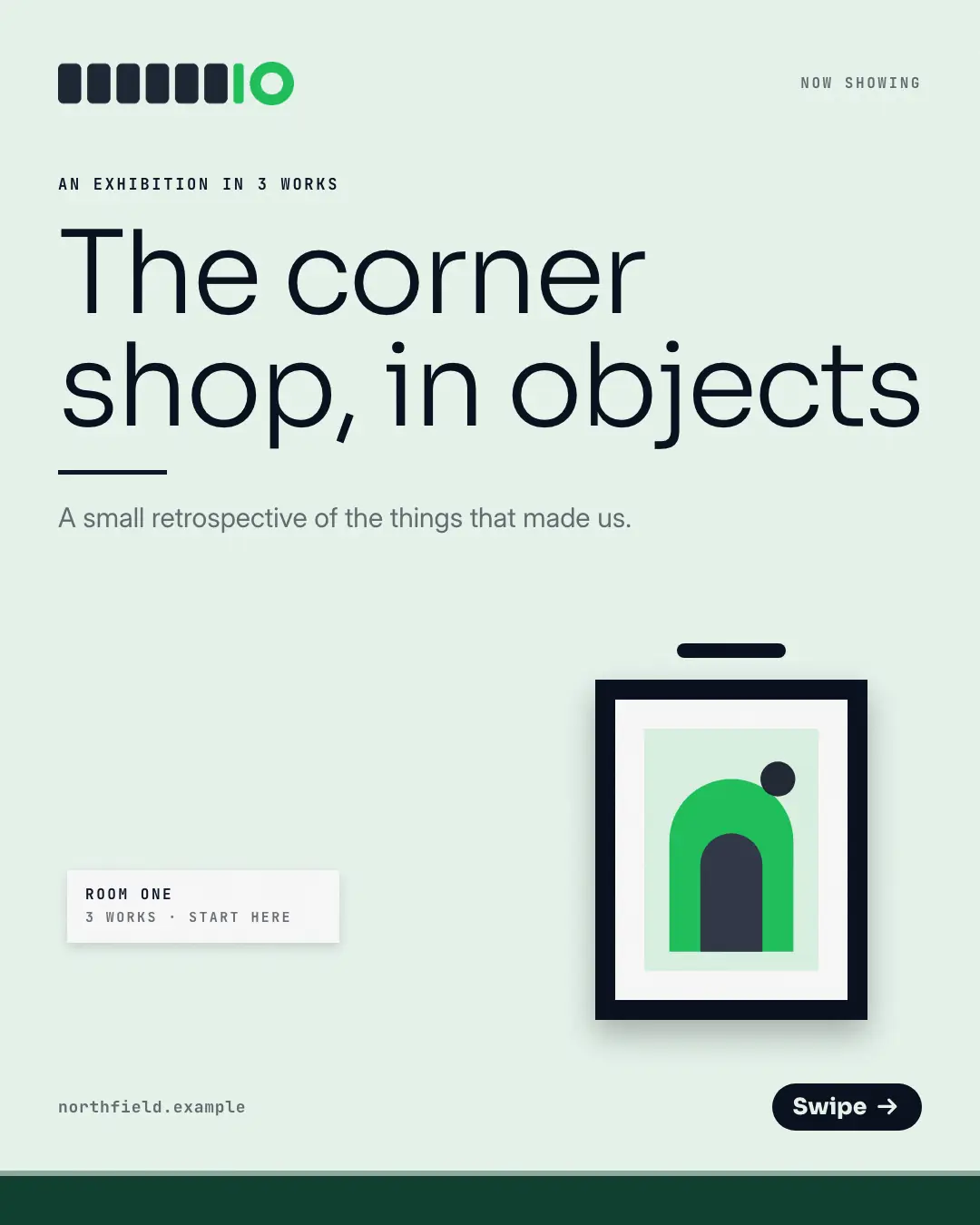
A business's story told 'in objects', hung as a museum show: each page is a gallery wall with one framed abstract work under a picture light and its exhibit placard — number, title, date line and curator's text — and the cover is the entrance wall with the show's title in big wall lettering. For milestones, firsts and objects worth a long look.
When the AI picks it
MarketiQ’s Creative Director favours the Museum placards for posts that prove a point, start a conversation or teach, when the message is real projects or past work, a timeline or a story. It is built first to prove a point.
It reads each post’s goal and shape first, then its own words, the platform and the facts you have, and offers this template only where it fits.
Who it’s for
Any business. Nothing in it assumes what you sell, so the Director can offer it to a software company, a café or a coaching centre alike — whenever the post fits.
Platforms and sizes
| Size | Where |
|---|---|
| 4:51080 × 1350 px | Instagram, Facebook, LinkedIn, Threads |
Carousel of 3–10 slides. Each size is laid out for its canvas, not cropped; the sample above is the 4:5 version.
What it needs
Only your post. It is made from your copy and your brand kit — there is nothing else to prepare.
Rules the AI follows
Word for word from the template library. The Director follows the copy rules when it writes into the template, and the visual review checks every creative against the visual rules.
Copy rules
- Only for a look back at milestones, firsts or objects that tell the business's story — an anniversary, a brand's history, a collection; not for offers or how-tos.
- Exhibit titles, dates and notes come from the copy; never invent dates, makers or provenance.
- The closing line invites the reader in — to visit, see the next piece or add their own.
Visual rules
- A soft gallery wall with a dark skirting floor: on each page a black-framed work with a white mat holding an abstract composition of palette shapes, a picture light and a soft glow above it.
- A white wall placard overlaps the frame's corner with 'Exhibit n / N', the heading, an italic date line and the curator's text under a hairline.
- The cover is the entrance wall — 'An exhibition in N works', the title in large light wall lettering and the intro text; the closing frame reads 'Your work here' beside the placard with the call to action.
More Narrative decks templates
Roller-coaster ride
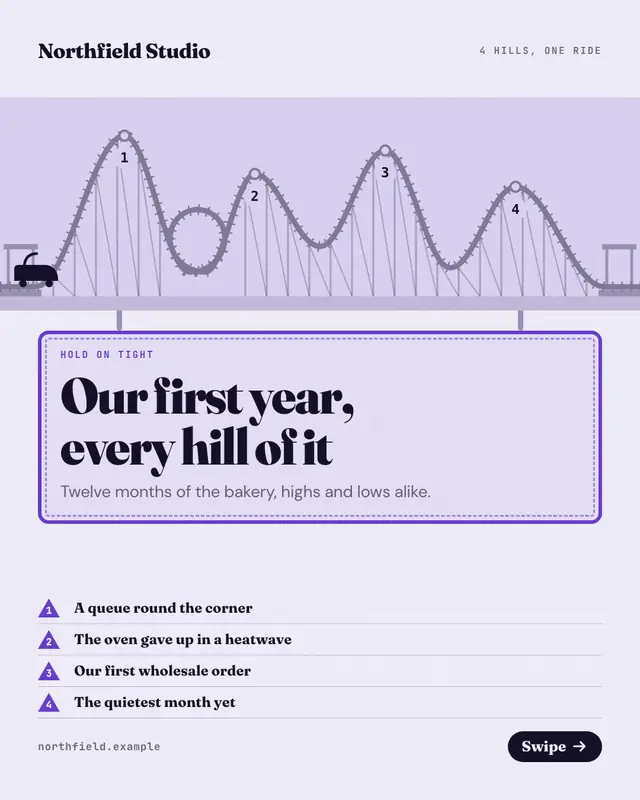
A story with its 'ups and downs', ridden as a 'roller-coaster': one track of hills and a loop on its lattice runs across the top of every page, the car a hill further…
Ticket stubs
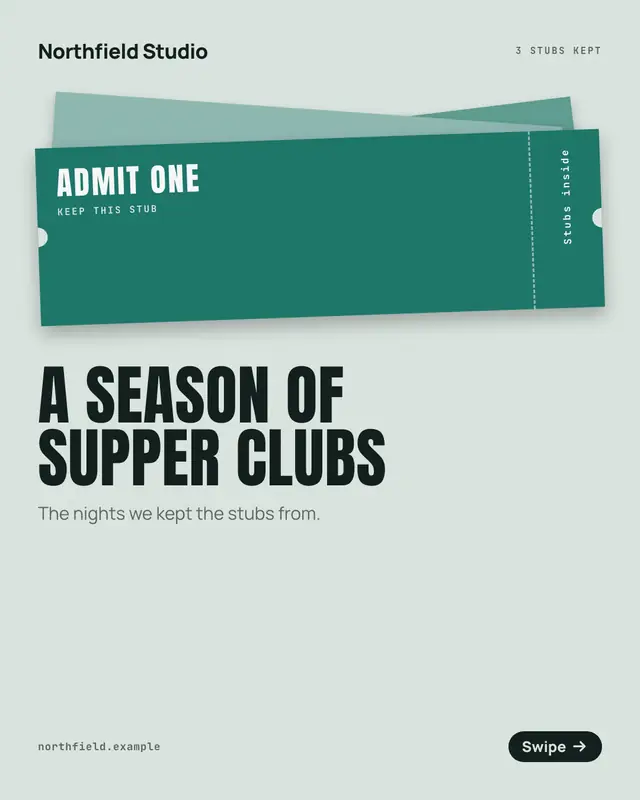
Moments kept as 'ticket stubs': each page is one torn admission stub
Voice memos
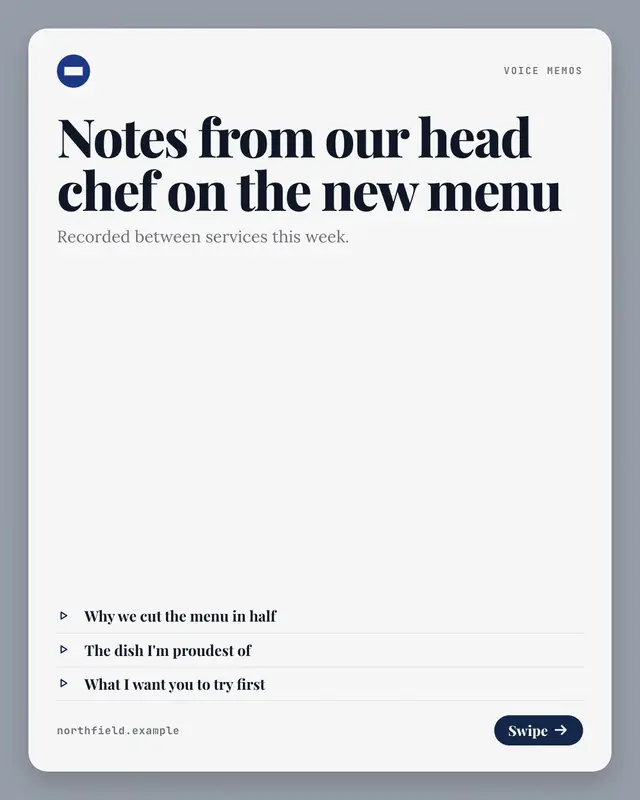
Thoughts told as 'voice memo' recordings: a clean recorder card lists the memos on the cover, then each page plays one
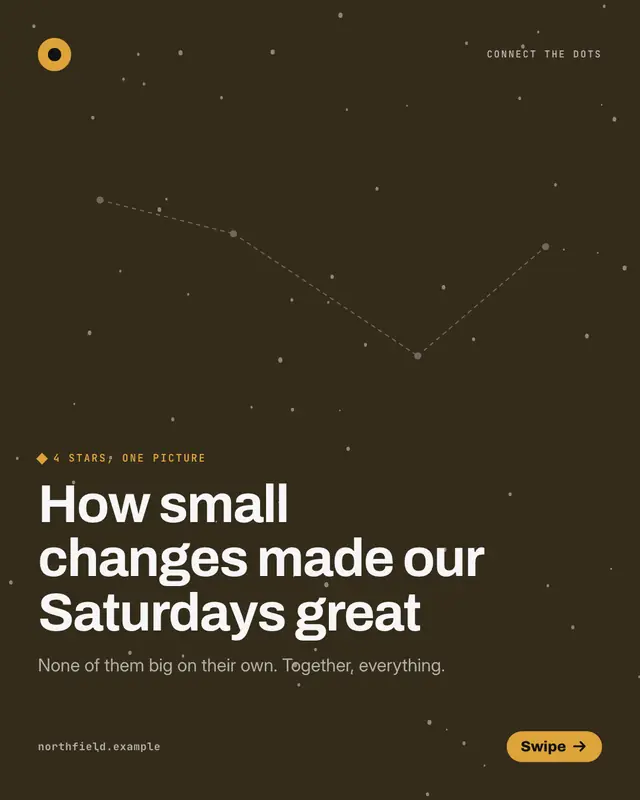
Constellation of moments
Separate moments that turn out to form one picture, a 'constellation of moments': on a night sky each page lights one more star and the line to it, its story underneath…
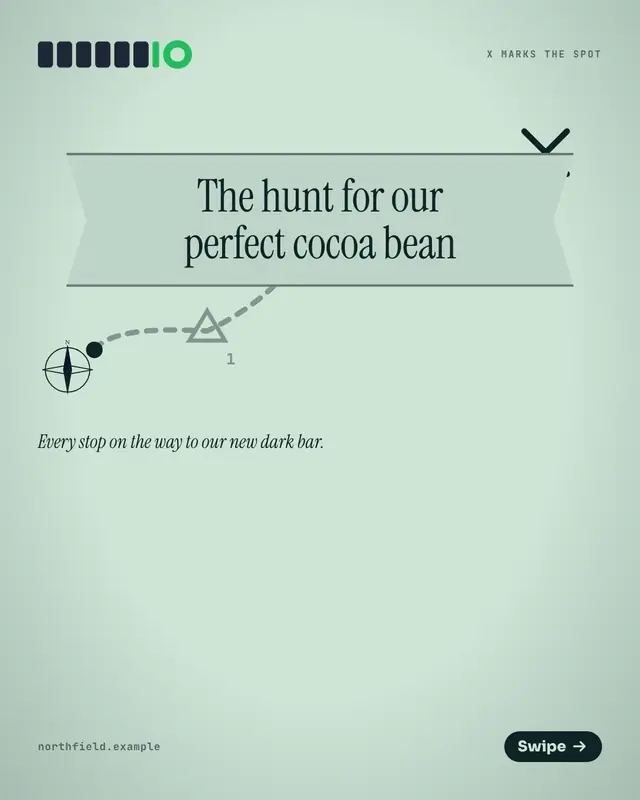
Treasure map
A quest drawn as a 'treasure map': a dotted trail winds across parchment past numbered landmarks, each page flags the next one and tells what was found there in the…
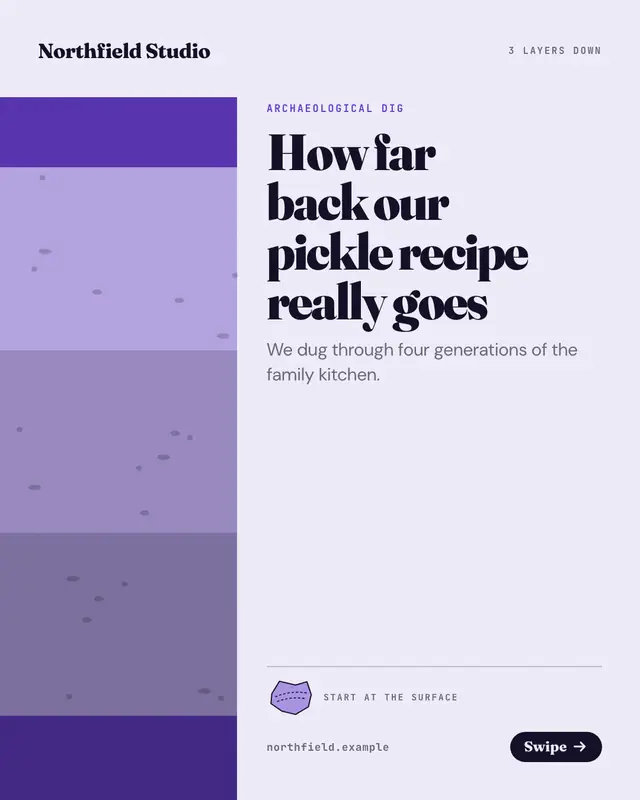
Archaeological dig
A story uncovered layer by layer, as an 'archaeological dig': a cross-section of soil runs down the left of every page
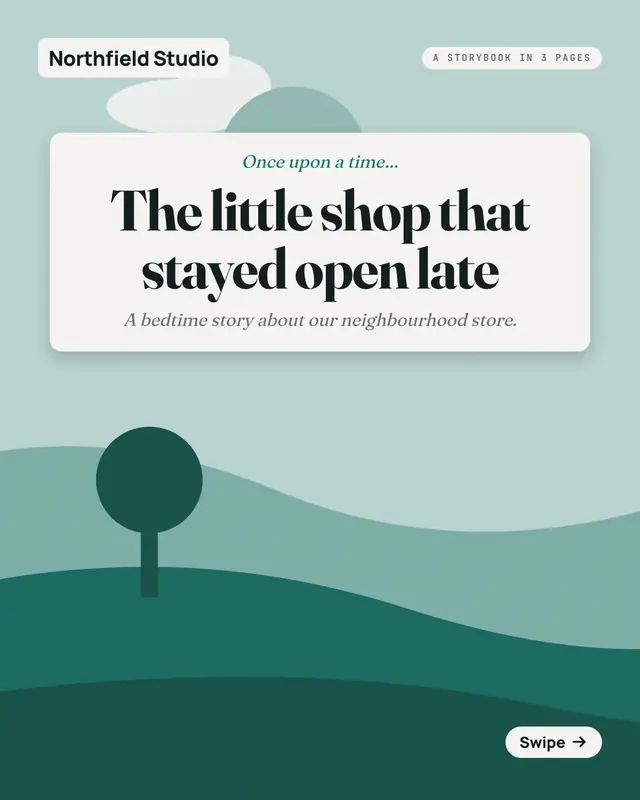
Storybook pages
A brand story told like a 'picture book': the cover is a painted landscape with 'Once upon a time…' on the title plate, then each page pairs a scene
Live blog
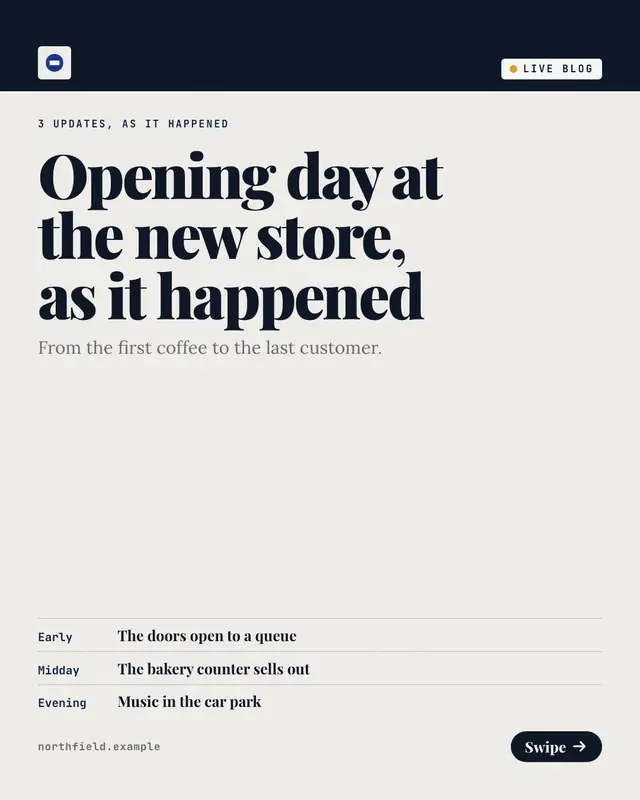
A day told as it happened, as a 'live blog': a dark bar with a 'Live blog' badge, a timeline rail down the page, the previous update fading above and the current one on…
Make a Museum placards with your brand.
MarketiQ writes the post, picks the template that carries it best — this one, when it fits — and fills it with your logo, colours, facts and copy.