Storyboard frames
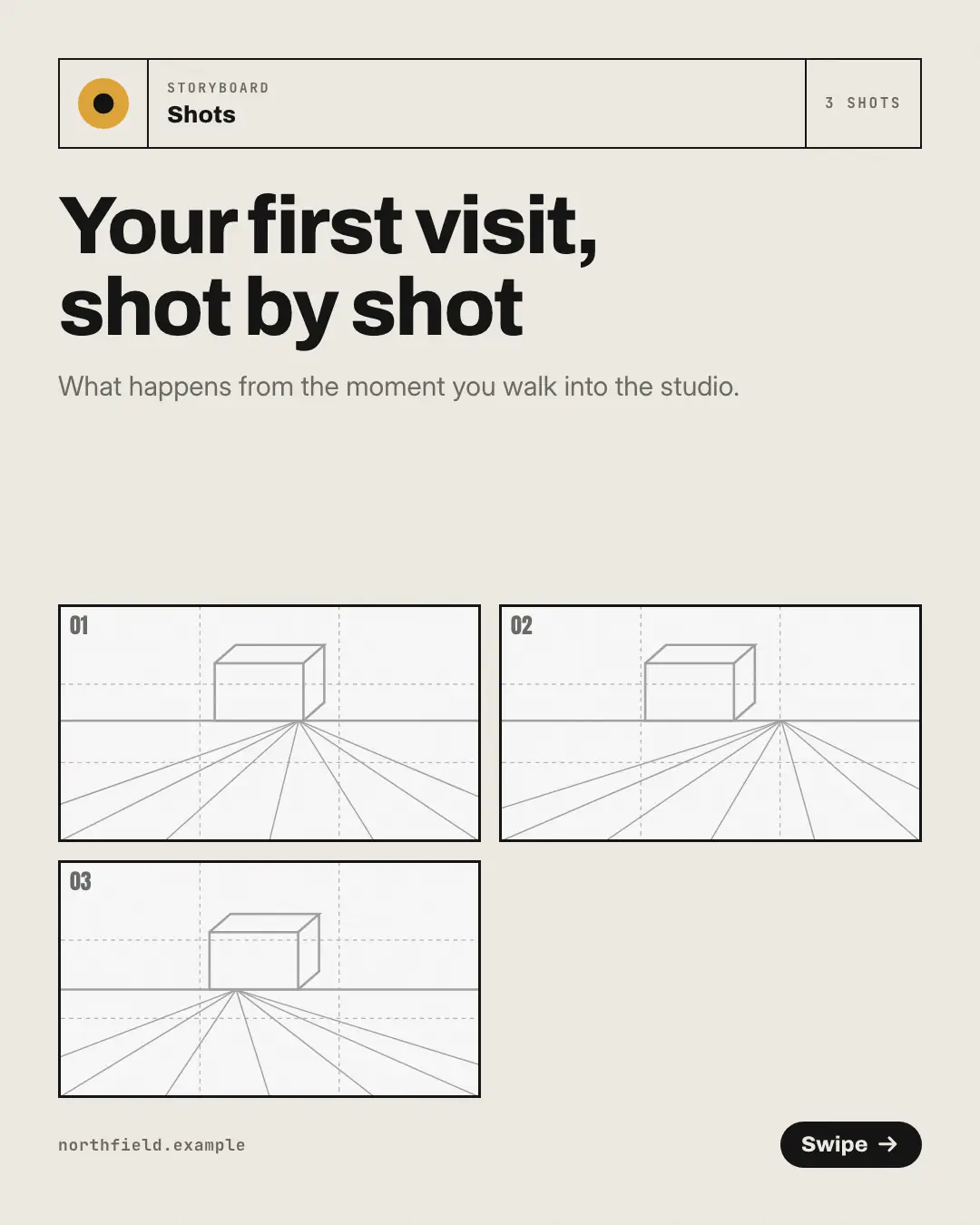
A story planned shot by shot on a production 'storyboard': a title block on every page, one pencil-sketched 16:9 frame with its shot number and camera-move arrow, and the shot's action and notes written underneath — the cover lays out every frame like a board on the wall.
When the AI picks it
MarketiQ’s Creative Director favours the Storyboard frames for posts that teach, start a conversation or get people to act, when the message is steps or a process or a story. It is built first to teach.
It reads each post’s goal and shape first, then its own words, the platform and the facts you have, and offers this template only where it fits.
Who it’s for
Any business. Nothing in it assumes what you sell, so the Director can offer it to a software company, a café or a coaching centre alike — whenever the post fits.
Platforms and sizes
| Size | Where |
|---|---|
| 4:51080 × 1350 px | Instagram, Facebook, LinkedIn, Threads |
Carousel of 3–10 slides. Each size is laid out for its canvas, not cropped; the sample above is the 4:5 version.
What it needs
Only your post. It is made from your copy and your brand kit — there is nothing else to prepare.
Rules the AI follows
Word for word from the template library. The Director follows the copy rules when it writes into the template, and the visual review checks every creative against the visual rules.
Copy rules
- Only for a sequence the reader can picture moment by moment — a visit, an unboxing, a service from arrival to result, how a video or event will play out; not for abstract advice.
- Each row is one visible moment: its heading says what we see, its body what happens; nothing the copy does not say.
- The closing line puts the reader in the scene.
Visual rules
- A storyboard sheet on paper: a bordered title block (logo, 'Storyboard' and the shot, the page counter) over one 16:9 frame with a pencil sketch — thirds, horizon, perspective lines, a box — its shot number in the corner and a brand-colour camera-move arrow.
- Under the frame, an 'Action' field with the handwritten heading and a 'Notes' field with the text.
- The cover grids the shots as small numbered frames under the title; the closing frame reads 'Fade out.' over 'Your scene' and the call to action.
More Narrative decks templates
Detective's clue board
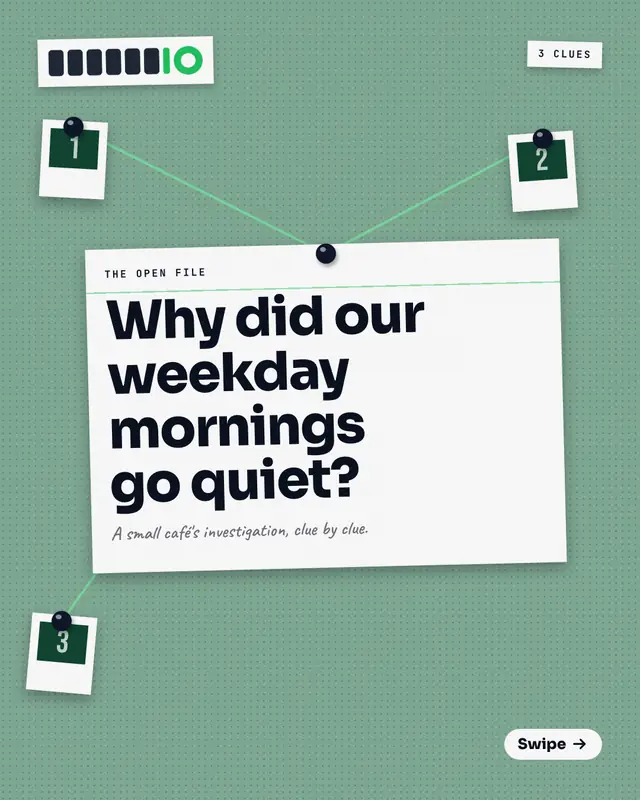
An investigation pinned to a cork 'clue board': each page pins one clue on an index card beside a '?' snapshot, the detail on a sticky note, and a string running from…
Theatre playbill
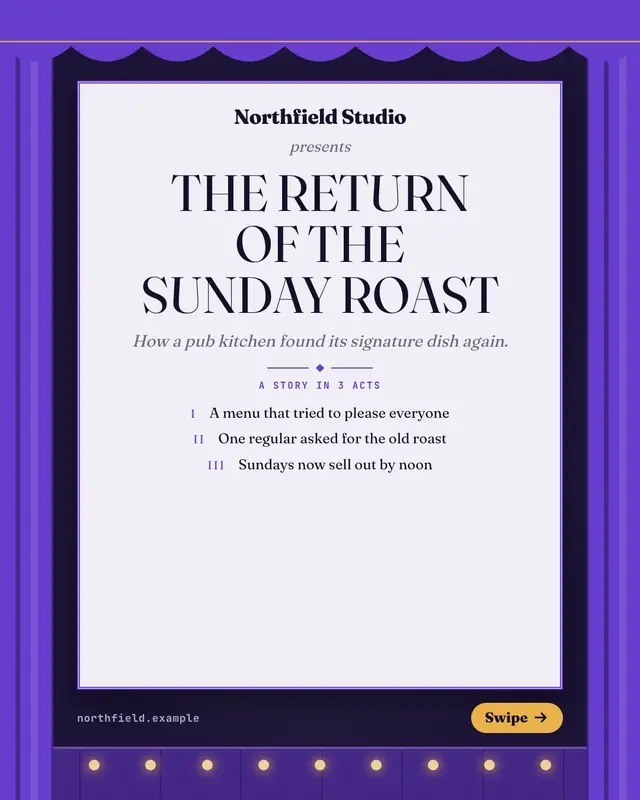
A story staged in acts: the cover is a theatre 'playbill' between velvet curtains
Lab notebook
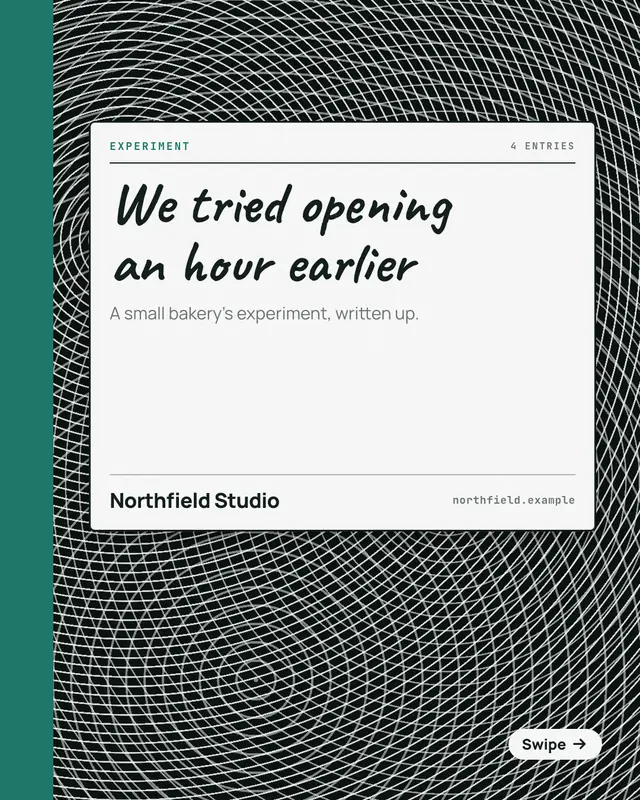
A real experiment written up in a 'lab notebook': a marbled composition-book cover with a label, then graph-paper pages with a red margin and index tabs down the edge
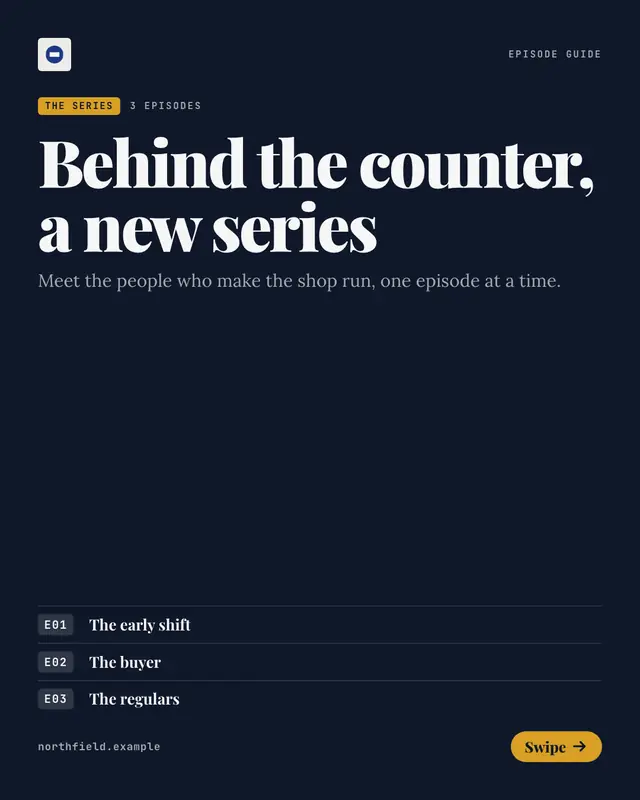
Episode guide
A series laid out as an 'episode guide': the cover lists every episode like a TV listing, then each page is one episode
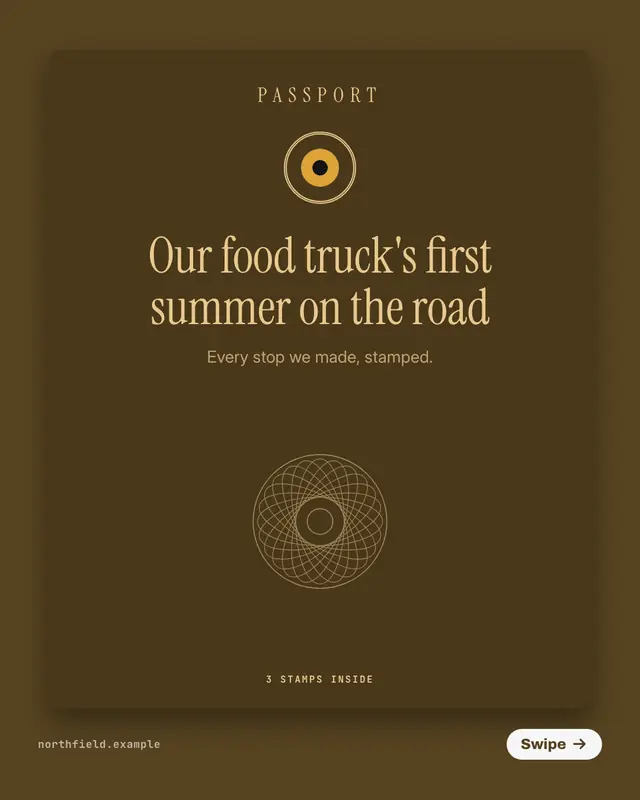
Passport pages
A journey across places or stages kept as 'passport stamps': the cover is a deep passport cover with the logo in a foil crest, then each page is a guilloche-printed visa…
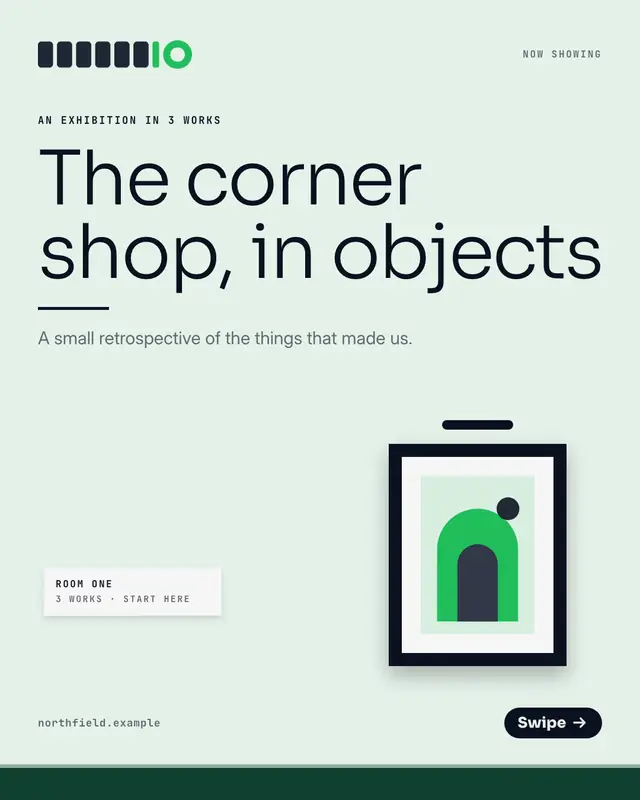
Museum placards
A business's story told 'in objects', hung as a museum show: each page is a gallery wall with one framed abstract work under a picture light and its exhibit placard
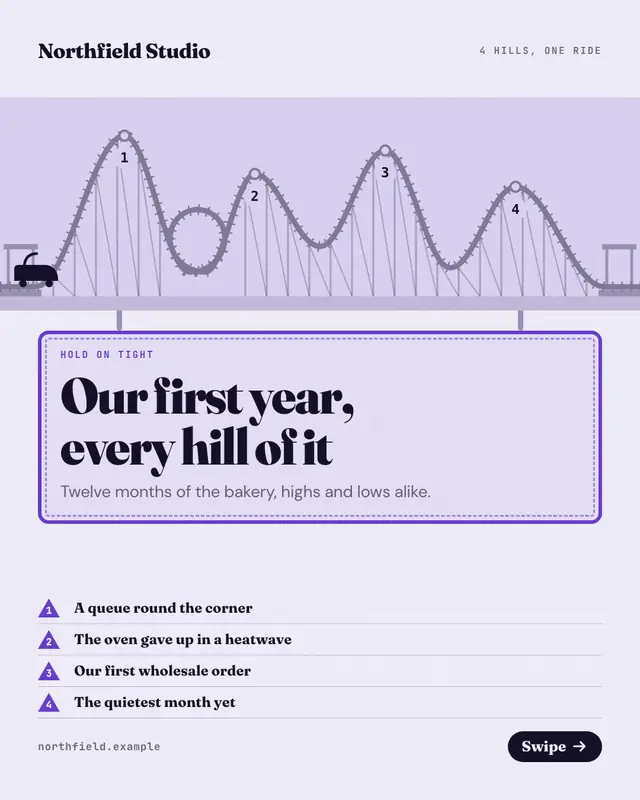
Roller-coaster ride
A story with its 'ups and downs', ridden as a 'roller-coaster': one track of hills and a loop on its lattice runs across the top of every page, the car a hill further…
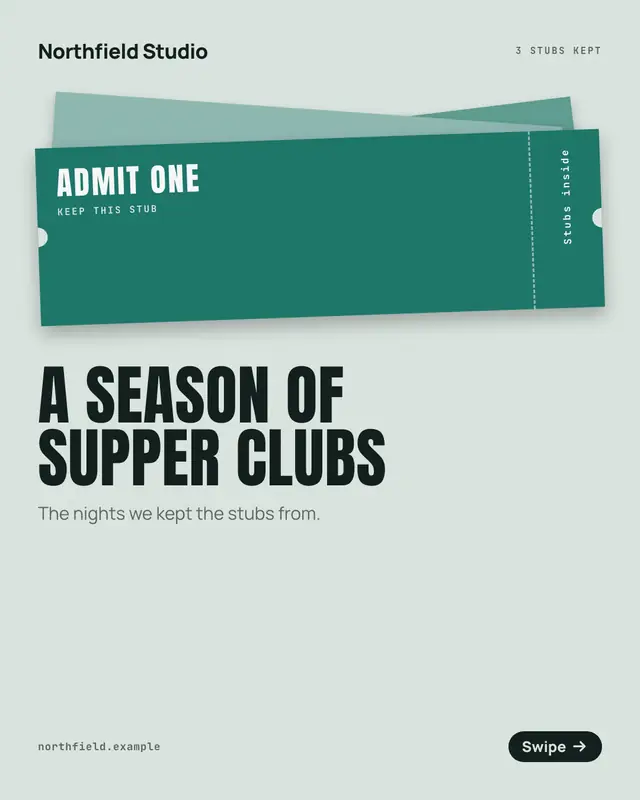
Ticket stubs
Moments kept as 'ticket stubs': each page is one torn admission stub
Make a Storyboard frames with your brand.
MarketiQ writes the post, picks the template that carries it best — this one, when it fits — and fills it with your logo, colours, facts and copy.