Postmortem
An honest 'postmortem' of what went wrong, set as a plain report: a ruled header on every page, one numbered section per page — what happened, why, what we got wrong, what we changed — each with its finding tag and a marked heading, and a contents list on the cover. Owning a failure in the format that earns trust.
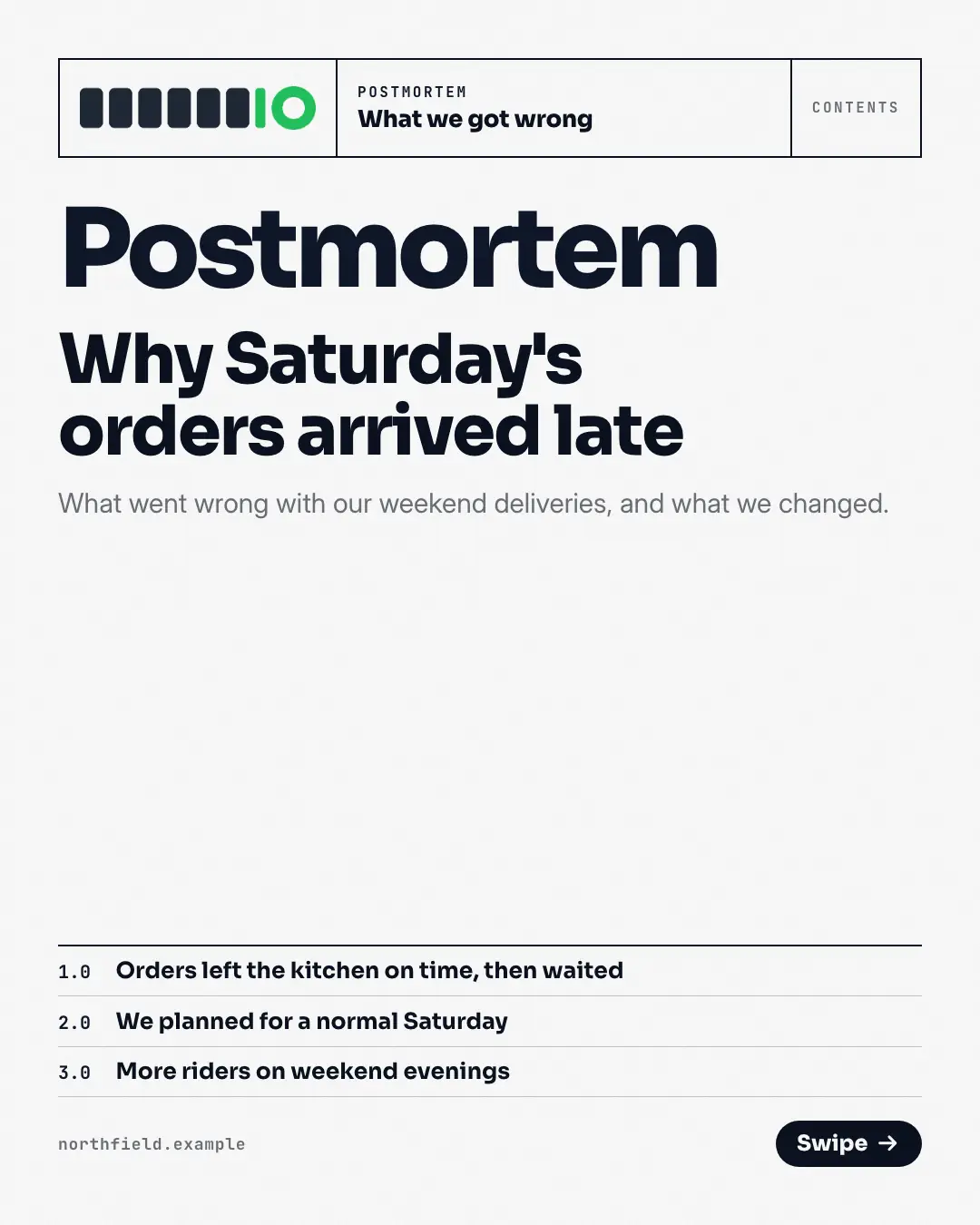
When the AI picks it
MarketiQ’s Creative Director favours the Postmortem for posts that prove a point or teach, when the message is a story, a contrast (this, not that) or a list. It is built first to prove a point.
It reads each post’s goal and shape first, then its own words, the platform and the facts you have, and offers this template only where it fits.
Who it’s for
Made for Not for: Healthcare. The Director offers it only to brands of that kind, so it never turns up for a business it does not suit.
Never offered to: Healthcare.
Platforms and sizes
| Size | Where |
|---|---|
| 4:51080 × 1350 px | Instagram, Facebook, LinkedIn, Threads |
Carousel of 3–10 slides. Each size is laid out for its canvas, not cropped; the sample above is the 4:5 version.
What it needs
Only your post. It is made from your copy and your brand kit — there is nothing else to prepare.
Rules the AI follows
Word for word from the template library. The Director follows the copy rules when it writes into the template, and the visual review checks every creative against the visual rules.
Copy rules
- Only for an honest account of something that went wrong and what the business changed — an outage, a late delivery, a launch that missed — where the copy itself owns the failure; never for a success story, a case study, a customer's thank-you or a sales pitch (a post that owns no failure is refused).
- Own it plainly: no blame on customers or named people, no invented causes, dates, numbers or fixes — only what the copy states.
- The closing line says what changes now or how the reader is looked after.
Visual rules
- A plain report on paper: a bordered header row on every page (logo, 'Postmortem — What we got wrong', the page counter), then a big section number in the brand colour beside a ruled column.
- Each section carries a boxed finding tag, a heading marked by a thick brand bar on its left, and the text below; the website closes the column.
- The cover sets 'Postmortem' huge over the title and a numbered contents list; the closing section is 'Next steps' with the call to action.
More Narrative decks templates
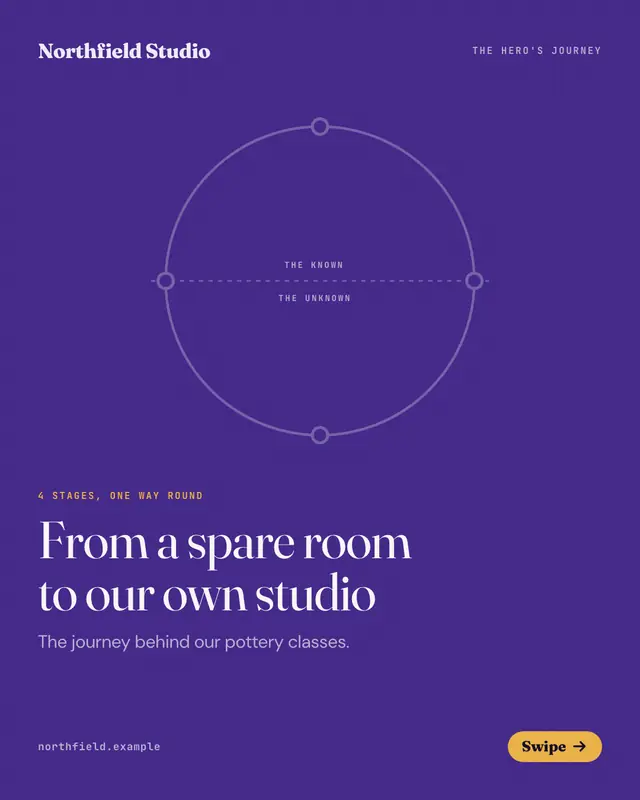
Hero's journey
A 'hero's journey' drawn as the classic ring of stages
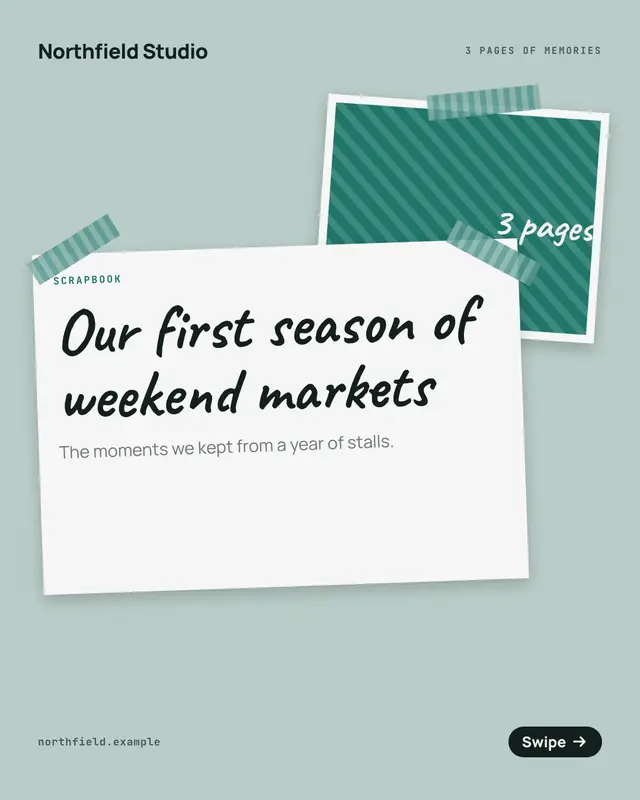
Scrapbook pages
A story kept as 'scrapbook pages' on kraft paper: a numbered pattern swatch mounted in a white border, the moment's heading on a taped card, the story on a torn note and…
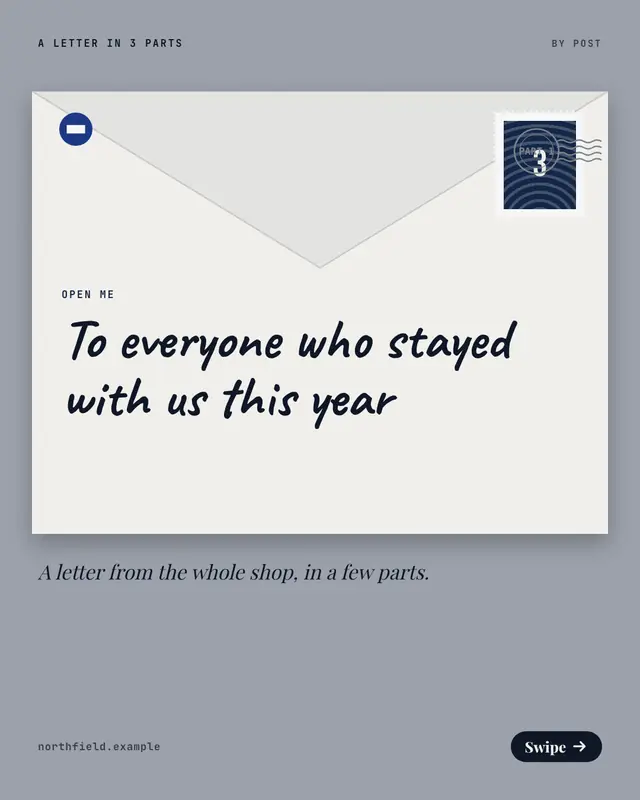
Serial letter
A 'letter in parts': the cover is a stamped envelope with the title written on it, each page one sheet of letterhead marked with its part and continued overleaf, and the…
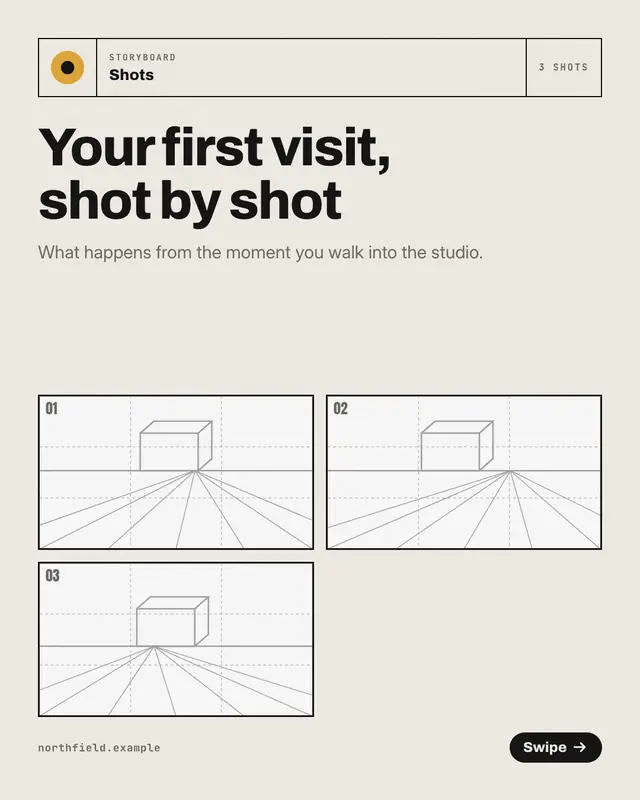
Storyboard frames
A story planned shot by shot on a production 'storyboard': a title block on every page, one pencil-sketched 16:9 frame with its shot number and camera-move arrow, and…
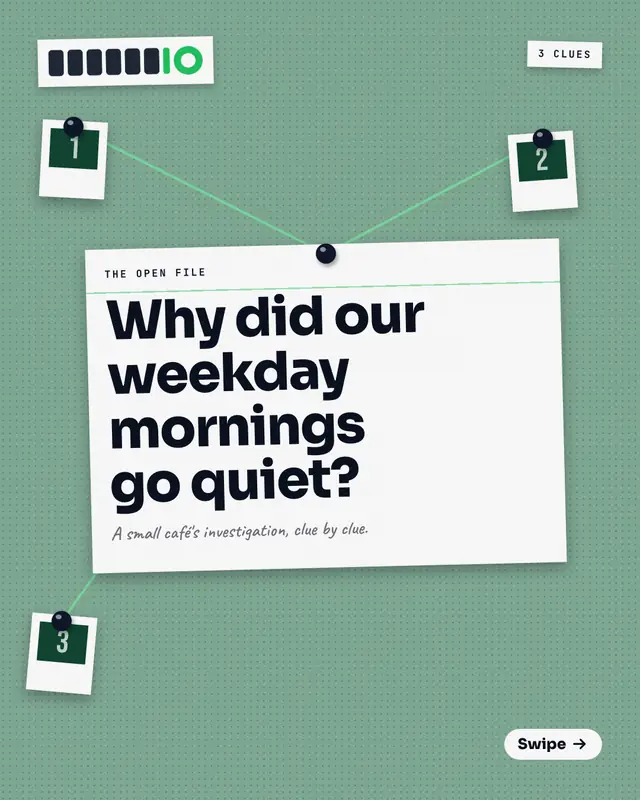
Detective's clue board
An investigation pinned to a cork 'clue board': each page pins one clue on an index card beside a '?' snapshot, the detail on a sticky note, and a string running from…
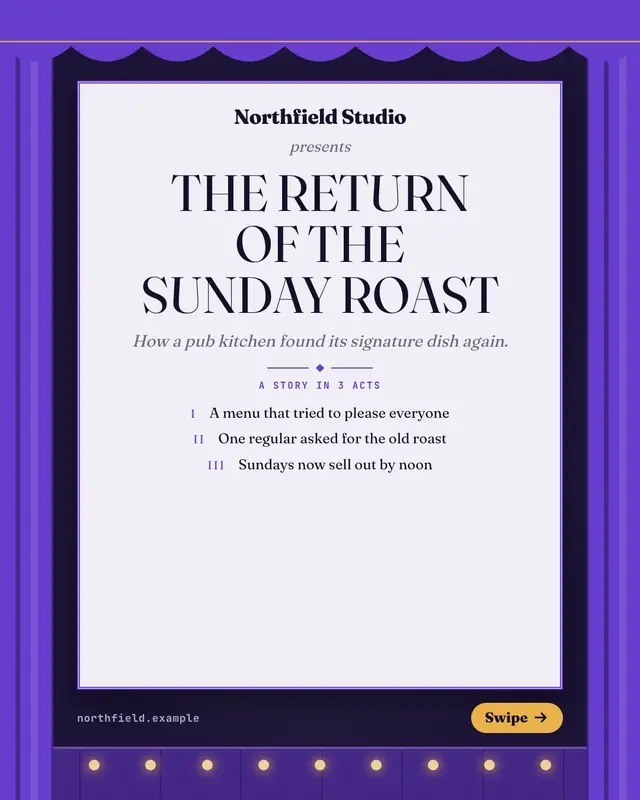
Theatre playbill
A story staged in acts: the cover is a theatre 'playbill' between velvet curtains
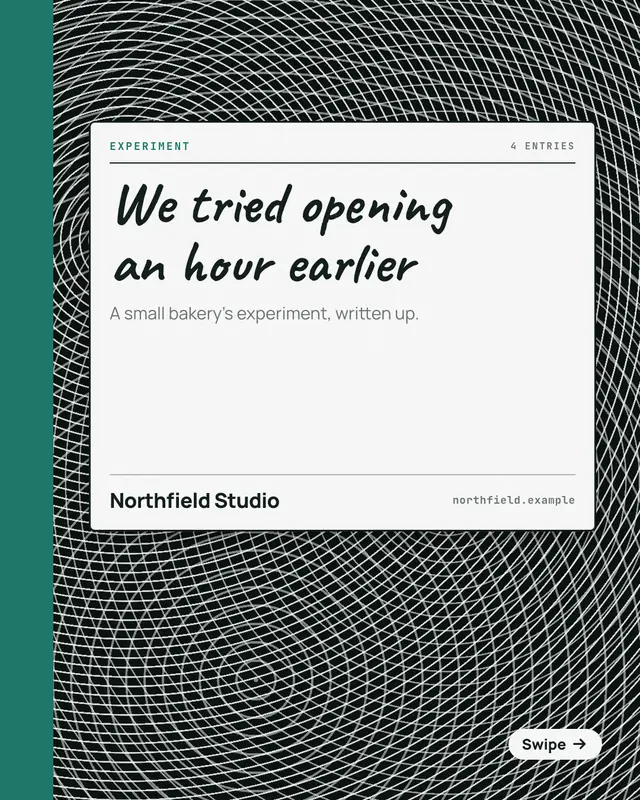
Lab notebook
A real experiment written up in a 'lab notebook': a marbled composition-book cover with a label, then graph-paper pages with a red margin and index tabs down the edge
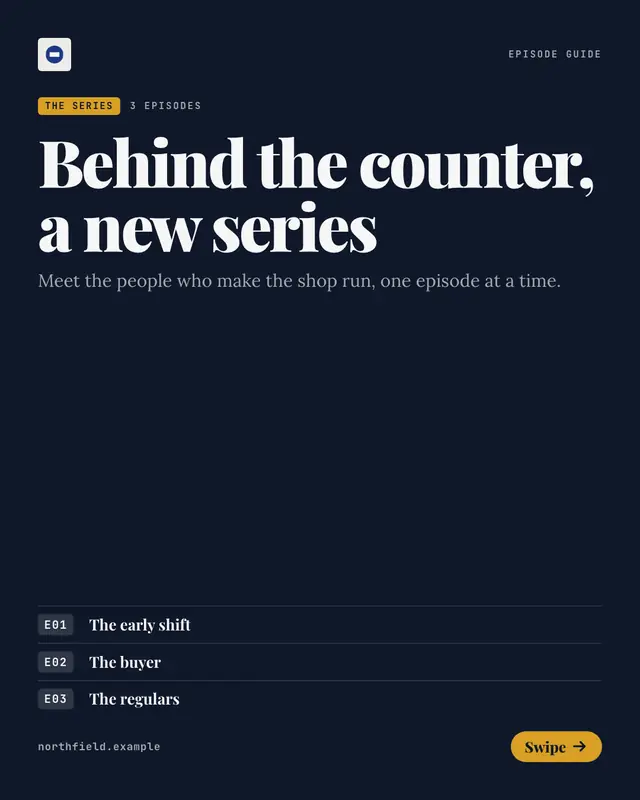
Episode guide
A series laid out as an 'episode guide': the cover lists every episode like a TV listing, then each page is one episode
Make a Postmortem with your brand.
MarketiQ writes the post, picks the template that carries it best — this one, when it fits — and fills it with your logo, colours, facts and copy.