AI GTM Platform Selection Guide
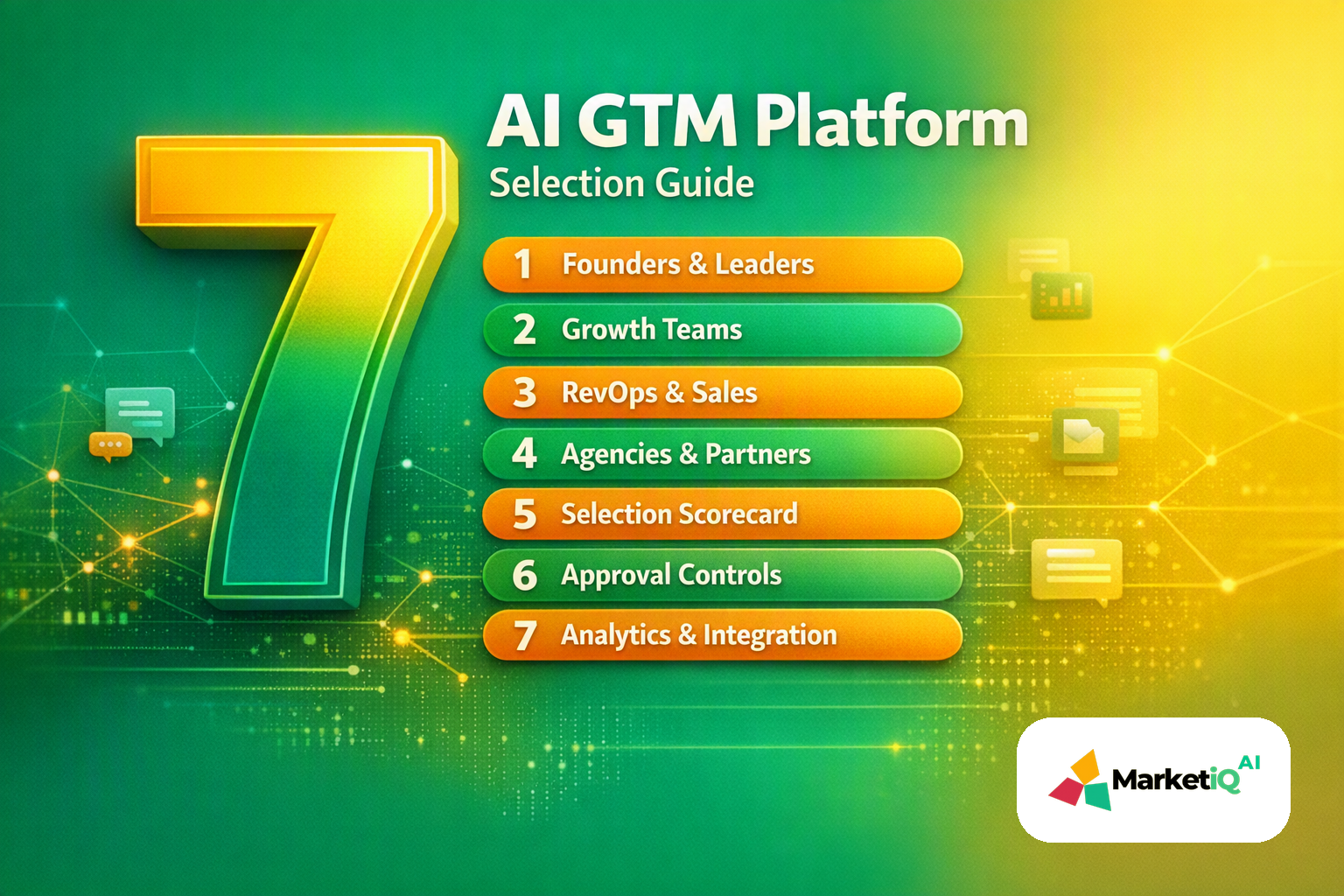
AI GTM Platform: Features, Use Cases and Selection Guide
A useful AI GTM platform should help a lean team move from market evidence to approved execution, then feed performance data back into the next decision. The longest feature list won't fix a fragmented workflow. The right platform closes the gaps between research, strategy, content, publishing, measurement and optimization while keeping humans responsible for decisions, permissions and budgets.
1. What Is an AI GTM Platform?
An AI GTM platform is an operating layer for go-to-market work. It coordinates specialized AI capabilities across the workflow instead of producing one isolated asset at a time.
For a B2B SaaS team, that workflow can include:
- Research: Gather market, audience and channel evidence before making campaign decisions.
- Strategy: Turn evidence into ICP definitions, positioning, messaging and channel plans.
- Creation: Produce approved content and campaign materials using shared brand context.
- Publishing: Schedule and distribute work across the required marketing channels.
- Optimization: Review performance and experiments, then use those findings in future planning.
MarketiQ AI is designed around this operating model. It is an autonomous go-to-market operating system powered by 45 AI agents and 26 optimization loops. Autonomy is bounded: data sources, permissions, brand rules and approval gates determine what the system can do without intervention.
That distinction matters. A platform that generates copy but leaves your team to coordinate briefs, approvals, publishing and reporting hasn't solved the operating problem.
2. What Can an AI GTM Platform Help With?
The strongest use cases are the ones that remove repeated coordination without handing over decisions that require context or accountability.
- Market and customer research: Build evidence around audiences, competitors, pain points and buying signals so planning starts with a documented point of view.
- ICP and positioning work: Organize research into practical segments, positioning choices and messages that a campaign can use.
- Campaign planning: Connect an objective to audiences, channels, content requirements, owners and approval steps.
- Content production: Create posts, emails, landing-page copy, campaign assets and related materials from a shared brand context rather than repeated prompts.
- Cross-channel distribution: Move approved work into publishing workflows and make status visible to the people accountable for shipping it.
- Measurement and experimentation: Track agreed leading indicators, compare tests and identify what should change in the next cycle.
- Pipeline operations: Give marketing, growth, sales and leadership a clearer connection between campaign activity, engagement and qualified pipeline signals.
These use cases are especially relevant when a 2 to 10-person marketing team is managing an 8 to 15-tool stack. The first opportunity may not be replacing every system. It may be reducing the manual handoffs between them.
3. Core Features to Look For
Use this six-part scorecard before comparing vendors. Score each category from 1 to 5, and require evidence for every score.
- Evidence: Can the platform show where research came from, distinguish observed information from assumptions, and preserve the reasoning behind a recommendation?
- Governance: Can administrators define brand rules, data access, permissions and operating boundaries? Look for configurable guardrails, not vague promises of safe automation.
- Approval controls: Can humans review strategy, content, spend-sensitive actions and publishing before execution? Approval gates should pause work transparently instead of creating hidden queues.
- Delivery receipts: After an approved action runs, can the team verify its status, provider response and reconciliation? A calendar marked “published” is insufficient if the destination system rejected the request.
- Analytics: Does performance data return to the operating context? Check whether the platform supports campaign measurement, experiment review and learning across cycles, not only isolated dashboards.
- Integration fit: Can it work with your current data sources, channels and workflows? Review authentication, permissions, export options, APIs, security documentation and the operational effort required to maintain each connection.
A high score in content generation cannot compensate for a zero in approval controls or delivery verification. For a lean team, operational reliability is part of the product.
4. AI GTM Platform Use Cases by Team
Founders and CEOs
Founders need visibility without becoming the approval queue for every asset. An AI GTM platform can centralize the research behind a campaign, show the decisions that require founder judgment and keep routine production moving inside defined boundaries.
The practical starting point is one bounded workflow, such as a campaign from research through approved content and reporting. Define the objective, approval owner, data sources and success indicators before activation.
Growth and demand generation teams
Growth teams usually feel the cost of slow handoffs first. They need to test messages, audiences and channels without writing every brief, formatting every asset or consolidating every result manually.
The platform should help them move faster while preserving a review step for claims, targeting, spend and publishing. Faster output is useful only when the team can inspect what ran and learn from it.
RevOps and marketing operations
RevOps leaders should evaluate the platform as workflow infrastructure. The key questions are whether permissions are clear, data can be reconciled, provider responses are visible and attribution inputs remain auditable.
An AI GTM platform should reduce coordination overhead without creating another opaque system between marketing activity and revenue reporting.
Agencies
Agencies managing multiple B2B SaaS clients need repeatable execution with separate brand contexts, approval paths and reporting. They should assess workspace separation, client visibility, white-label requirements and the ability to keep each account's instructions and permissions distinct.
Agency throughput improves when specialists spend less time copying campaign information between tools, but client approval should remain explicit.
5. How to Choose and Implement the Right AI GTM Platform
Selection and implementation should be treated as one decision. A platform can have strong capabilities and still fail if the first workflow is too broad.
- Choose one expensive coordination problem. Map the current path from research to execution. Record tools, owners, approval delays, repeated formatting and reporting steps.
- Set a baseline before activation. Measure time-to-first-campaign, approval latency, production throughput and the leading indicators tied to the campaign objective.
- Configure the operating boundary. Connect only the required data sources, define permissions, establish brand rules and identify every approval-gated action.
- Run a bounded pilot. Start with one campaign or workflow. Review evidence at an agreed midpoint and at the end, rather than waiting for a broad rollout to reveal control problems.
- Inspect delivery and learning. Confirm that approved work was accepted by destination providers, then document what the performance data changes in the next plan.
- Expand from evidence. Add channels, agents or workflows only when the initial process is reliable and the team understands its decision rights.
This approach protects budget judgment and makes the business case more credible. The goal is not an impressive demo. It is a repeatable operating loop that the team can explain, approve and improve.
6. Frequently Asked Questions About AI GTM Platforms
Can an AI GTM platform replace a marketing team?
No. It can provide additional execution capacity, but people still define goals, approve important decisions, manage permissions and judge whether evidence is sufficient. The value is coordinated throughput, not the removal of accountability.
Is an AI GTM platform the same as an AI content generator?
No. Content generation is one stage. An AI GTM platform connects research, planning, production, publishing, measurement and optimization in a shared workflow.
How should a small B2B SaaS team start?
Start with one bounded workflow and one accountable owner. Define the campaign objective, baseline metrics, approval gates and required integrations before expanding scope.
What should a security review cover?
Review data sources, permissions, authentication, retention, integrations, auditability, publishing controls and how the platform handles approval-gated actions. Ask for current product and security documentation rather than relying on broad automation claims.
What is the best next step after comparing platforms?
Review the product and security evidence, then test one defined workflow against your baseline. MarketiQ AI is free to start, so teams can evaluate the operating model before committing to a wider rollout.
- #AI
- #GTM
- #Platform
This article describes practices and observations; it is not a promise of rankings, deliverability or revenue. Verify cited sources and their dates before making decisions.
Related reading
- 1Best Autonomous GTM OS for Lean B2B StartupsLinked from this article
- 2Jasper and Copy.ai Alternatives Beyond ContentLinked from this article
- 3The Operating Loop Decision for Lean B2B SaaS TeamsLinked from this article