Swiss cheese model
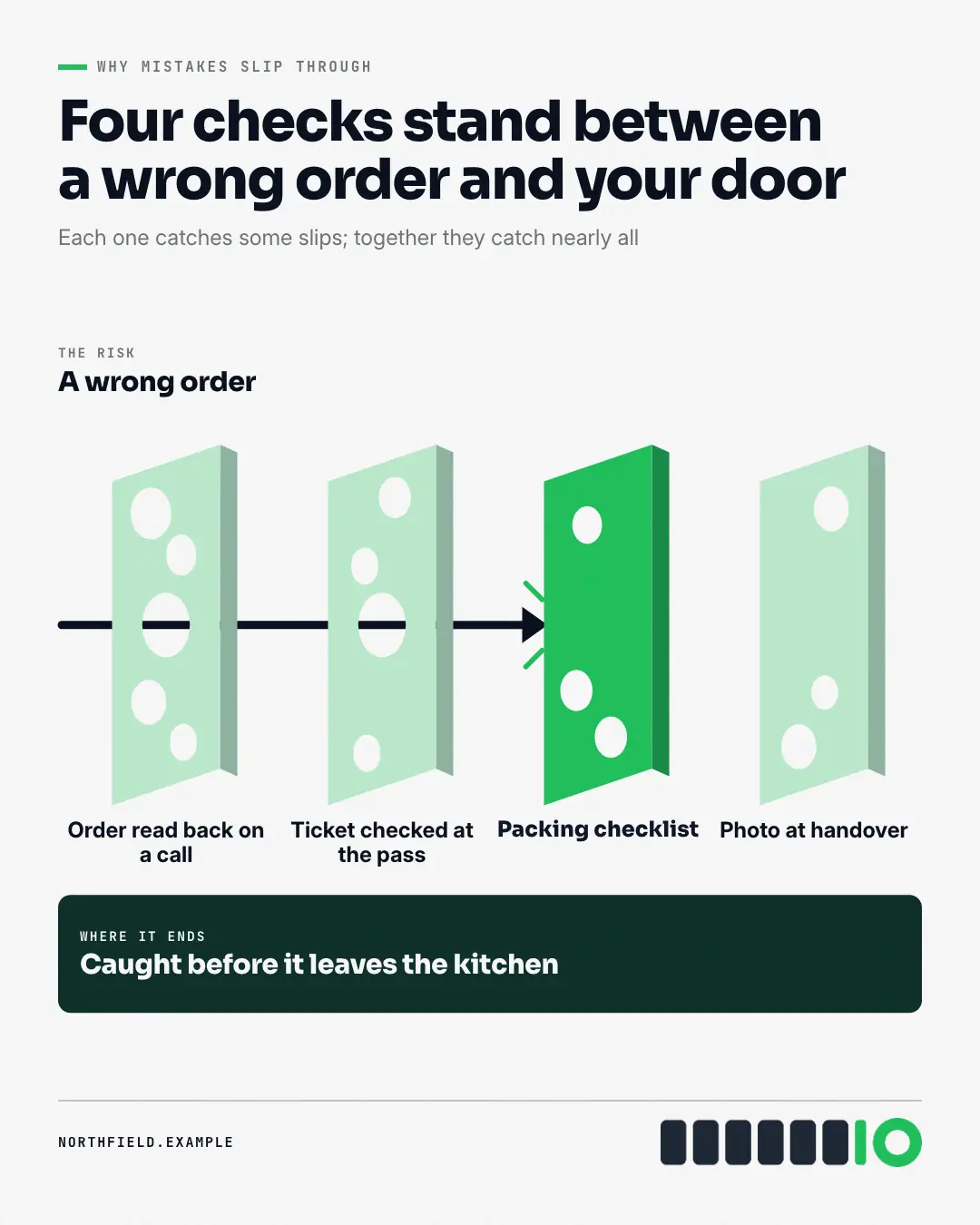
A Swiss cheese model: three to five slices of defence side by side, each named and full of holes, and one arrow — the risk — threading the holes that line up until a slice stops it or it gets through — why one check is never enough.
When the AI picks it
MarketiQ’s Creative Director favours the Swiss cheese model for posts that teach or prove a point, when the message is steps or a process, a list or one sharp insight. It is built first to teach.
It reads each post’s goal and shape first, then its own words, the platform and the facts you have, and offers this template only where it fits.
Who it’s for
Any business. Nothing in it assumes what you sell, so the Director can offer it to a software company, a café or a coaching centre alike — whenever the post fits.
Platforms and sizes
| Size | Where |
|---|---|
| 4:51080 × 1350 px | Instagram, Facebook, LinkedIn, Threads, Reddit |
| 1:11080 × 1080 px | Ads |
| 9:161080 × 1920 px | TikTok |
| 2:31000 × 1500 px | |
| 16:91600 × 900 px | X, YouTube |
| 1.91:11200 × 628 px | Newsletter, Blog |
Single image. Each size is laid out for its canvas, not cropped; the sample above is the 4:5 version.
What it needs
Only your post. It is made from your copy and your brand kit — there is nothing else to prepare.
Rules the AI follows
Word for word from the template library. The Director follows the copy rules when it writes into the template, and the visual review checks every creative against the visual rules.
Copy rules
- Every label is the post's own words — no invented numbers, scores or percentages.
- Each layer is a real check or defence the post names, in the order the risk meets it.
- The outcome says where the risk ends — caught at a named layer, or getting through when the holes line up.
Visual rules
- Three to five slabs in a pale brand tint with darker edges, each full of see-through holes, set side by side (stacked down the page on tall canvases); one ink arrow threads the aligned holes.
- The arrow stops on the brand-coloured slab that catches it, or passes every slab into a dark box with the outcome; each slab is named beside it, the risk labelled where the arrow starts.
More Business diagrams templates
Adoption curve
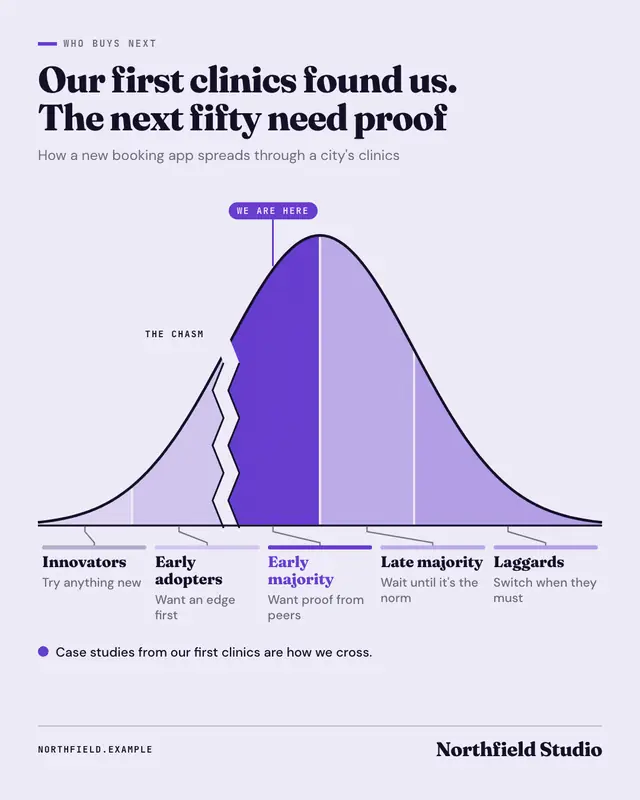
An adoption curve: a bell split into three to five groups in the order they take up something new, from the first to try it to the last, with a crack where the market…
Keystone arch
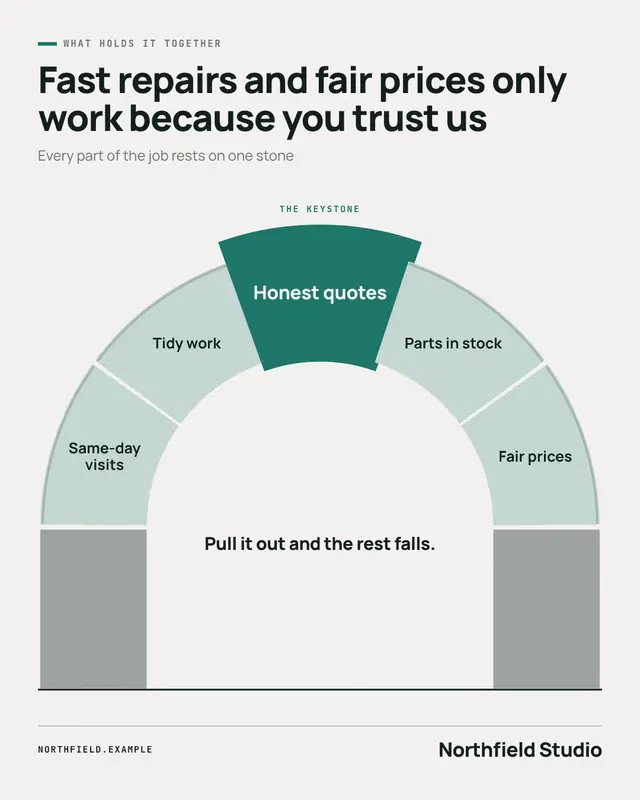
A keystone arch: a stone arch on two piers, two to six of its stones named for the things the business stands on and the 'keystone' at the top in brand colour
Kano model
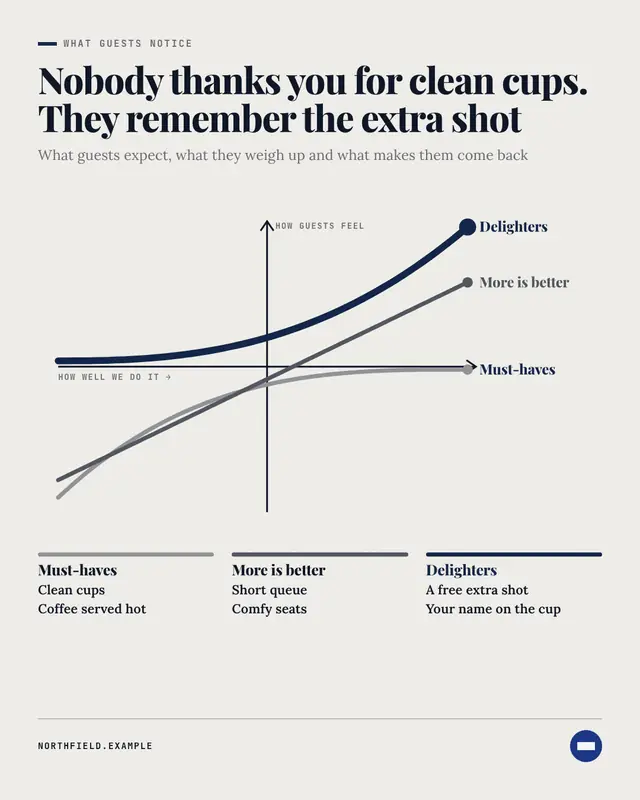
A Kano model: how well something is done across, how customers feel up the side, and three curves through the middle
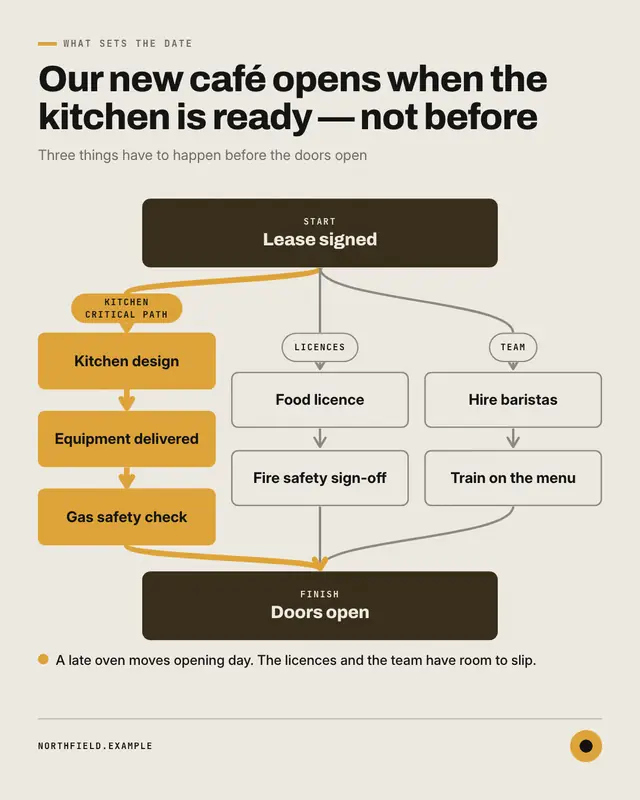
Critical path
A critical path: a start and a finish joined by two or three parallel tracks of one to three tasks each, every track named, and the one chain where any delay moves the…
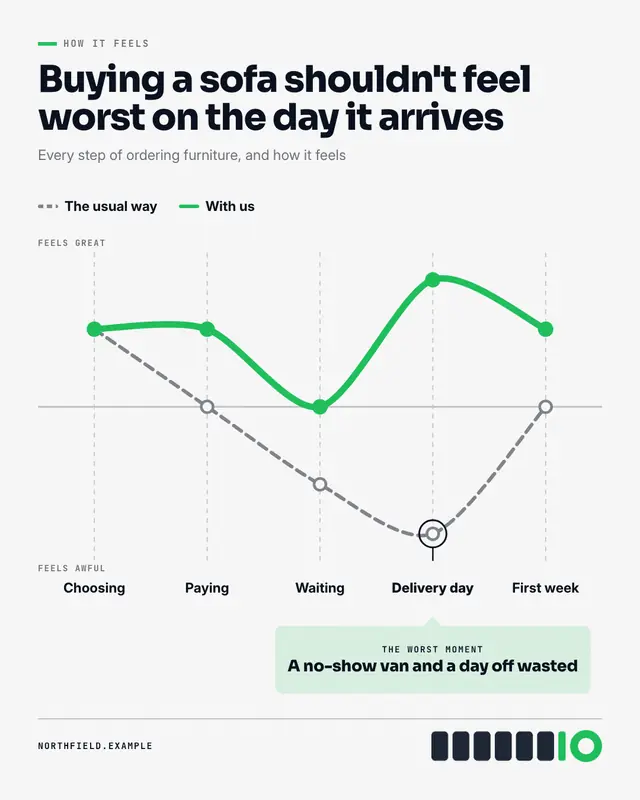
Emotion curve
An emotion curve (a 'journey map' of feelings): the stages of an experience along the bottom and how each one feels as a curve rising and dipping over a neutral midline
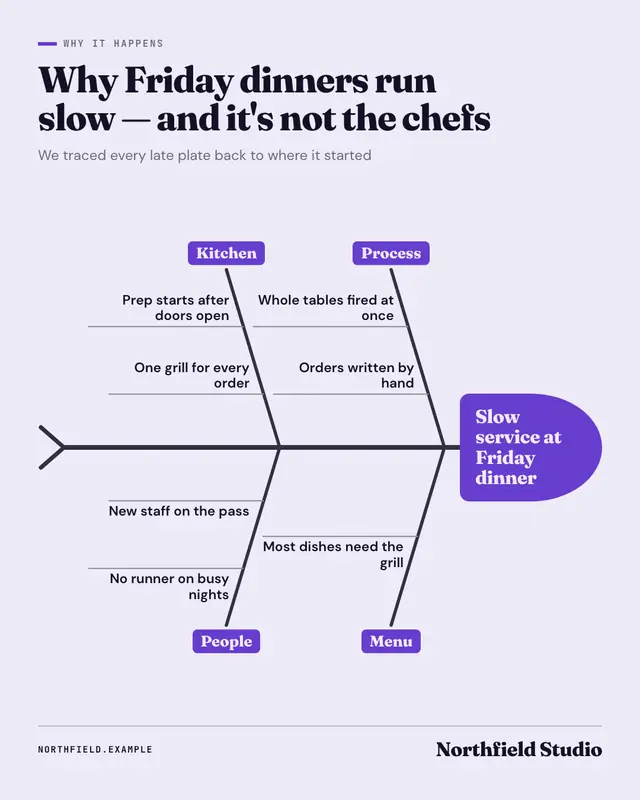
Fishbone diagram
A fishbone diagram (Ishikawa): the problem in the fish's head, a spine running into it and three to six slanted bones
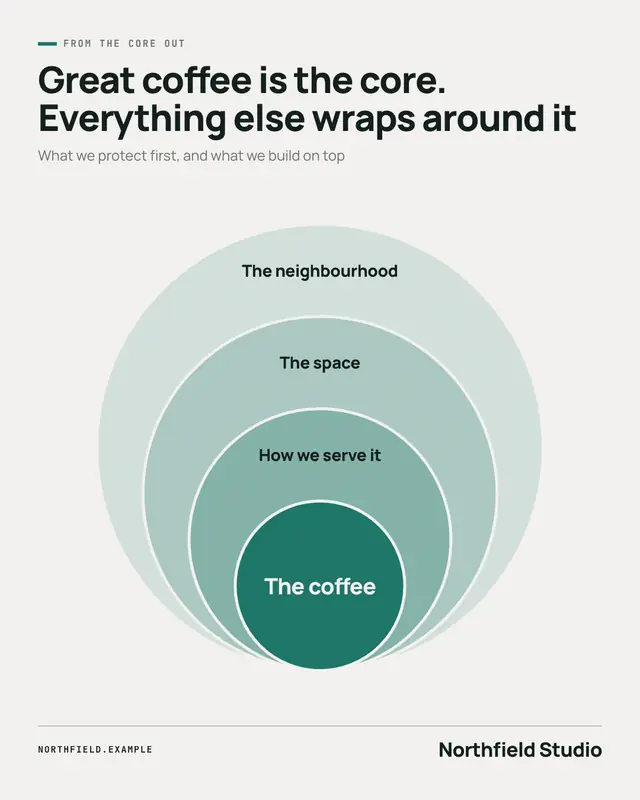
Onion diagram
An onion diagram: three or four nested circles resting on one point, the core in full brand colour and each outer layer a paler crescent named in its widest part
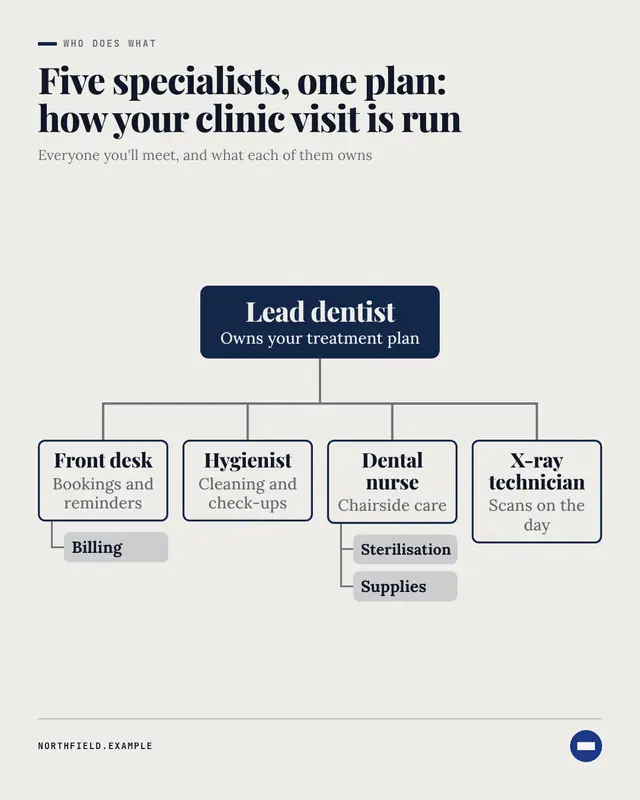
Org chart
An org chart (an 'organisation chart'): one lead role on a dark plate, a connector branching to two to five roles in brand-edged boxes, each with what it owns and up to…
Make a Swiss cheese model with your brand.
MarketiQ writes the post, picks the template that carries it best — this one, when it fits — and fills it with your logo, colours, facts and copy.