Flywheel
A flywheel ring of stages, each arc arrowing into the next, for a post about a loop that feeds itself, a 'virtuous cycle' — every page lights one stage with its name in the hub and says which stage it feeds, and the closing page lights the whole 'flywheel' turning, so the reader sees momentum, not a list.
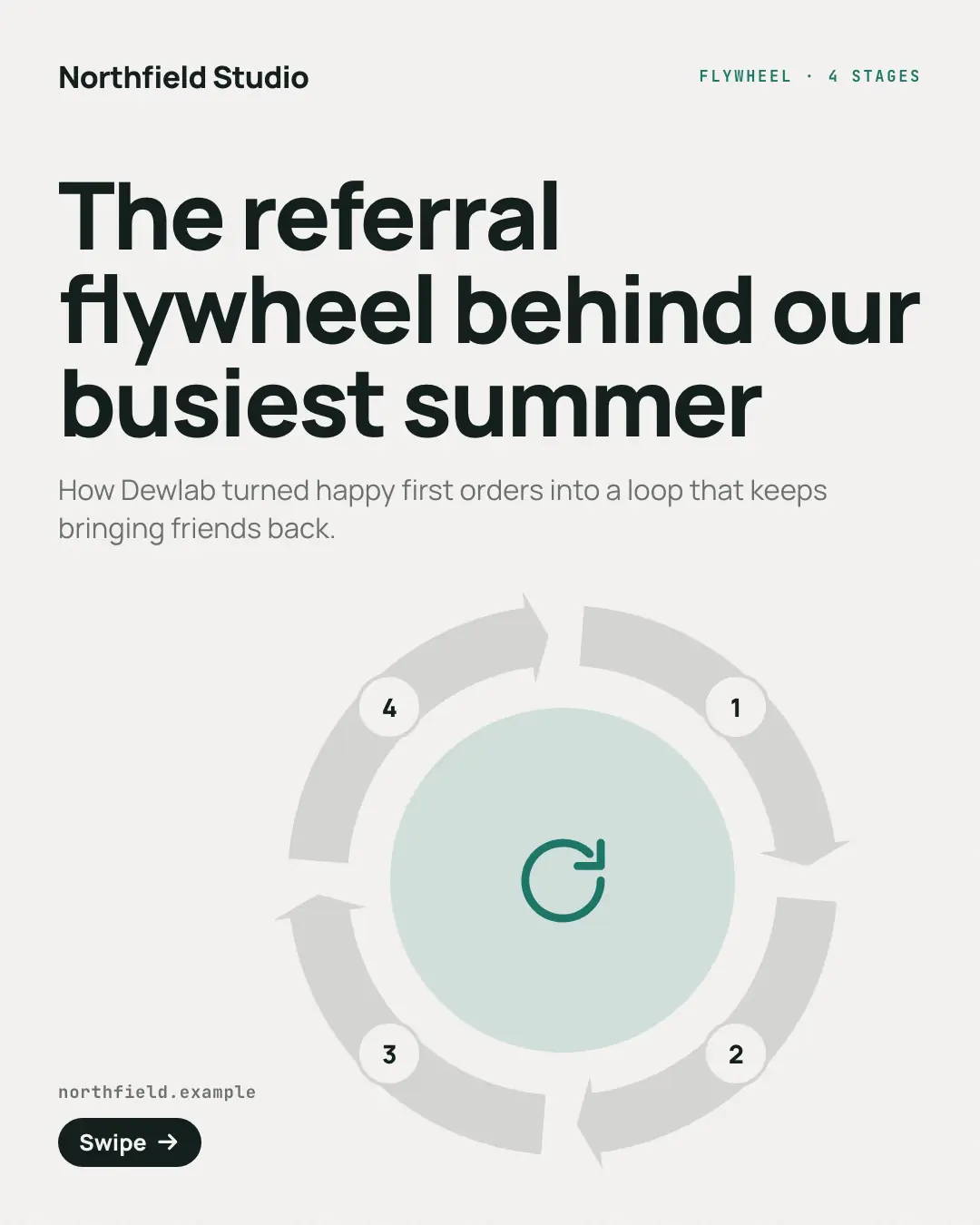
When the AI picks it
MarketiQ’s Creative Director favours the Flywheel for posts that teach, when the message is steps or a process. It is built first to teach.
It reads each post’s goal and shape first, then its own words, the platform and the facts you have, and offers this template only where it fits.
Who it’s for
Any business. Nothing in it assumes what you sell, so the Director can offer it to a software company, a café or a coaching centre alike — whenever the post fits.
Platforms and sizes
| Size | Where |
|---|---|
| 4:51080 × 1350 px | Instagram, Facebook, LinkedIn, Threads |
Carousel of 5–10 slides. Each size is laid out for its canvas, not cropped; the sample above is the 4:5 version.
What it needs
Only your post. It is made from your copy and your brand kit — there is nothing else to prepare.
Rules the AI follows
Word for word from the template library. The Director follows the copy rules when it writes into the template, and the visual review checks every creative against the visual rules.
Copy rules
- Use it only when the post describes a loop whose stages feed each other and build momentum — never for steps that end, or for a plain list.
- Each row is one stage in the loop's order; its body says what happens there and what it feeds next, and the last stage leads back to the first.
- Three to eight stages; the cover names the flywheel, the closing line is the push that starts it turning.
Visual rules
- A ring of arcs, one per stage, each ending in an arrowhead into the next, with a numbered node on every arc.
- Each stage page lights its arc and enlarges its node, sets the stage's name inside the hub and its body below (beside, at 1:1) under a 'Stage N → N+1' line.
- The cover shows the whole ring under the title; the closing page lights every arc around a turning hub.
More Mental models templates
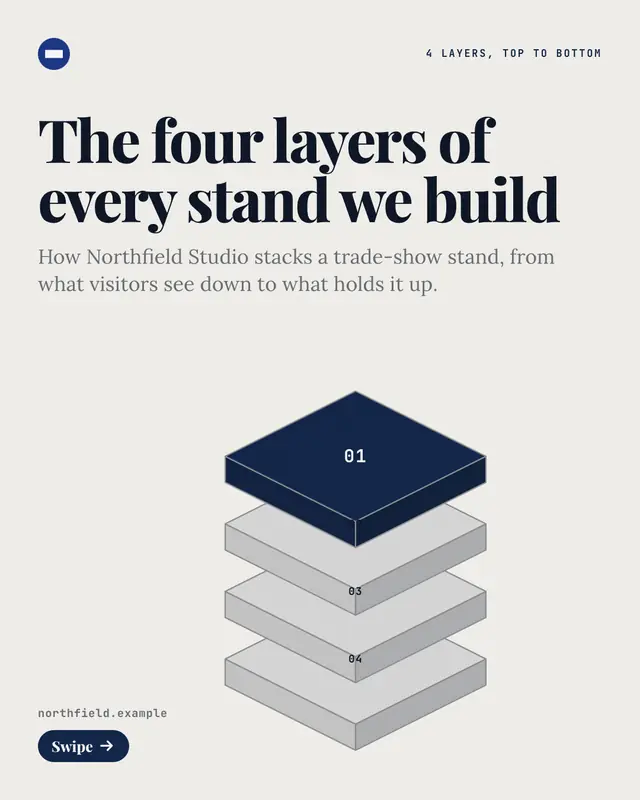
Layer stack
An exploded isometric stack of slabs, one per layer, for a post about something built 'layer by layer'
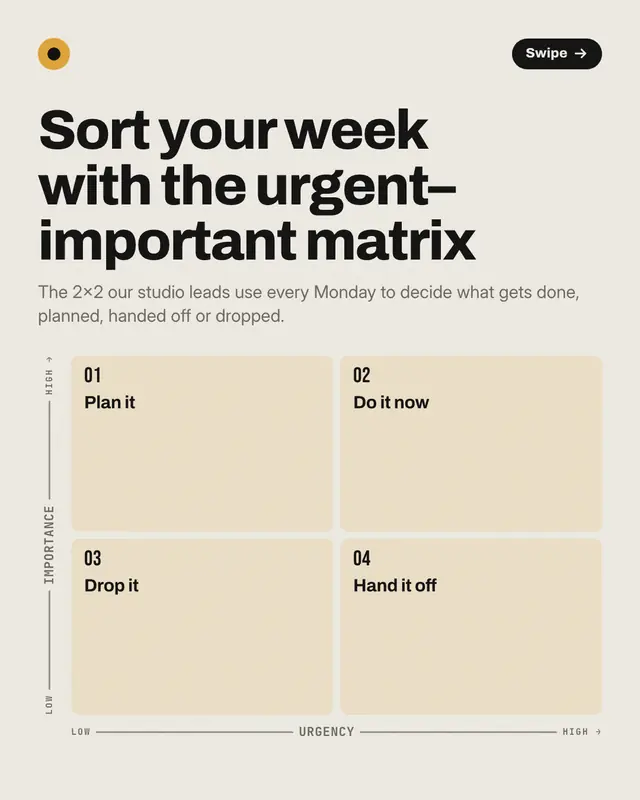
Quadrant matrix
A 2×2 quadrant matrix toured one quadrant per page, for a post that sorts things on two axes
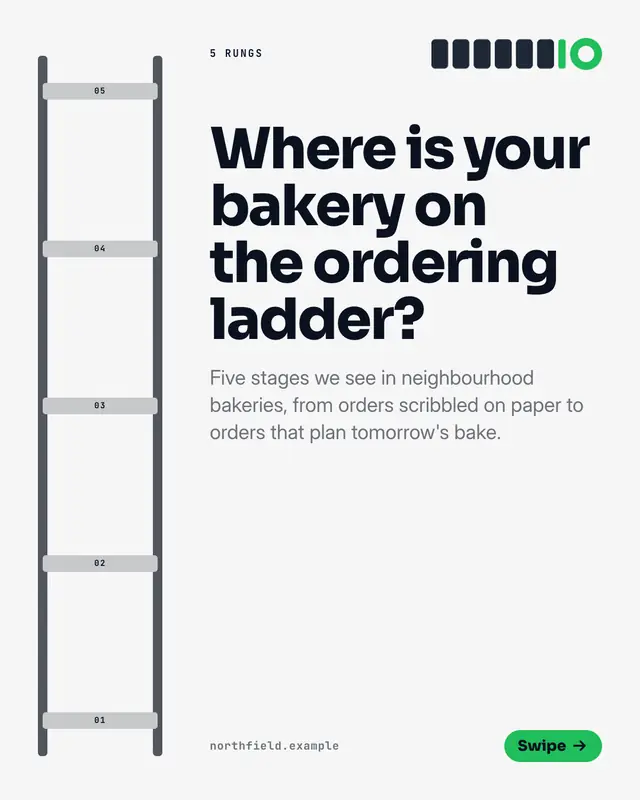
Maturity ladder
A tall ladder with one rung per stage, for a post about levels of maturity from first steps to mastery
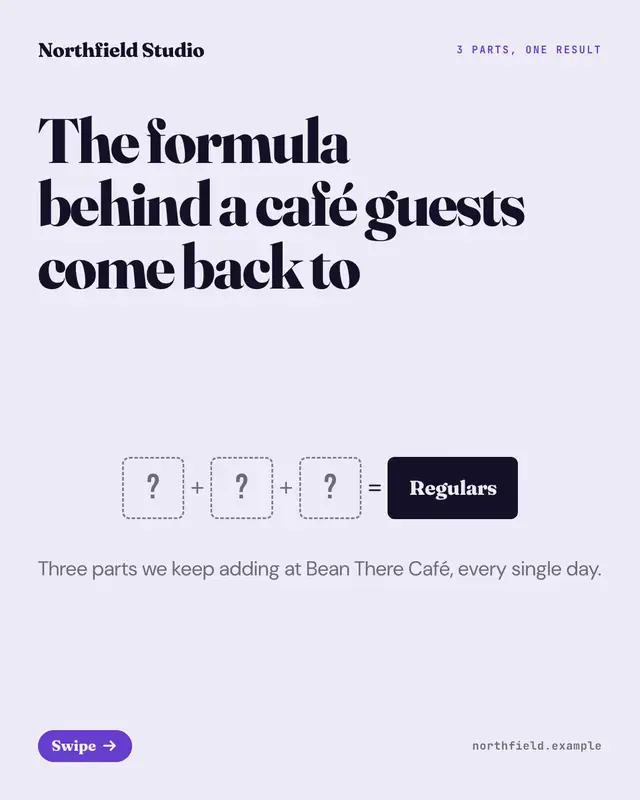
Equation
An equation built term by term
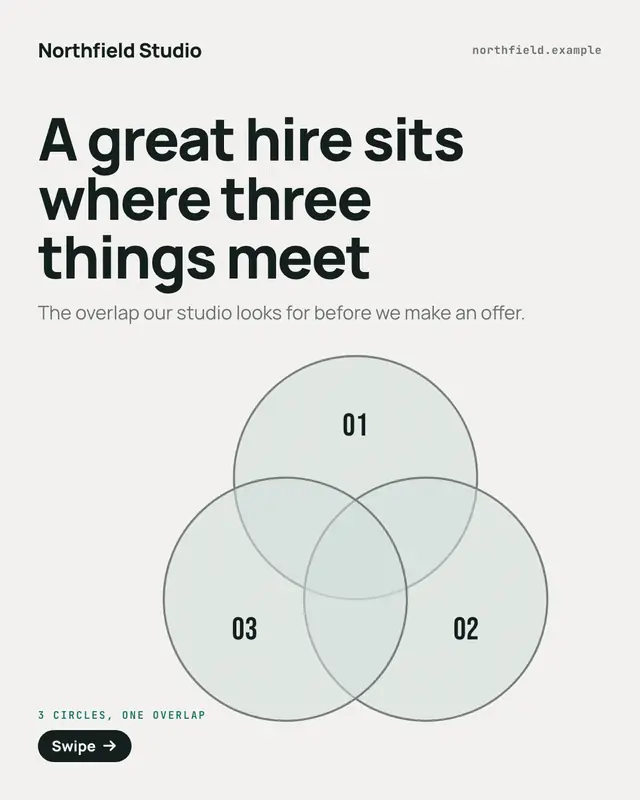
Venn diagram
A Venn of two to four overlapping circles lit one per page, for a post about where several things meet
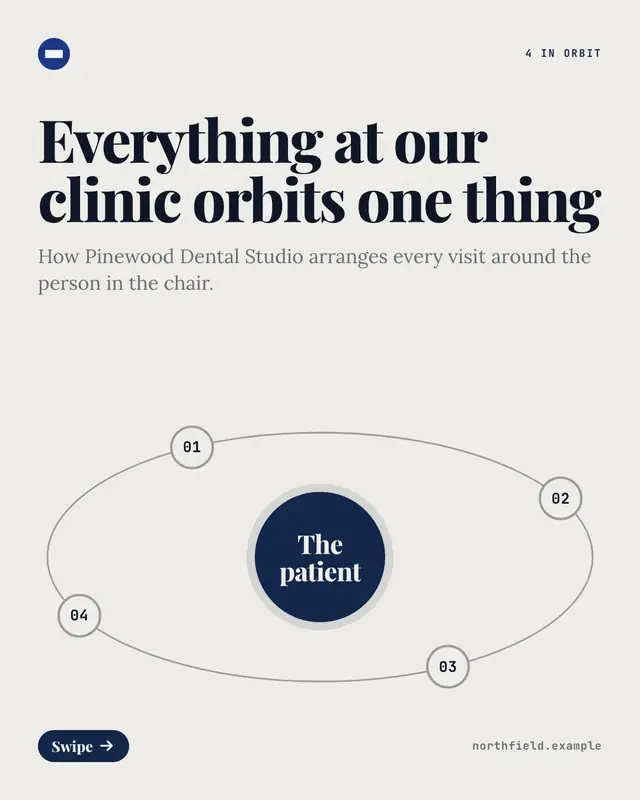
Satellite orbit
One core with numbered satellites on tilted orbits around it, for a post about the parts that revolve around one centre
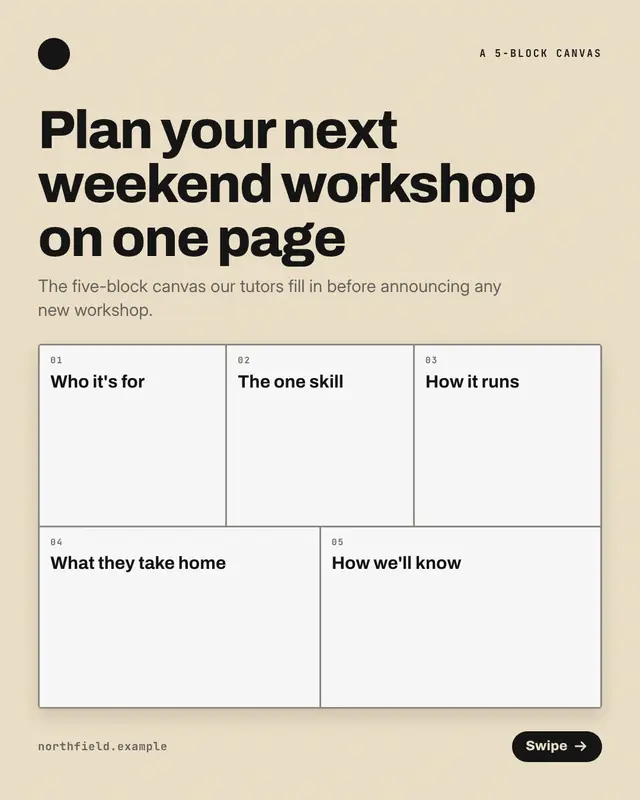
One-page canvas
A one-page planning canvas of ruled blocks, for a post that lays a plan out as named boxes to fill in, like a 'business model canvas'
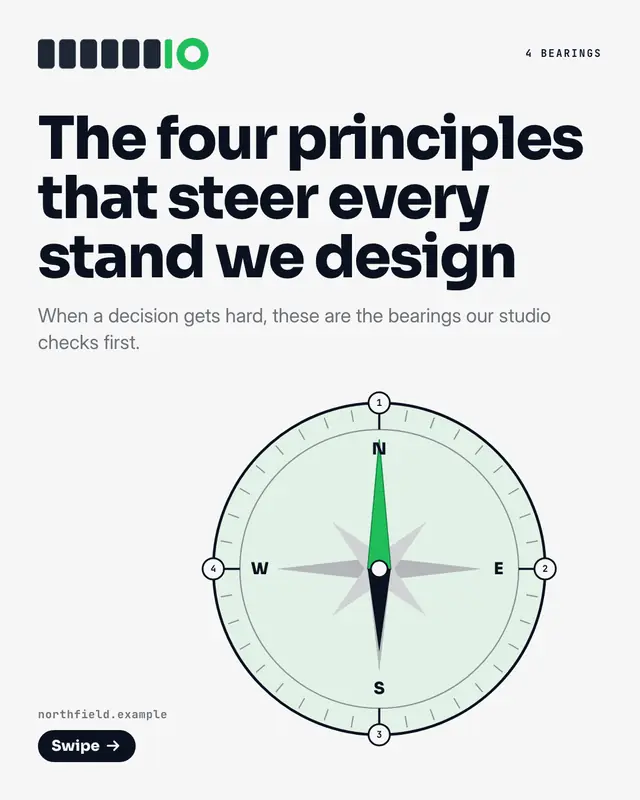
Compass rose
A 'compass' rose with one numbered bearing per principle around its ring, for a post about the principles that steer a team or a choice
Make a Flywheel with your brand.
MarketiQ writes the post, picks the template that carries it best — this one, when it fits — and fills it with your logo, colours, facts and copy.