Post card
A clean screenshot of a text post from the brand's own account — avatar, name, handle, the post set large and a generic engagement row — so a sharp take reads like something people already share.
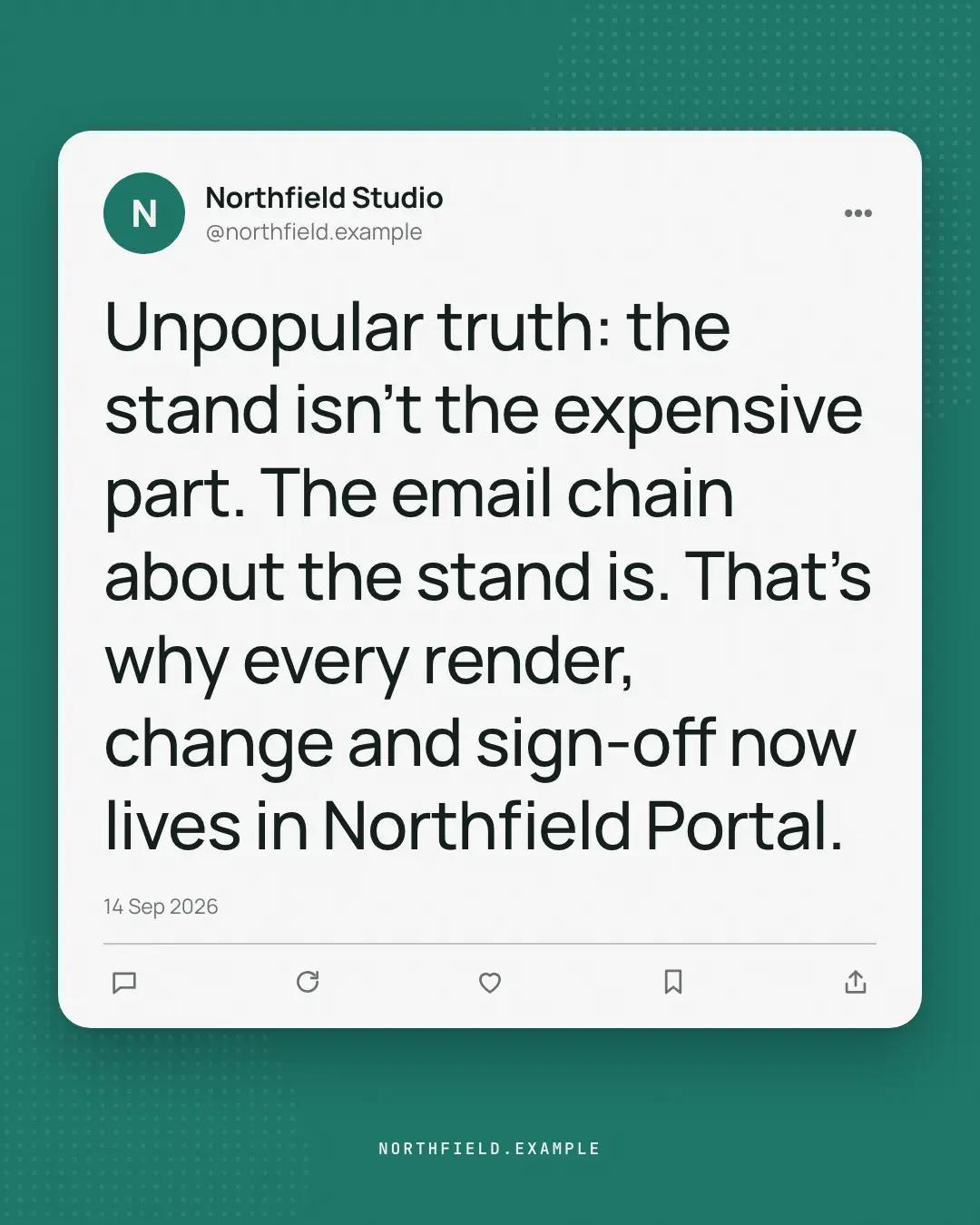
When the AI picks it
MarketiQ’s Creative Director favours the Post card for posts that start a conversation, entertain, teach or announce news, when the message is one sharp insight, a question or a quote. It is built first to start a conversation.
It reads each post’s goal and shape first, then its own words, the platform and the facts you have, and offers this template only where it fits.
Who it’s for
Any business. Nothing in it assumes what you sell, so the Director can offer it to a software company, a café or a coaching centre alike — whenever the post fits.
Platforms and sizes
| Size | Where |
|---|---|
| 4:51080 × 1350 px | Threads |
| 16:91600 × 900 px | X |
Single image. Each size is laid out for its canvas, not cropped; the sample above is the 4:5 version.
What it needs
Only your post. It is made from your copy and your brand kit — there is nothing else to prepare.
Rules the AI follows
Word for word from the template library. The Director follows the copy rules when it writes into the template, and the visual review checks every creative against the visual rules.
Copy rules
- Write it as a real post: conversational, first person plural, no hashtags, no emoji, no links.
- One idea; it should be worth quoting on its own. No invented numbers or names.
Visual rules
- A white post card with a soft shadow on a brand-colour field with halftone dots; brand avatar, name and an @-style label from the website; the post in the body face set large; generic comment/repost/like/save/share icons with no counts and no platform marks.
- Logo and website sign off on the brand field.
More Internet culture templates
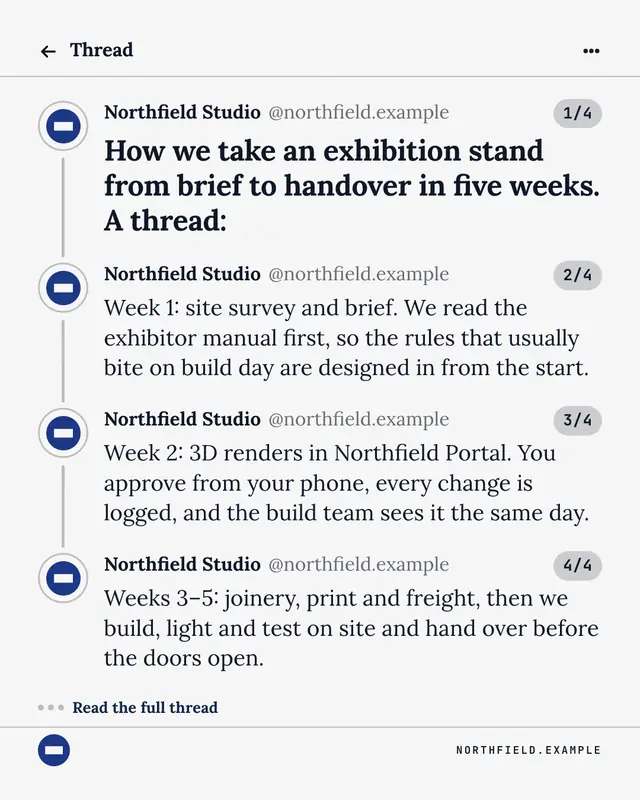
Thread
A numbered thread (1/n) of three or four posts from the brand, joined by the thread line
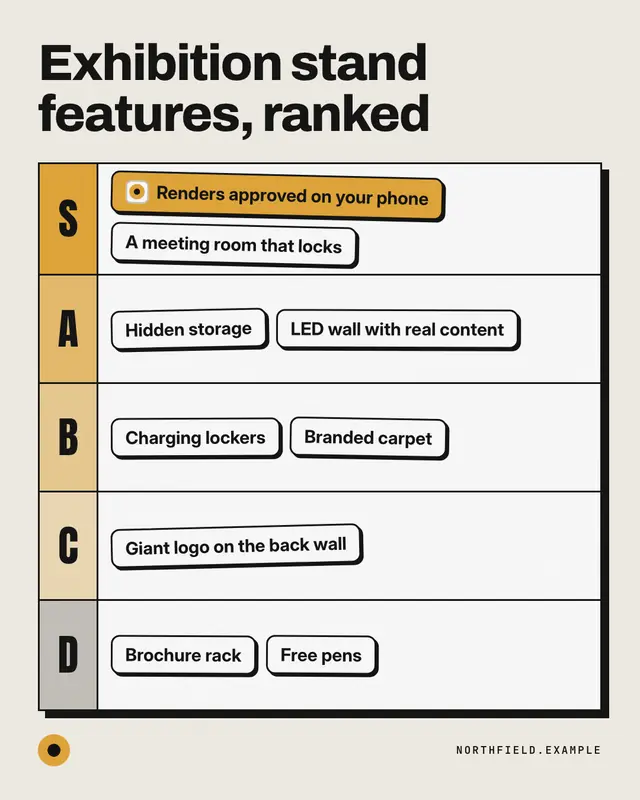
Tier list
An S-to-D tier list of the things the audience argues about, ranked by the brand
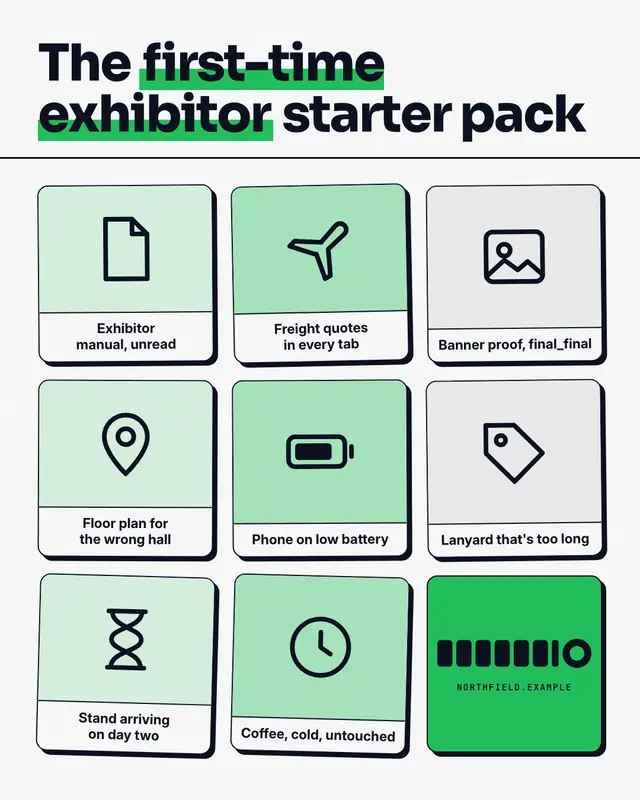
Starter pack
'The ___ starter pack': a collage of labelled item tiles that sums up a type of buyer in one glance
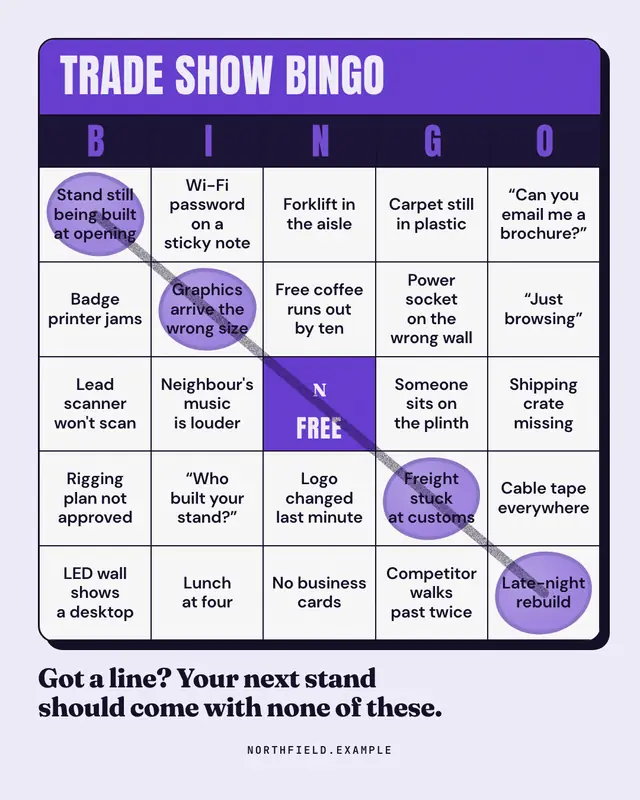
Bingo card
A printed bingo card of the moments everyone in the audience has lived through
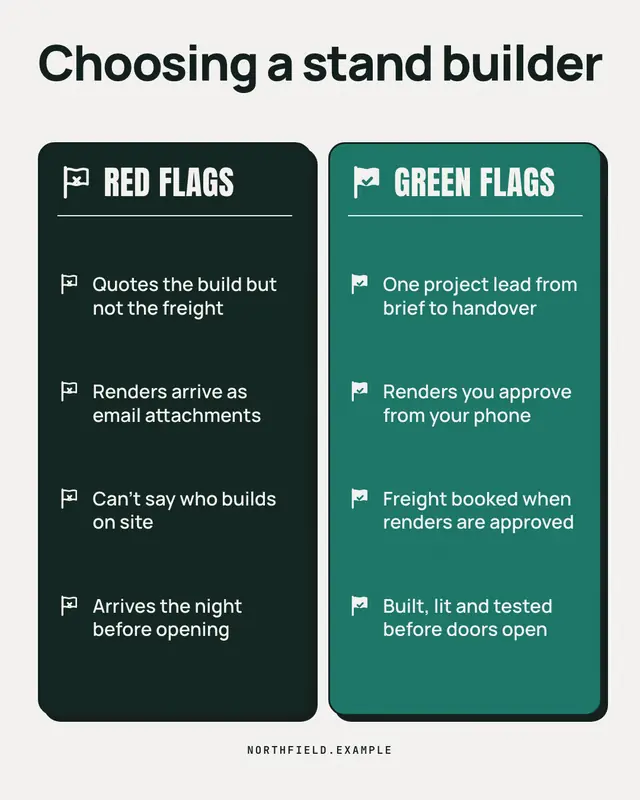
Red flags / green flags
Two panels of the internet's favourite shorthand
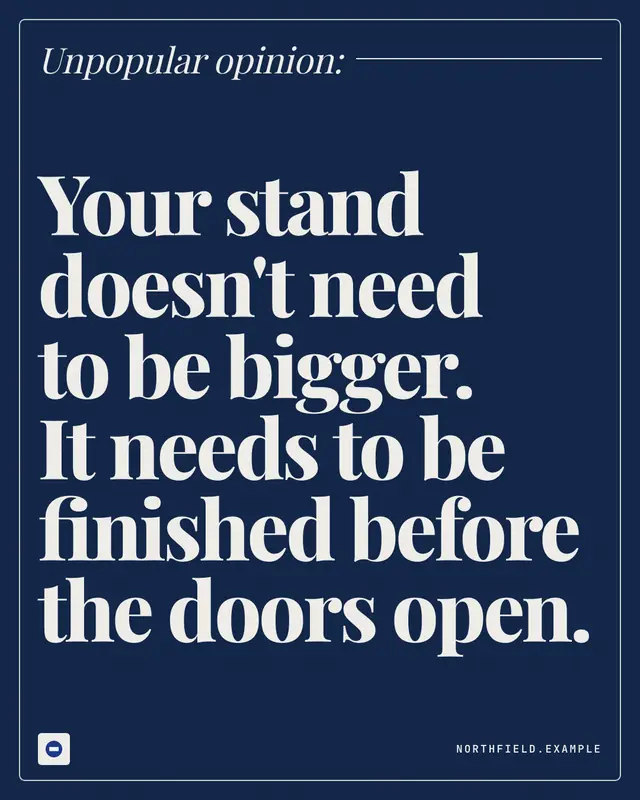
Unpopular opinion
A bold typographic card: a small 'Unpopular opinion:' label and the brand's contrarian statement set huge.
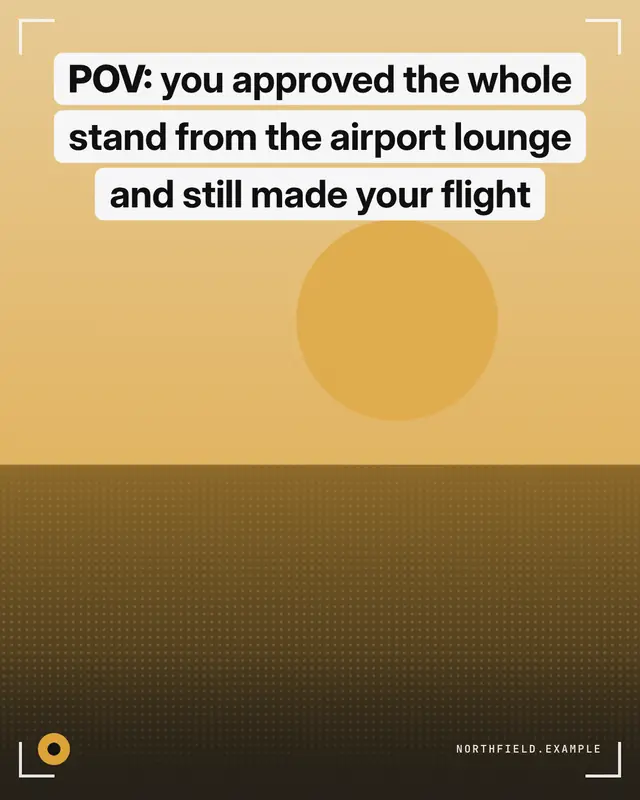
POV
'POV:' caption boxes over a full-bleed photo of the moment
Encyclopedia article
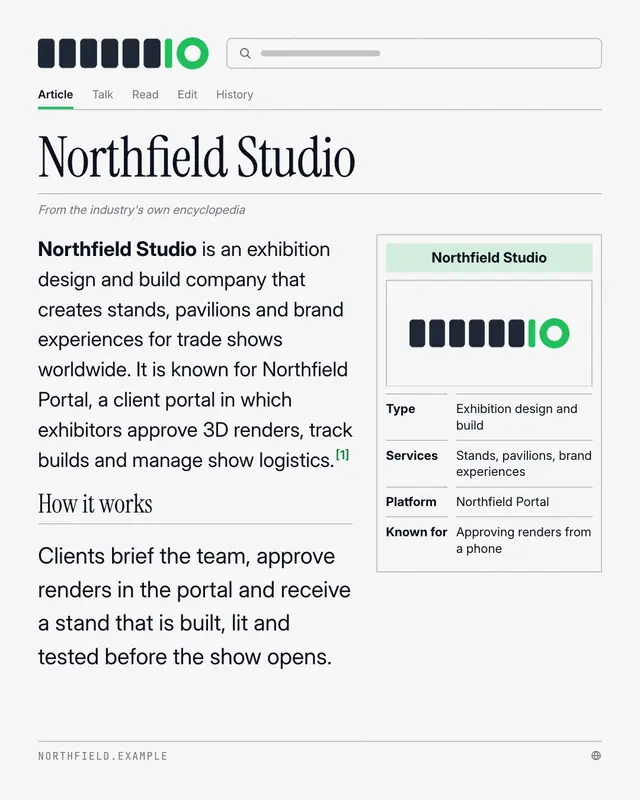
An encyclopedia-style entry about the brand (or the thing it does): serif title, lead paragraph with a citation mark, an infobox of key facts and a section heading
Make a Post card with your brand.
MarketiQ writes the post, picks the template that carries it best — this one, when it fits — and fills it with your logo, colours, facts and copy.