Decision tree
A clean top-down decision tree: a root question on a night card, rounded orthogonal connectors with arrowheads and yes/no pill labels, optional follow-up questions on white cards and two to four outcomes in brand-colour cards on one row — the reader finds their own path to an answer.
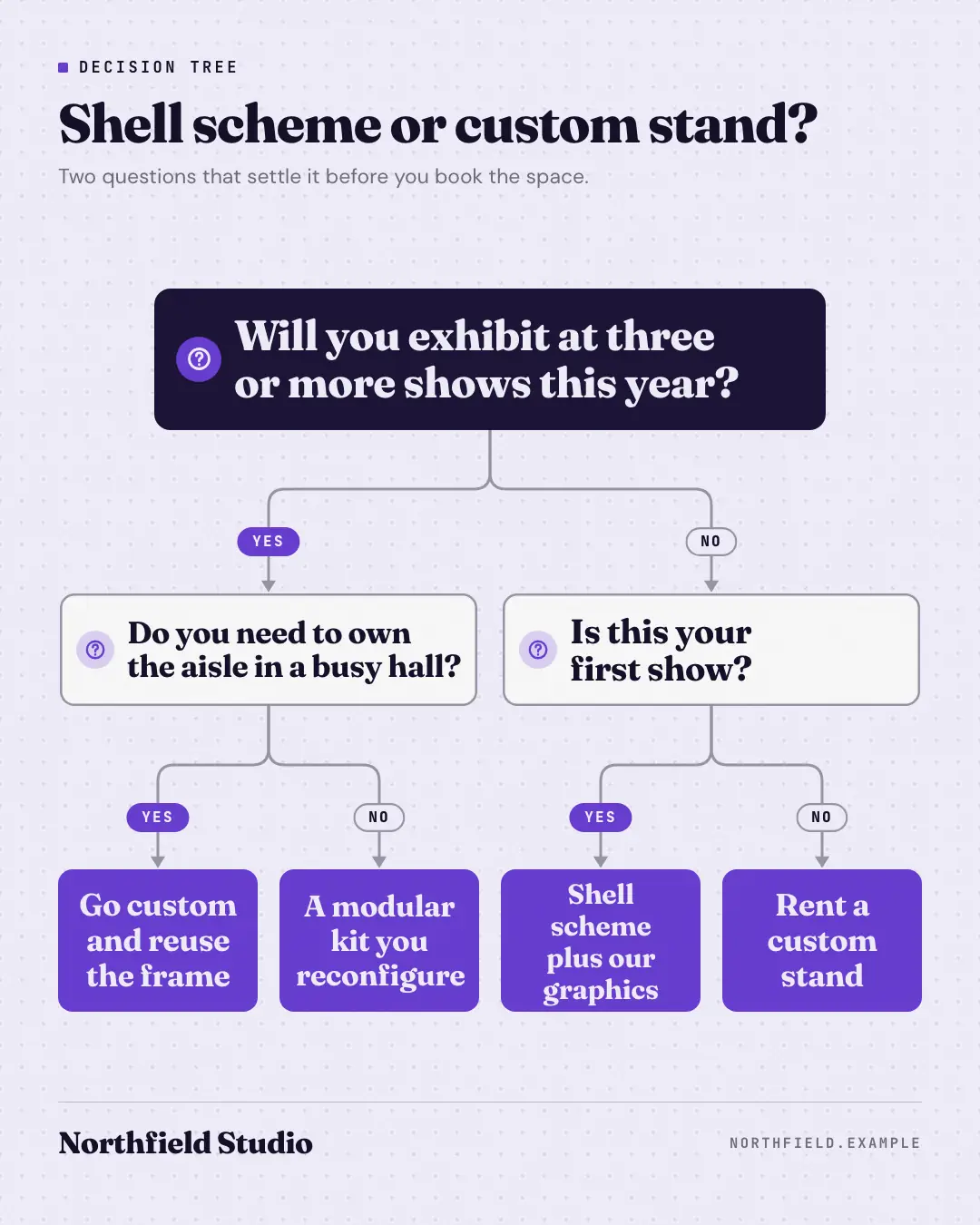
When the AI picks it
MarketiQ’s Creative Director favours the Decision tree for posts that teach, start a conversation or get people to act, when the message is steps or a process, a question or a side-by-side comparison. It is built first to teach.
It reads each post’s goal and shape first, then its own words, the platform and the facts you have, and offers this template only where it fits.
Who it’s for
Any business. Nothing in it assumes what you sell, so the Director can offer it to a software company, a café or a coaching centre alike — whenever the post fits.
Platforms and sizes
| Size | Where |
|---|---|
| 4:51080 × 1350 px | Instagram, Facebook, LinkedIn, Threads, Pinterest, Reddit |
| 1:11080 × 1080 px | Ads |
| 9:161080 × 1920 px | TikTok |
| 16:91600 × 900 px | X, YouTube |
| 1.91:11200 × 628 px | Newsletter, Blog |
Single image. Each size is laid out for its canvas, not cropped; the sample above is the 4:5 version.
What it needs
Only your post. It is made from your copy and your brand kit — there is nothing else to prepare.
Rules the AI follows
Word for word from the template library. The Director follows the copy rules when it writes into the template, and the visual review checks every creative against the visual rules.
Copy rules
- Questions are honest yes/no questions about the reader's situation, under 10 words.
- Outcomes are short recommendations (under 7 words) that only name what the business really offers.
- Use follow-up questions only when they change the answer; two to four outcomes in total.
Visual rules
- Root question on a night card with a brand '?' disc; follow-ups on white cards with a tint '?' disc.
- Rounded orthogonal connectors in soft ink with arrowheads; yes pills in the brand colour, no pills outlined.
- Outcomes in brand-colour cards on one row (a column on landscape, where the tree runs left to right).
More Infographics templates
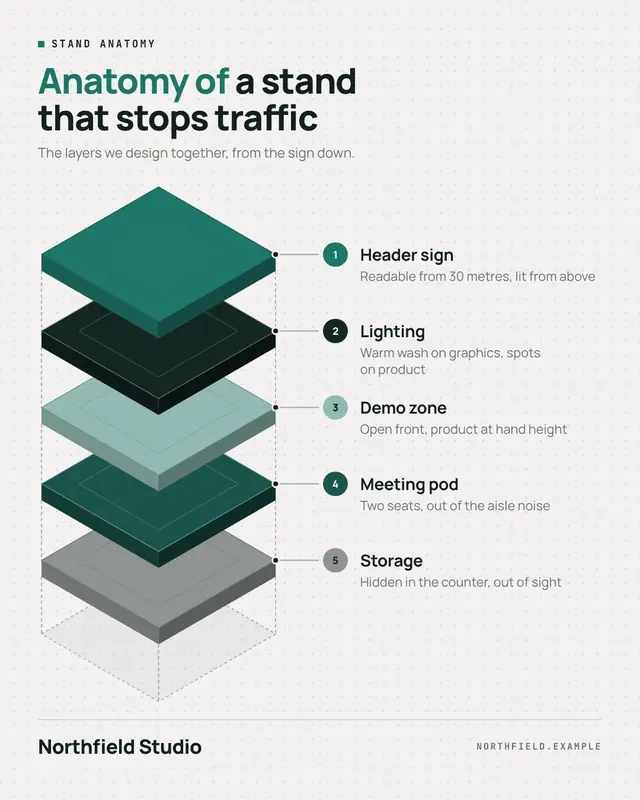
Anatomy of…
An isometric exploded view: three to six layered plates with real thickness in palette colours, floating over a dashed footprint with alignment guides, each called out…
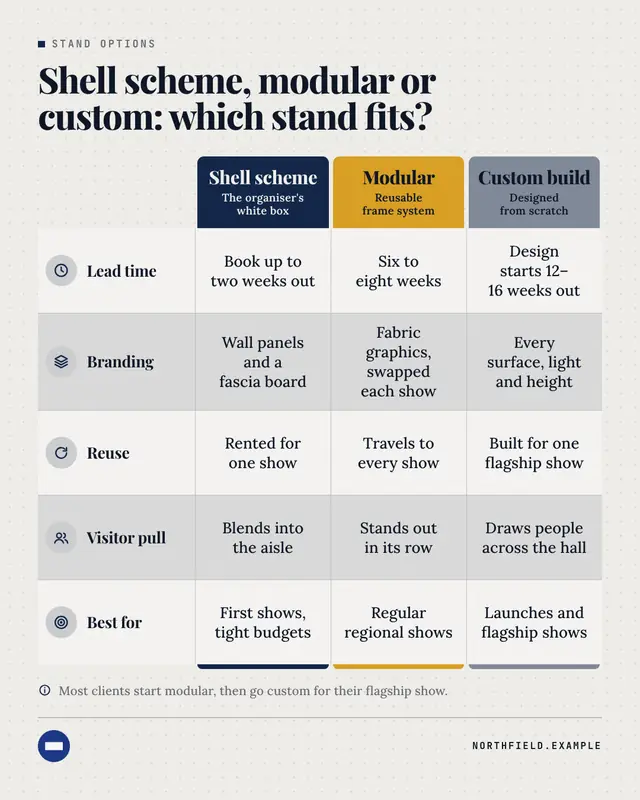
Comparison matrix
A premium comparison table: each option heads its column as a solid block in its own palette colour, criteria run down the left with tinted icons, and short phrases fill…
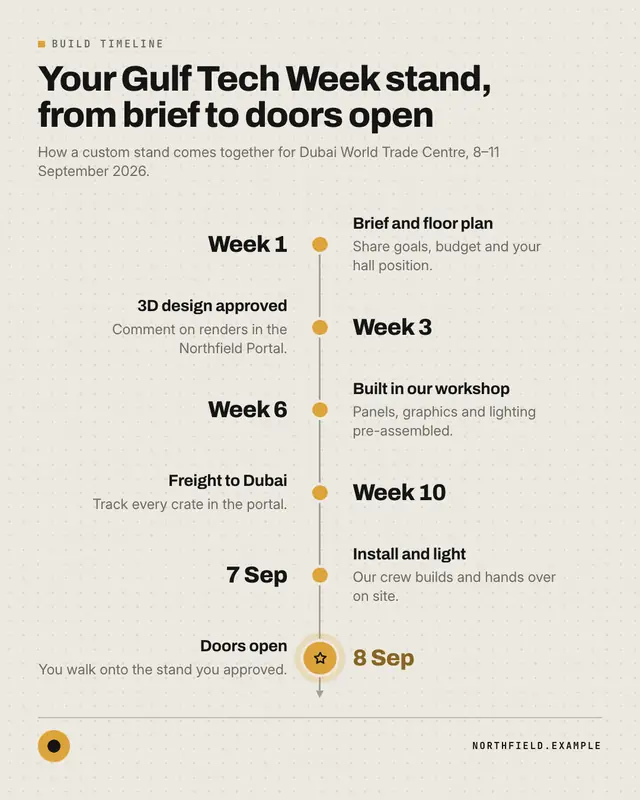
Timeline
A clean milestone timeline
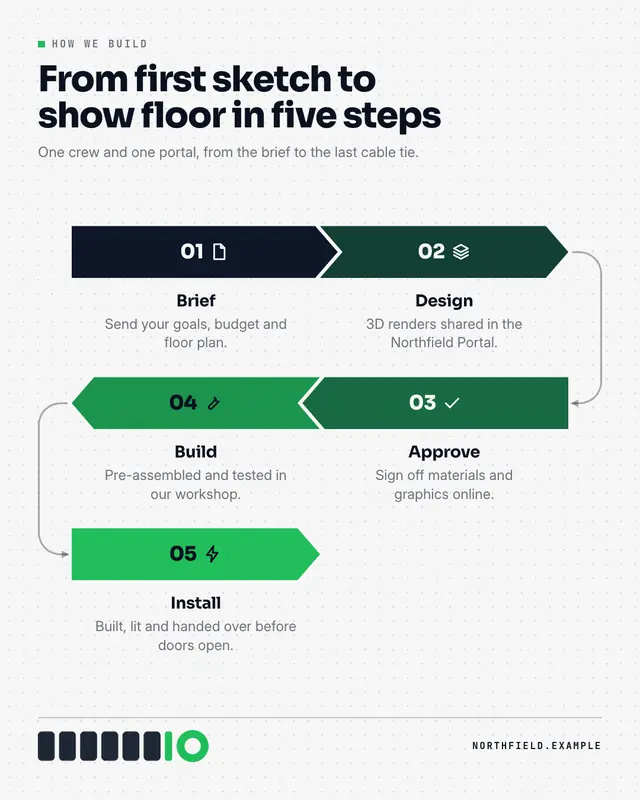
Process flow
A pipeline of interlocking chevrons
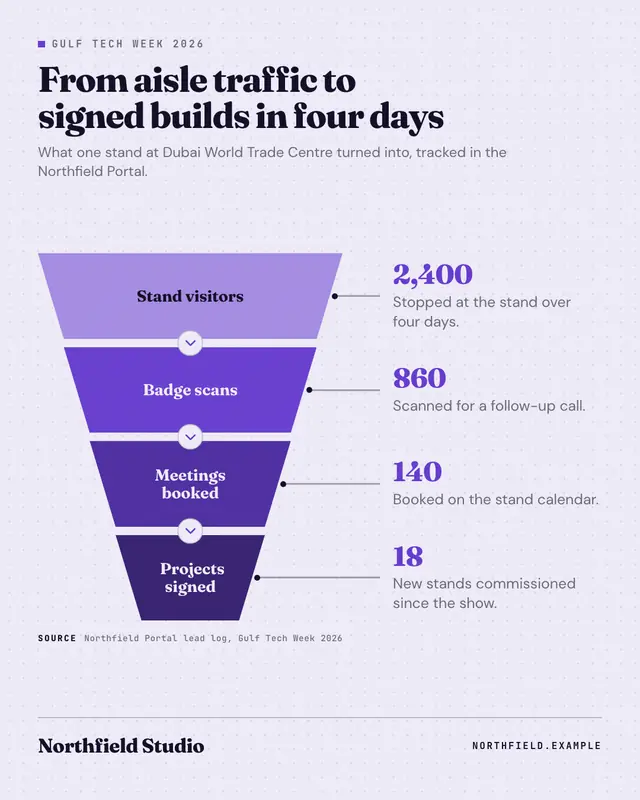
Funnel
A stacked funnel of three to five trapezoids narrowing downward and deepening in colour
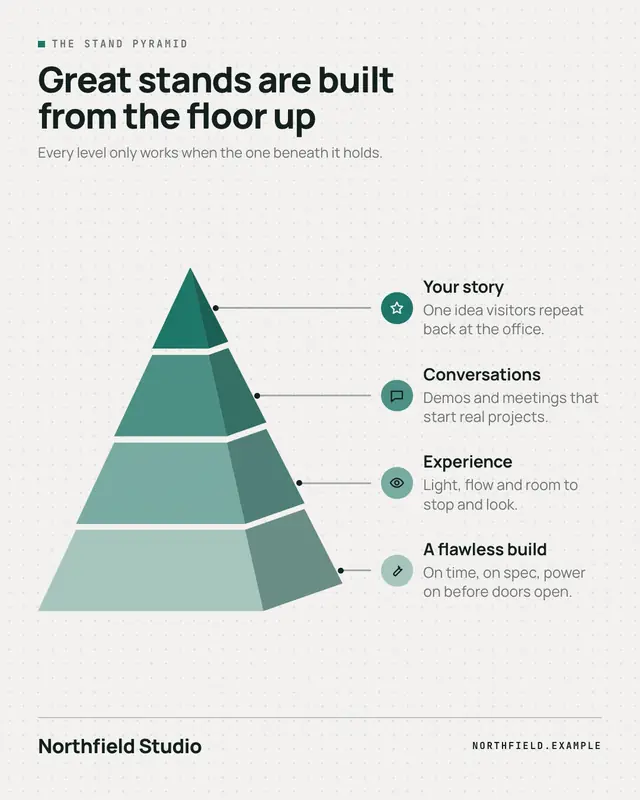
3D pyramid
A segmented 3D pyramid
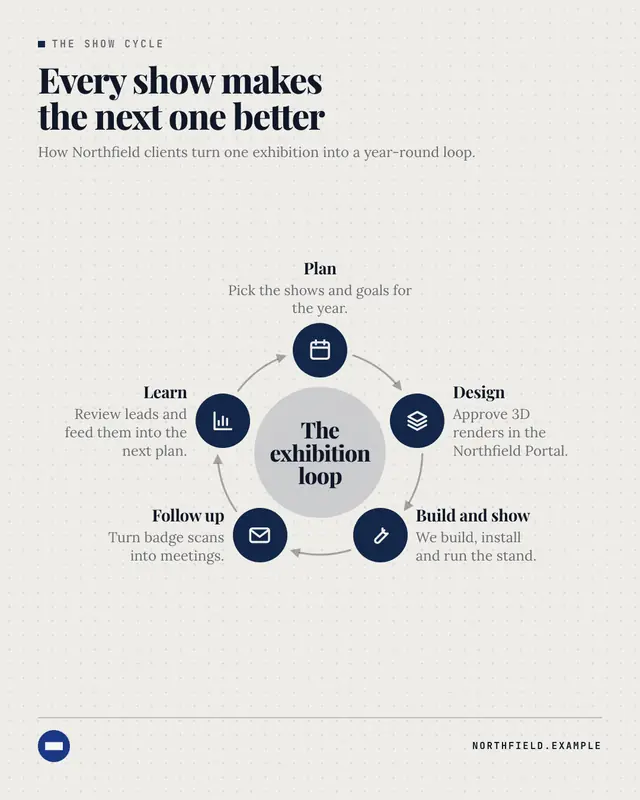
Cycle
A loop diagram: three to six brand-coloured icon nodes around a ring, joined clockwise by curved arrows, with the loop's name in a tinted centre disc and each stage's…
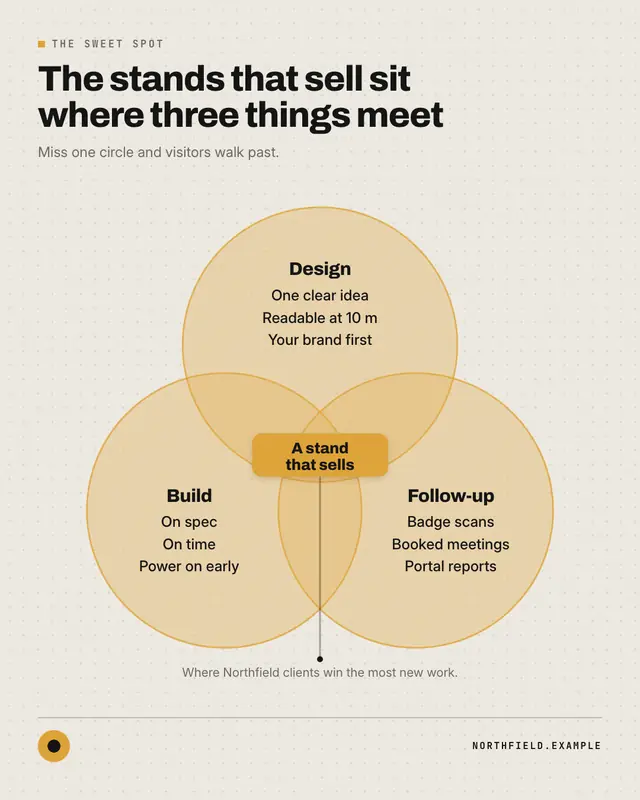
Venn diagram
Two or three overlapping translucent circles in palette tints with crisp coloured rims, each holding its name and up to three short items, and the overlap called out in…
Make a Decision tree with your brand.
MarketiQ writes the post, picks the template that carries it best — this one, when it fits — and fills it with your logo, colours, facts and copy.