You asked, it's here
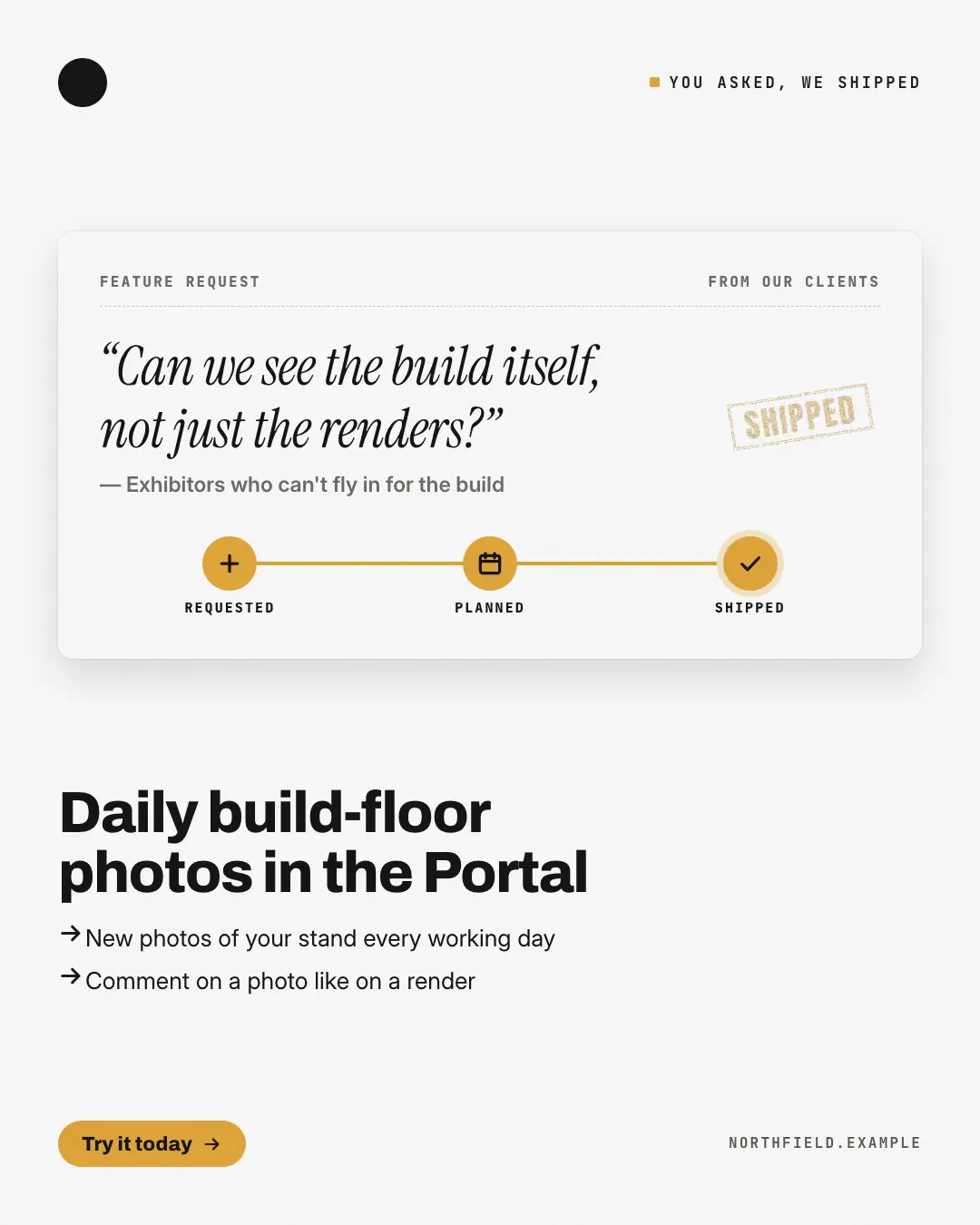
A customer-requested feature told through its request ticket: the ask quoted in italic serif, who asked, a three-stop tracker — requested, planned, shipped — all lit, a SHIPPED rubber stamp across the ticket, and below it what the team built. Proof that the brand listens, with the receipt.
When the AI picks it
MarketiQ’s Creative Director favours the You asked, it's here for posts that announce news, prove a point or start a conversation, when the message is a quote, a story or one sharp insight. It is built first to announce news.
It reads each post’s goal and shape first, then its own words, the platform and the facts you have, and offers this template only where it fits.
Who it’s for
Any business. Nothing in it assumes what you sell, so the Director can offer it to a software company, a café or a coaching centre alike — whenever the post fits.
Platforms and sizes
| Size | Where |
|---|---|
| 4:51080 × 1350 px | Instagram, Facebook, LinkedIn, Threads, Pinterest, Reddit |
| 1:11080 × 1080 px | Ads |
| 9:161080 × 1920 px | TikTok |
| 16:91600 × 900 px | X, YouTube |
| 1.91:11200 × 628 px | Newsletter, Blog |
Single image. Each size is laid out for its canvas, not cropped; the sample above is the 4:5 version.
What it needs
Only your post. It is made from your copy and your brand kit — there is nothing else to prepare.
Rules the AI follows
Word for word from the template library. The Director follows the copy rules when it writes into the template, and the visual review checks every creative against the visual rules.
Copy rules
- The request is what customers really asked, from the post — never invent a quote, a customer or a vote count.
- The answer names the feature that shipped; a ticket number only when the post gives one.
Visual rules
- A white ticket on a pale brand ground: mono ticket labels over a dashed rule, the request in large italic serif quotes, an attribution line, and a three-stop tracker of brand-colour discs joined by a brand bar.
- A brand-colour rubber stamp across the ticket's corner; below the ticket, the feature name in the heading face and arrowed lines on what it does; logo top left, button and website at the foot.
More Releases & roadmaps templates
Tree-ring timeline
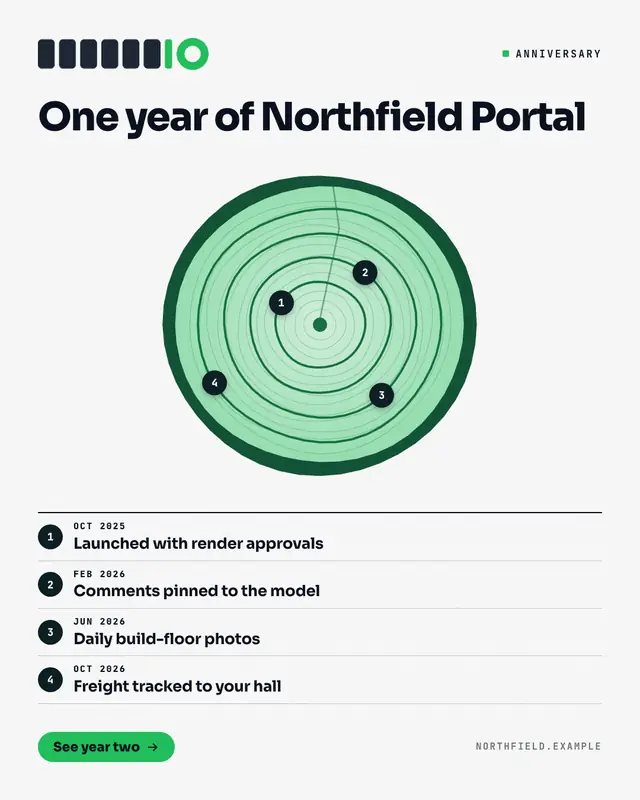
A product's first year drawn as the cross-section of a trunk: bark in the deep brand colour, pale wood, fine 'growth rings' and one heavier ring per milestone, each…
Release diff
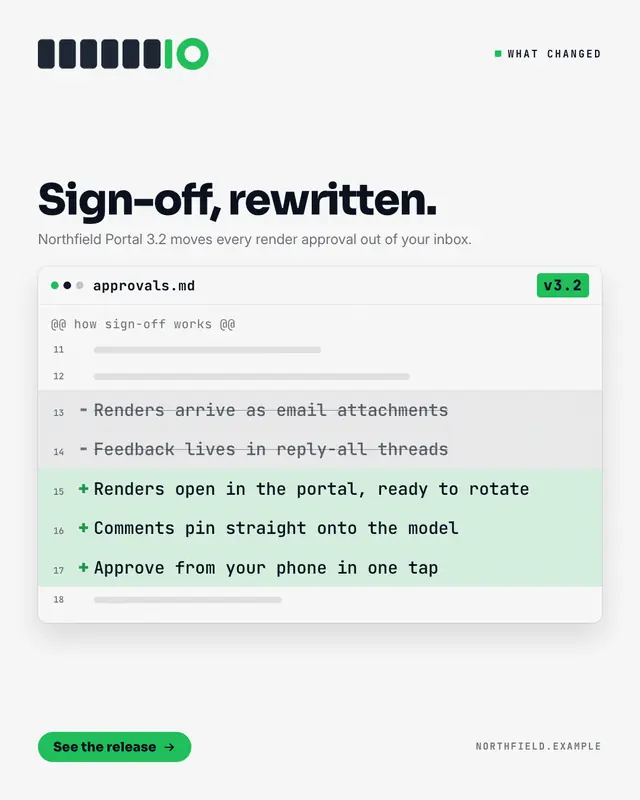
What changed, shown as a reviewed diff in a code-review window: the old behaviour on struck-out '−' lines in grey, the new behaviour on '+' lines tinted in the brand…
Release line
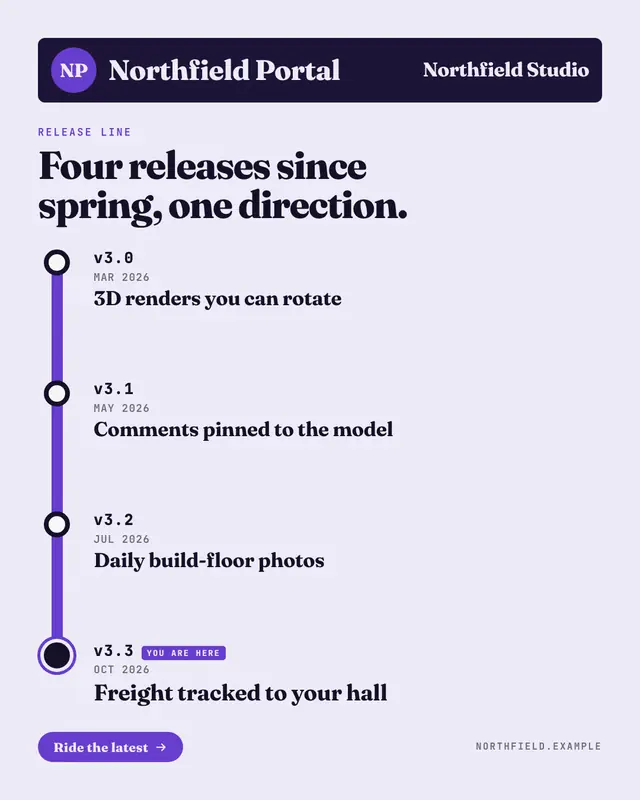
A product's releases drawn as a transit line: a station sign with a round line bullet and the product's name, then a thick brand-colour line whose stations are the…
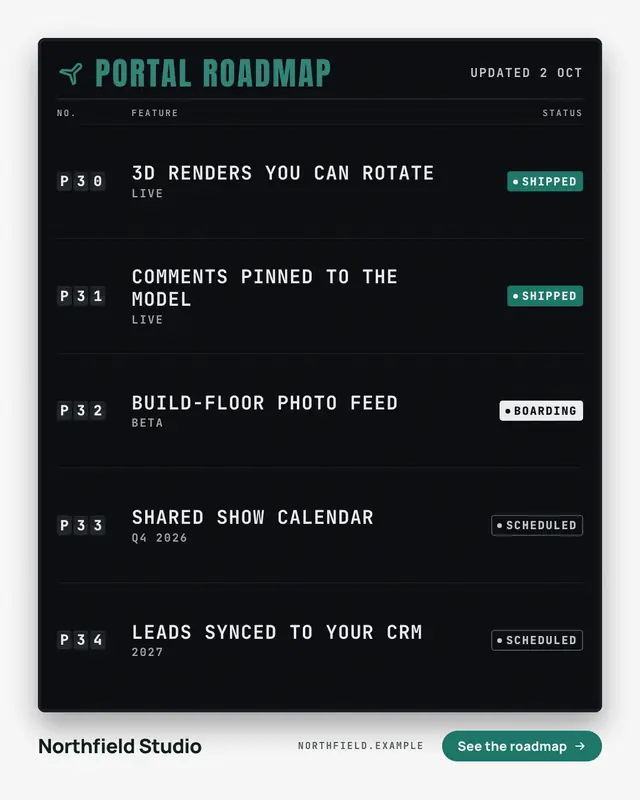
Departures board
Shipped versus planned as an airport departures board: dark split-flap code tiles, the features in white mono caps and a status chip for each
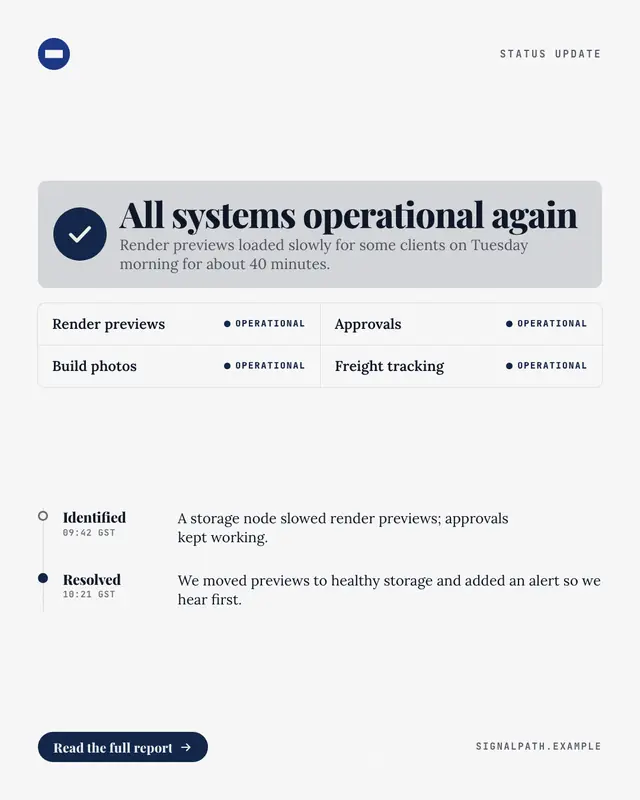
Status: resolved
An incident update in the shape of a status page: a check-mark all-clear banner, the affected components each marked operational, and the update timeline
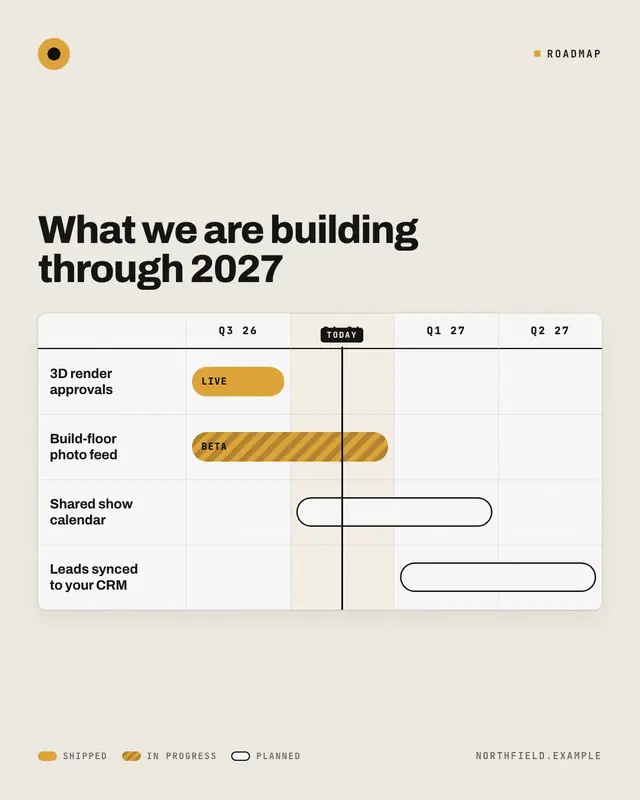
Quarter roadmap
The roadmap as the Gantt chart a product team actually plans with: workstreams down the left, the quarters across the top, a bar for each piece of work
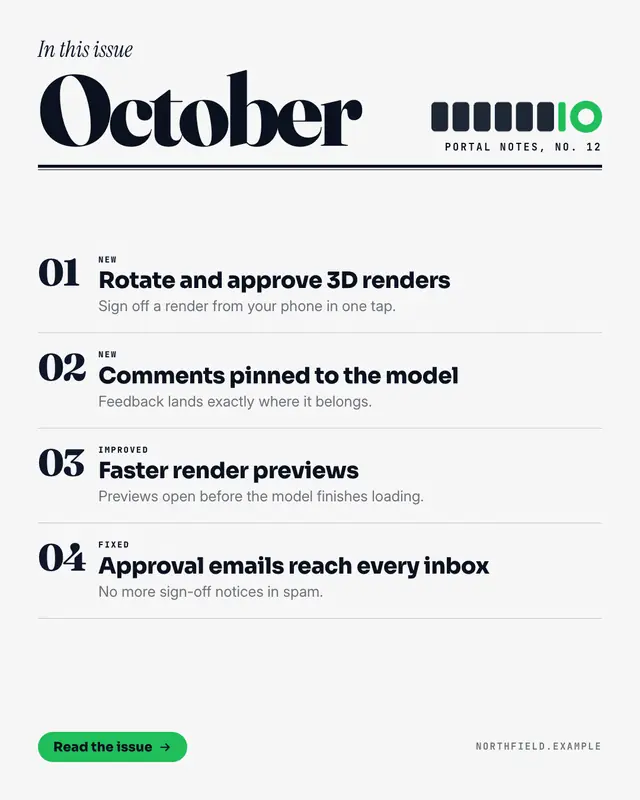
What's new magazine
A month of product updates set as a magazine's table of contents: an in-this-issue line in italic serif over the month in huge editorial type, a heavy double rule, then…
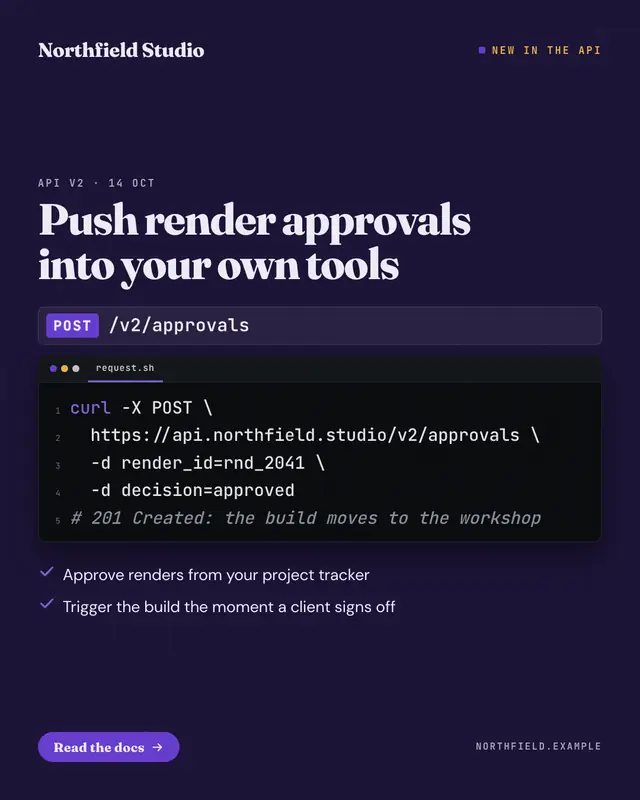
API release card
A developer release on a dark grid: the endpoint as a method chip and a mono path, the request in a code editor with line numbers and quiet highlighting, the headline…
Make a You asked, it's here with your brand.
MarketiQ writes the post, picks the template that carries it best — this one, when it fits — and fills it with your logo, colours, facts and copy.