Padlocks
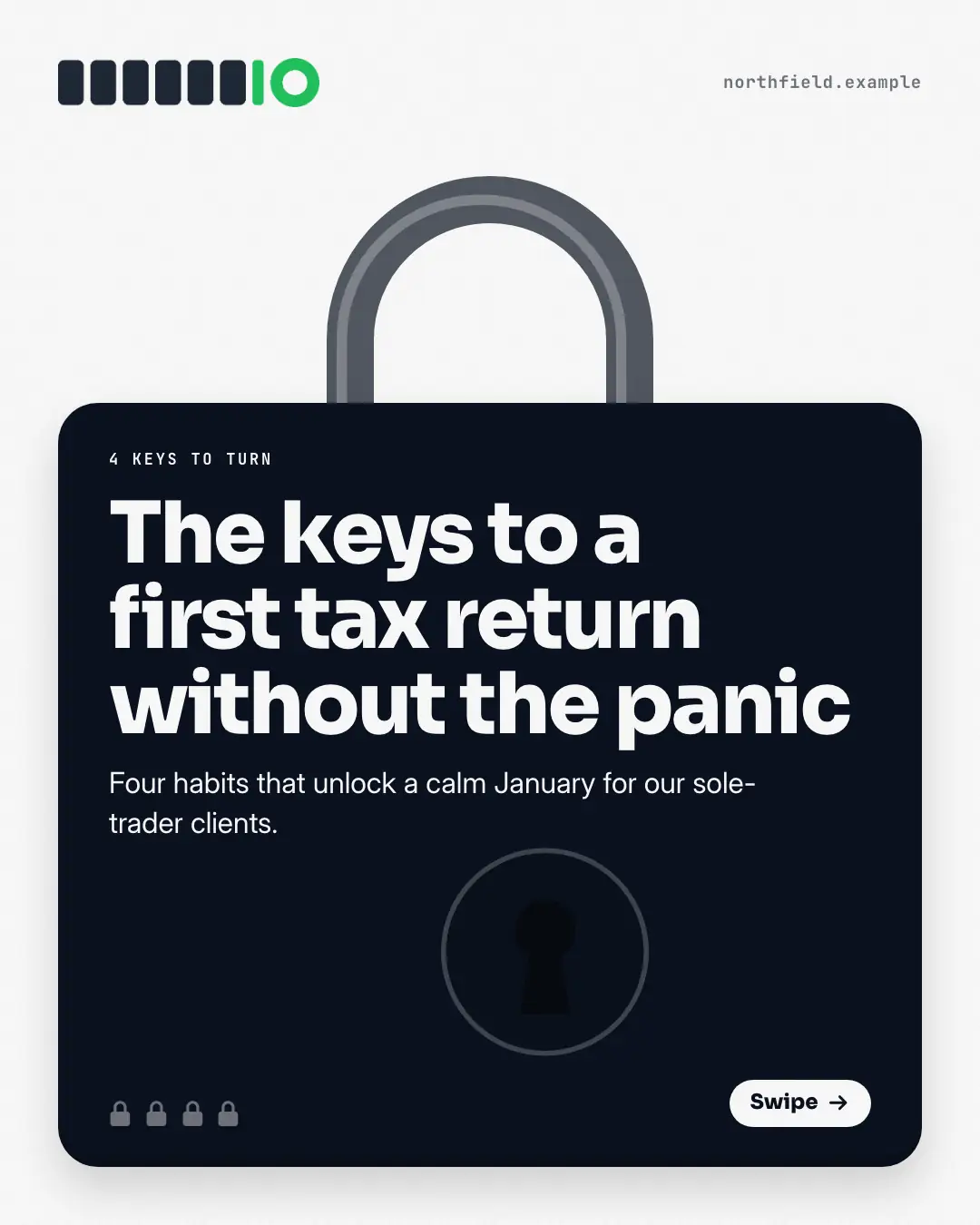
A padlock as big as the page whose shackle springs open on every page, for a post that hands over the keys to something — what unlocks a result, one key per page: each page opens the lock in the brand colour with the key turned in it and the key's name and what it unlocks on the lock's face, a row of small locks counting the keys, and the closing page shows every lock open.
When the AI picks it
MarketiQ’s Creative Director favours the Padlocks for posts that teach, when the message is a list. It is built first to teach.
It reads each post’s goal and shape first, then its own words, the platform and the facts you have, and offers this template only where it fits.
Who it’s for
Any business. Nothing in it assumes what you sell, so the Director can offer it to a software company, a café or a coaching centre alike — whenever the post fits.
Platforms and sizes
| Size | Where |
|---|---|
| 4:51080 × 1350 px | Instagram, Facebook, LinkedIn, Threads |
Carousel of 3–10 slides. Each size is laid out for its canvas, not cropped; the sample above is the 4:5 version.
What it needs
Only your post. It is made from your copy and your brand kit — there is nothing else to prepare.
Rules the AI follows
Word for word from the template library. The Director follows the copy rules when it writes into the template, and the visual review checks every creative against the visual rules.
Copy rules
- Use it only when the post frames its points as keys — what unlocks, opens or gives access to a result; never for a plain list the post doesn't call keys, and never for a how-to procedure.
- Each row is one key: a short line naming it and what it unlocks, from the copy.
- The title names what the keys unlock; the call to action is the next step towards it.
Visual rules
- The page is a padlock: a big rounded body under a metal shackle, a keyhole on its face and a row of small locks along its foot, one per key.
- The cover's lock is shut and dark with the title on its face; every key's page springs the shackle open, turns the key in the keyhole and colours the body in the brand colour, the key's name and body on it (its small lock opened, the ones still to come shut).
- The closing page shows every small lock open above the call to action.
More Mental models templates
Jigsaw
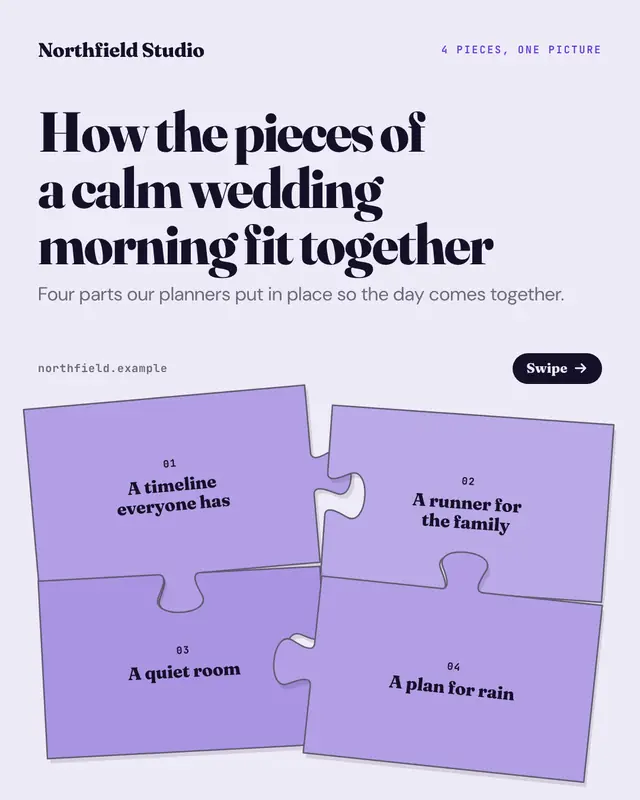
A jigsaw whose pieces lock into place one per page, for a post about the 'pieces of the puzzle'
Toolbox
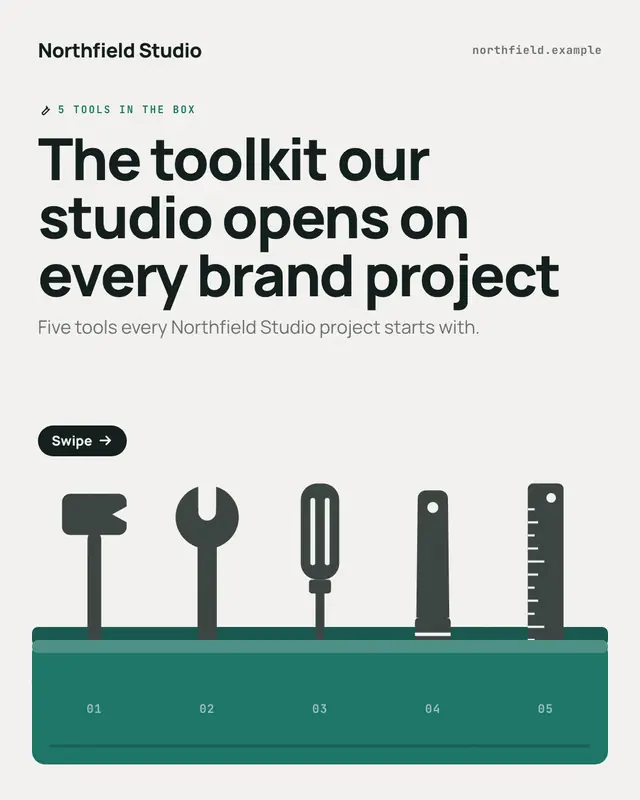
An open toolbox with one generic tool lifted out per page, for a post that lays out a 'toolkit'
Dials and levers
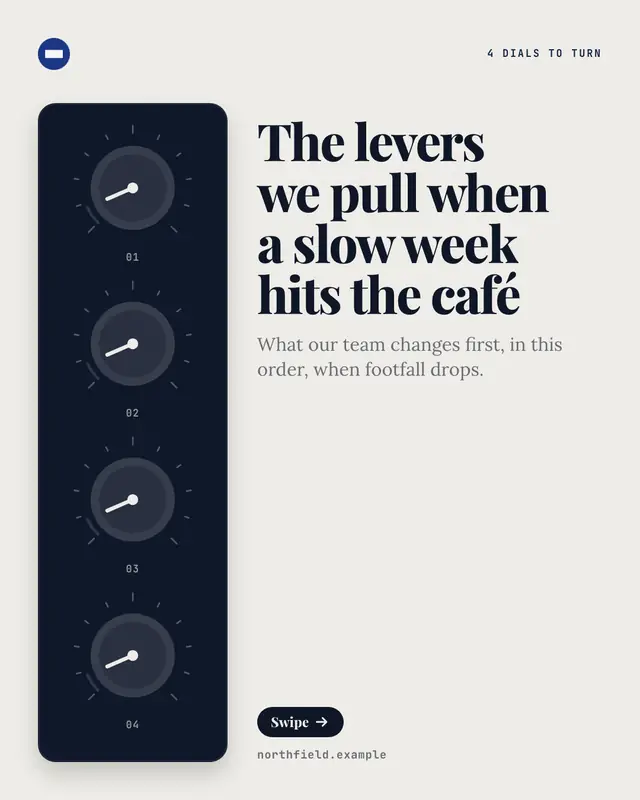
A control panel of dials beside the copy, one dial turned right up per page, for a post about the 'levers to pull'
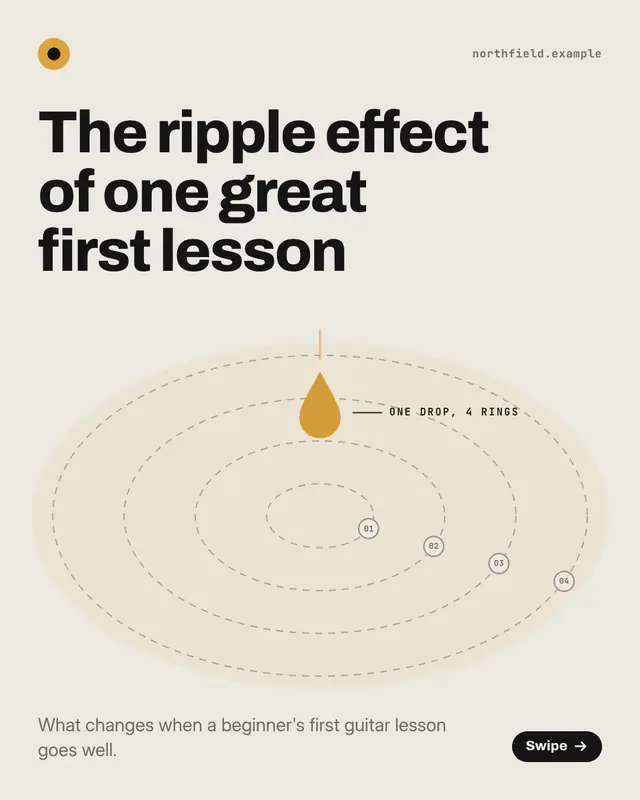
Ripple effect
'Ripples' spreading from one drop, a ring further out per page, for a post about the 'ripple effect' of one change
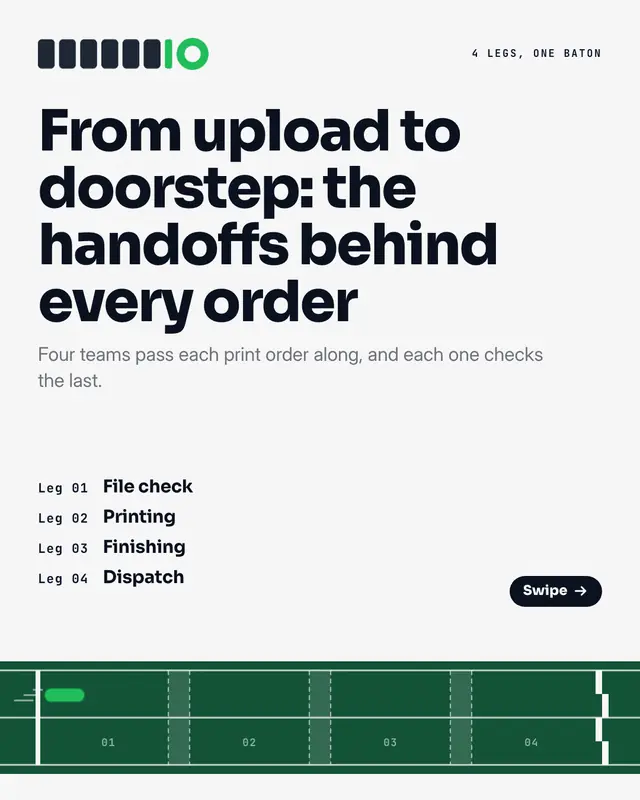
Relay baton
A relay race run one leg per page, for a post about handoffs
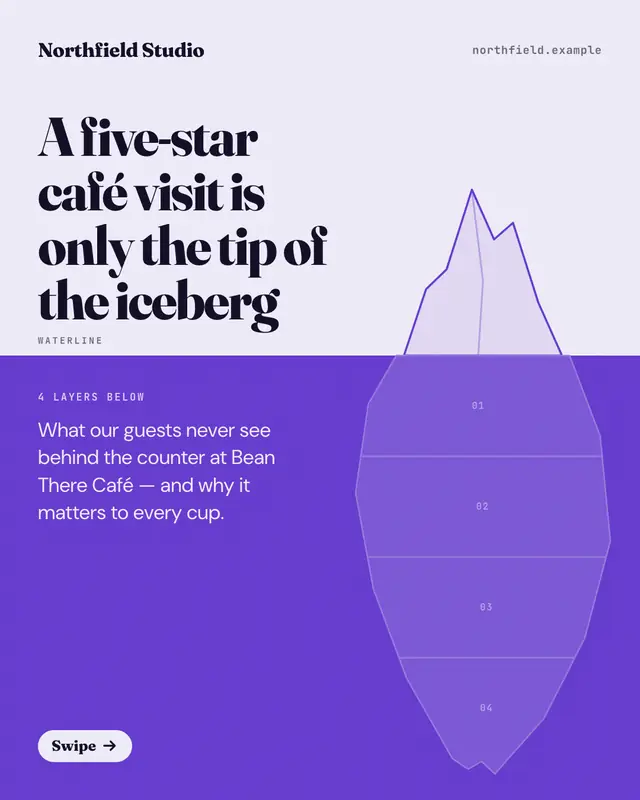
Iceberg waterline
An iceberg cut at the waterline, for a post about what lies beneath a visible surface
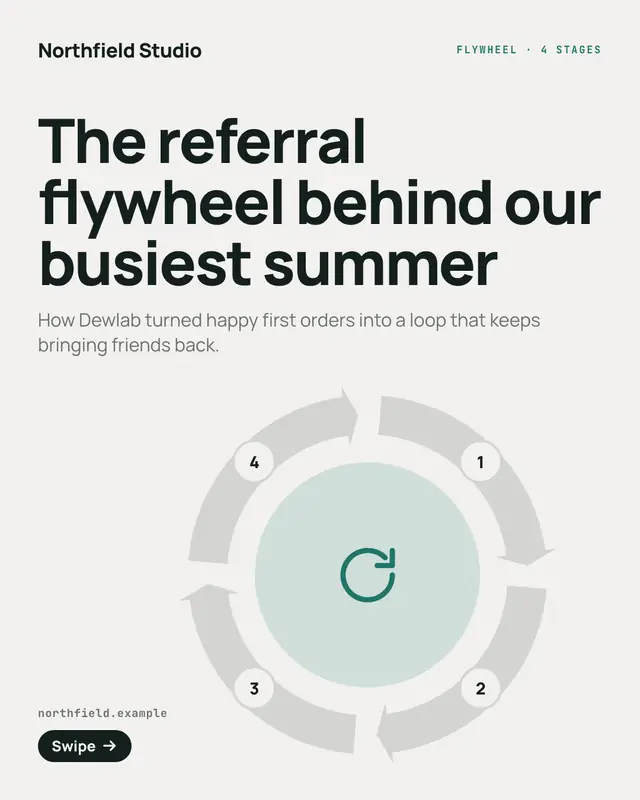
Flywheel
A flywheel ring of stages, each arc arrowing into the next, for a post about a loop that feeds itself, a 'virtuous cycle'
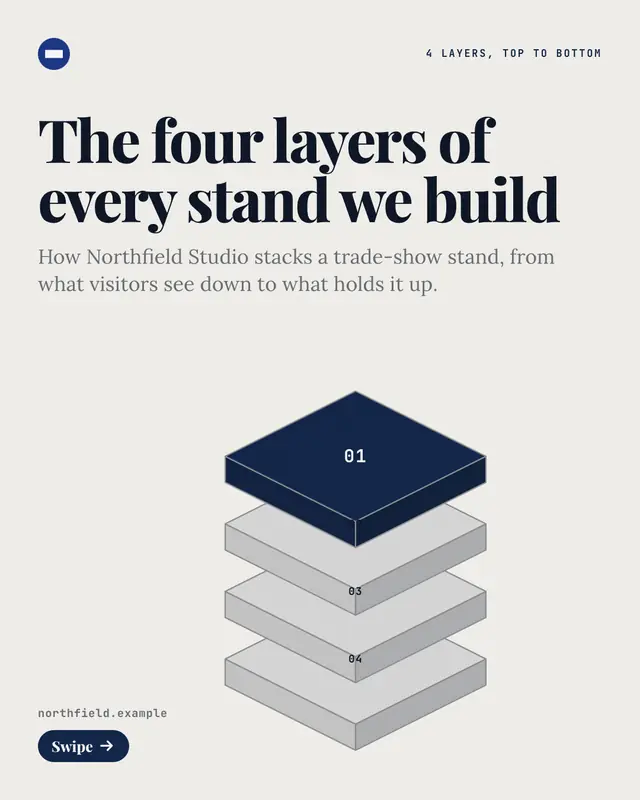
Layer stack
An exploded isometric stack of slabs, one per layer, for a post about something built 'layer by layer'
Make a Padlocks with your brand.
MarketiQ writes the post, picks the template that carries it best — this one, when it fits — and fills it with your logo, colours, facts and copy.