Rubric
A grading sheet of criteria with empty check boxes, for a post that sets out how to judge something — each page opens one criterion in place, with its name and what good looks like, while the others stay listed, and the closing page hands the 'rubric' to the reader. Text only, never a score.
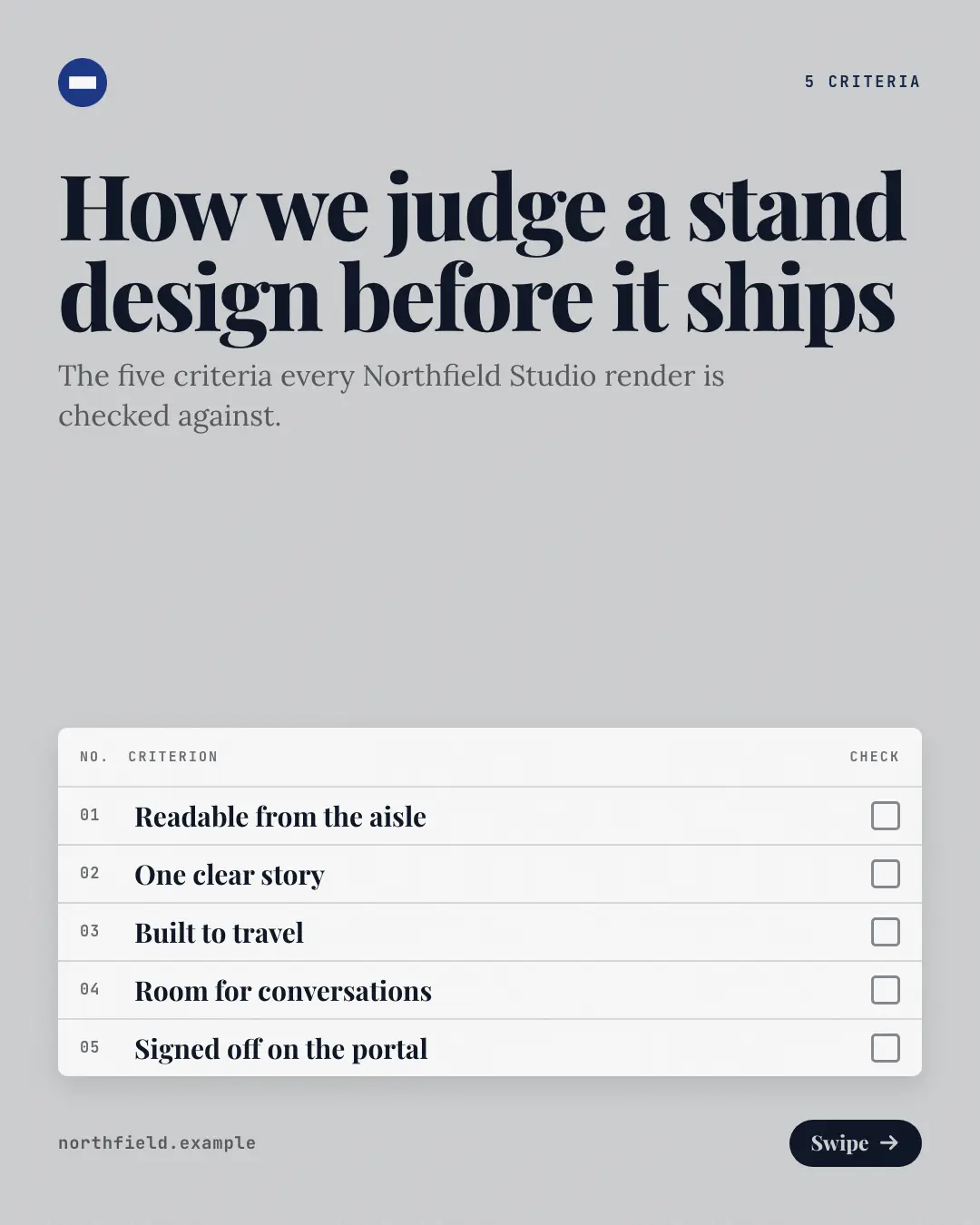
When the AI picks it
MarketiQ’s Creative Director favours the Rubric for posts that teach, when the message is a list. It is built first to teach.
It reads each post’s goal and shape first, then its own words, the platform and the facts you have, and offers this template only where it fits.
Who it’s for
Any business. Nothing in it assumes what you sell, so the Director can offer it to a software company, a café or a coaching centre alike — whenever the post fits.
Platforms and sizes
| Size | Where |
|---|---|
| 4:51080 × 1350 px | Instagram, Facebook, LinkedIn, Threads |
Carousel of 3–10 slides. Each size is laid out for its canvas, not cropped; the sample above is the 4:5 version.
What it needs
Only your post. It is made from your copy and your brand kit — there is nothing else to prepare.
Rules the AI follows
Word for word from the template library. The Director follows the copy rules when it writes into the template, and the visual review checks every creative against the visual rules.
Copy rules
- Use it only when the post sets out criteria for judging something (a hire, a vendor, a design) — never for a story or a list of products.
- Each row is one criterion: a short name or question and what good looks like, in words — never a score, a weight or a mark the post does not state.
- The cover title says what is being judged; the closing line invites the reader to use the rubric.
Visual rules
- A white grading sheet on a pale brand ground: a header row (No. · Criterion · Check) and one numbered line per criterion with an empty check box.
- Each criterion page opens its own line in place — a brand bar, a large number, the criterion and 'What good looks like' with its body — while the rest stay listed.
- The cover lists every criterion under the title; the closing page shows the sheet above the call to action.
More Mental models templates
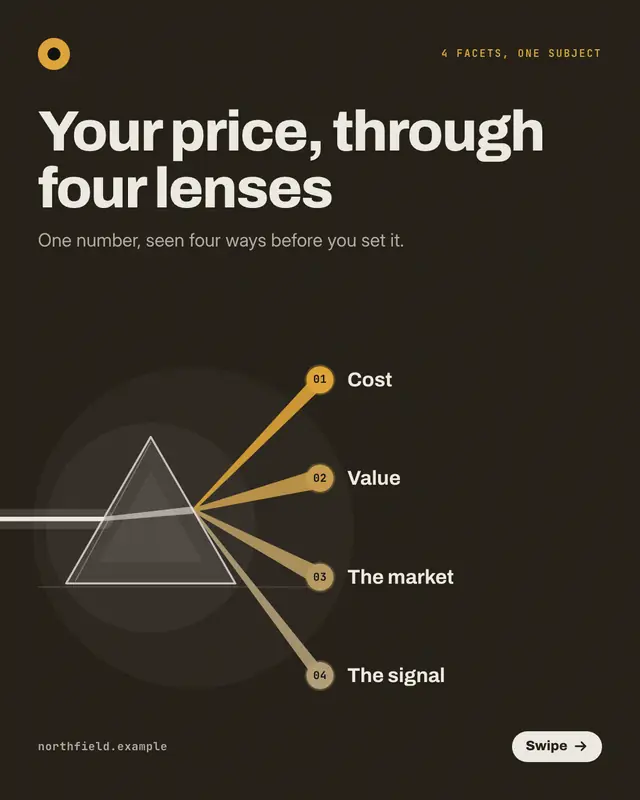
Prism facets
A glass prism splitting one white beam into a fan of coloured rays on a dark ground, for a post that looks at one subject 'through four lenses'
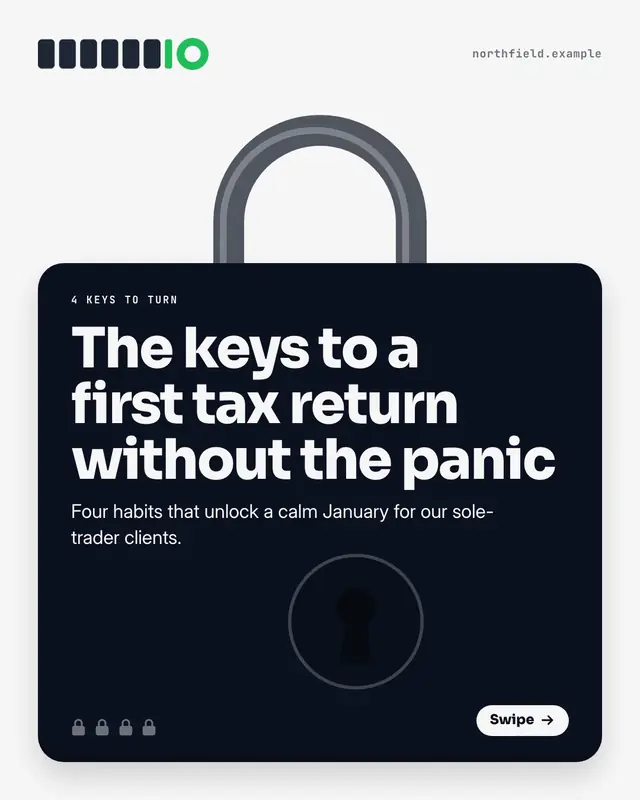
Padlocks
A padlock as big as the page whose shackle springs open on every page, for a post that hands over the keys to something
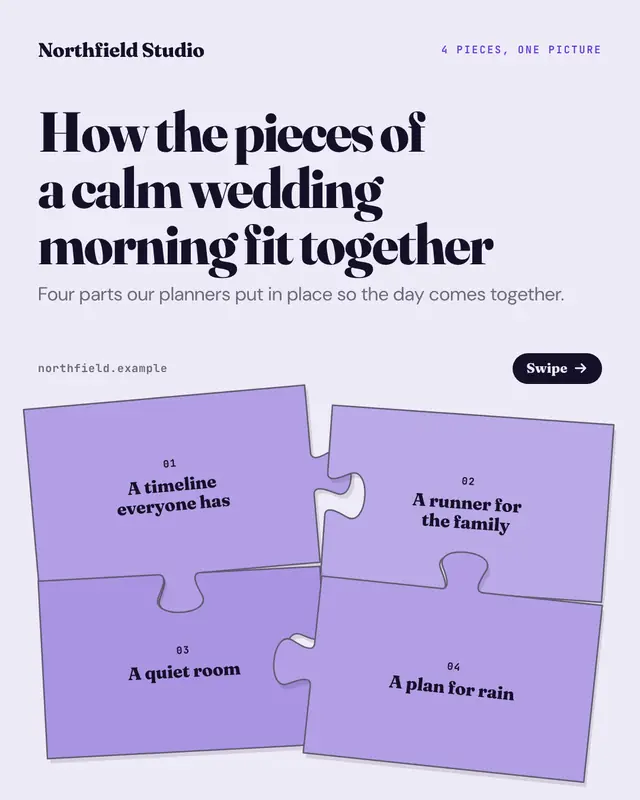
Jigsaw
A jigsaw whose pieces lock into place one per page, for a post about the 'pieces of the puzzle'
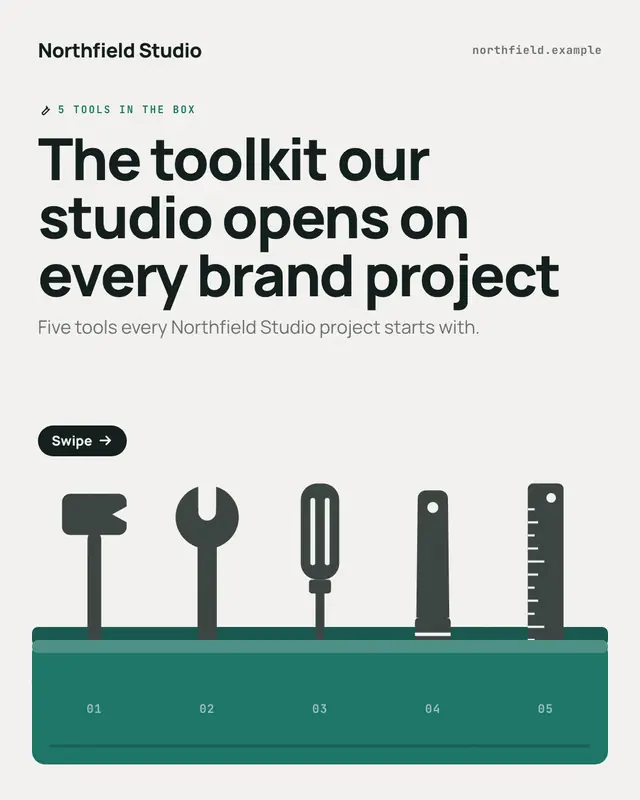
Toolbox
An open toolbox with one generic tool lifted out per page, for a post that lays out a 'toolkit'
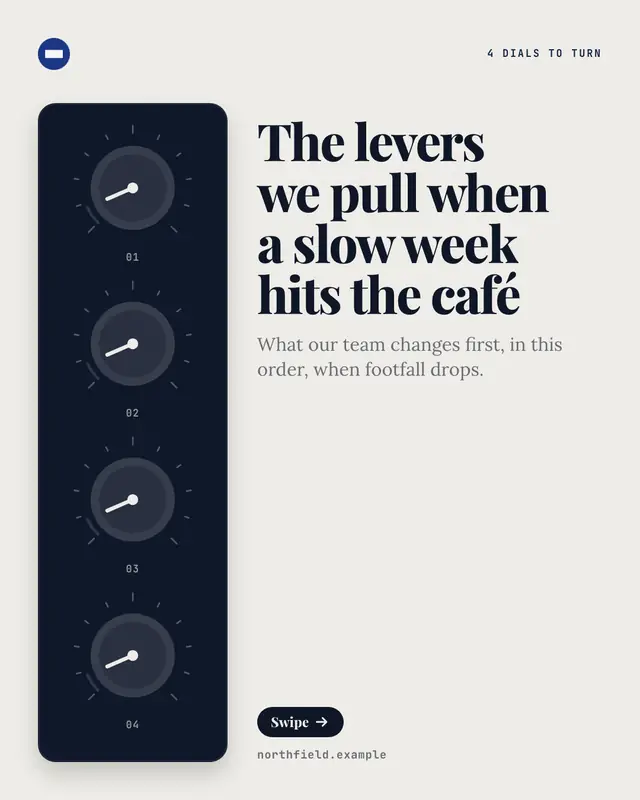
Dials and levers
A control panel of dials beside the copy, one dial turned right up per page, for a post about the 'levers to pull'
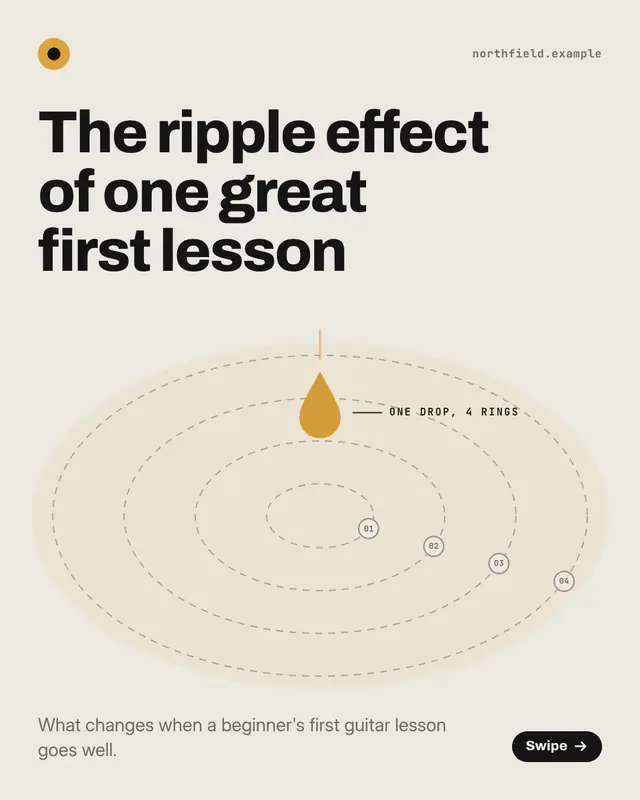
Ripple effect
'Ripples' spreading from one drop, a ring further out per page, for a post about the 'ripple effect' of one change
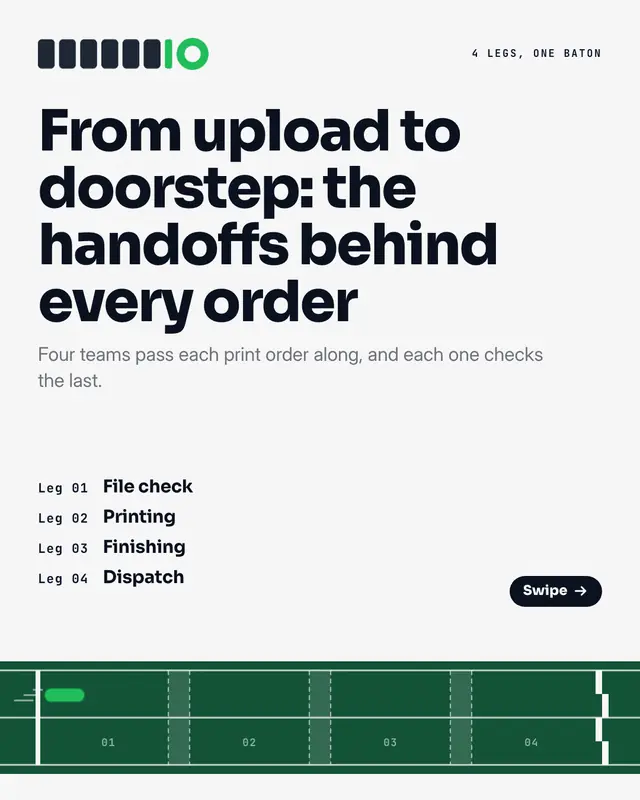
Relay baton
A relay race run one leg per page, for a post about handoffs
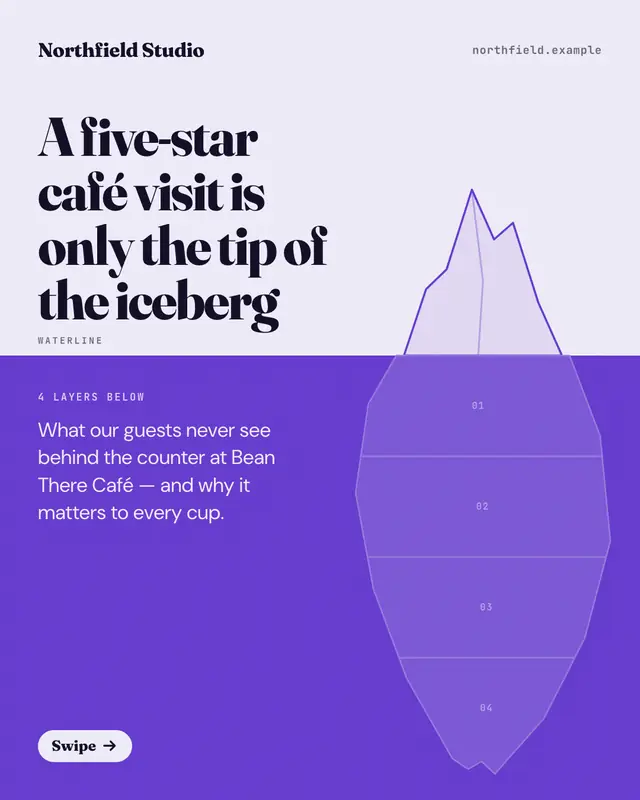
Iceberg waterline
An iceberg cut at the waterline, for a post about what lies beneath a visible surface
Make a Rubric with your brand.
MarketiQ writes the post, picks the template that carries it best — this one, when it fits — and fills it with your logo, colours, facts and copy.